






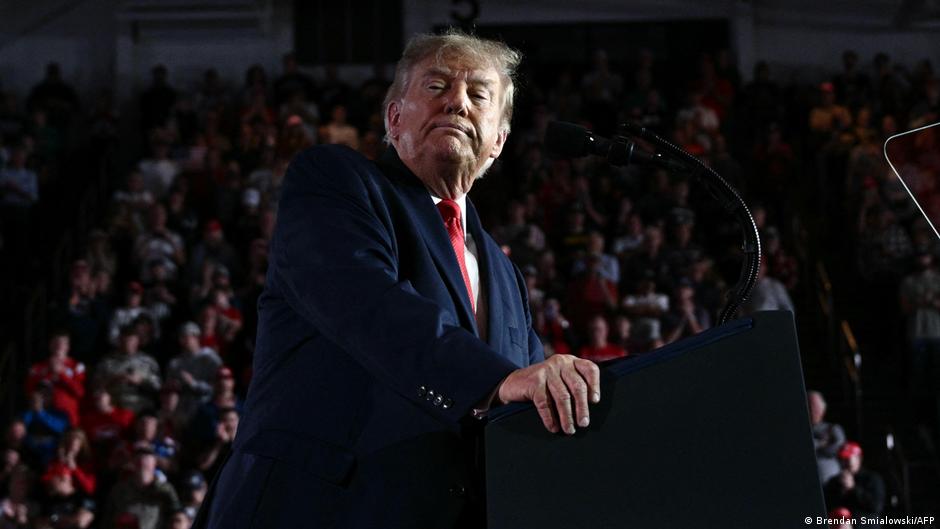
The Democratic Party made significant gains in Tuesday’s midterm elections and secured control of both chambers of Congress. Below are five insights drawn from the results.
1. American democracy remains resilient
The storming of the Capitol, attempts to alter electoral rules, and a series of presidential executive orders used to bypass Congress had raised concerns that U.S. democracy was shifting toward authoritarianism under Donald Trump. The country’s democratic institutions, however, have proved more resilient than many feared.
Many voters turned out in opposition to Trump’s desire to govern without constraints. Instead, they want institutional safeguards strengthened.
A post-election survey by the Associated Press found that roughly 30 percent of voters viewed the state of democracy as the country’s most pressing problem. About 70 percent believed Congress was not doing enough to check and balance the presidency.
The midterm outcome sends a clear message that voters want stronger congressional oversight. President Trump could continue attempting to govern through executive orders, but Congress controls the purse strings.
Because Democrats now control Congress, they can withhold funding for the president’s political initiatives. They can also establish investigative committees, placing the Trump administration under considerable pressure to justify its actions.
2. The Democratic Party remains a competitive force
For years, the Democratic Party struggled with compelling leadership, a unified strategy, and a clear plan for winning votes. Tuesday’s election demonstrates that the party remains a significant political force.
Its gains in traditional Republican strongholds are remarkable. Democrats even scored victories in Texas and South Carolina. In Kansas, the party won a Senate seat for the first time since 1932.
The midterms have also spotlighted a new generation of Democrats—younger politicians, some noticeably more progressive—who could chart a fresh course for the party.
Consider the Democratic Socialists of America, or DSA, an organization considerably more left-wing than the Democratic Party itself. At least five DSA-endorsed candidates have been elected to the House of Representatives.
The DSA advocates strong welfare policies centered on affordable housing, health care, and workers’ rights. Members also seek greater checks on the power of large corporations.
“The argument was always that these folks can’t win on a national stage,” said Brandon Bohrn, an expert on trans-Atlantic relations at the Bertelsmann Foundation, in an interview with DW. “Now some of them have defied the odds and actually won, potentially sparking an internal debate about what the Democrats stand for and how they plan to win voters in the 2028 presidential election.”
3. Republicans face an internal battle over the party’s future
Donald Trump has made clear that he does not accept responsibility for the midterm defeat, taking to Truth Social to deflect blame.
Yet not every Republican is likely to agree. Critics of Trump who have been sidelined may feel emboldened to speak up again. The question of whether the party should abandon Trumpism will be almost impossible to ignore.
Under the law, Donald Trump cannot run for a third term in the 2028 presidential race, so Republicans must consider who can lead them. But who will take charge—and on what policy platform?
Tuesday’s defeat will likely accelerate this debate, making a power struggle over the party’s political future inevitable.
4. Iran’s leadership views Trump’s setback as good news
The war against Iran and the resulting economic hardships cost the Republicans many votes. The cost of living, in particular, was a key issue for American voters.
The consequences of the Iran war have primarily driven up energy prices, likely increasing domestic pressure on Trump to reach a lasting agreement with Iran.
Trump appears keen to cut foreign policy costs, especially in areas that have been politically controversial for his party. Shortly before the midterms, he announced that he no longer intends to provide billions in military aid to Israel—a deal that was meant to expire in two years anyway.
5. What the outcome could mean for Europe
Ian Lesser, an expert on U.S. foreign and security policy at the German Marshall Fund, believes the midterm elections could also affect trans-Atlantic relations. “This actually makes a big difference for Europe in a number of important ways,” Lesser told DW.
Lesser suggests the Democrats could try to reinvigorate dialogue between Europe and the United States. With control of Congress, Democrats have more influence over Trump’s NATO policy, can shape budget decisions and military funding, and can complicate planned cuts to U.S. support. Europe and the United States may even cooperate on climate and environmental issues.
“Simply restoring a degree of trust and predictability, however we get to that, makes a big difference,” Lesser said.
Not all differences will be resolved overnight.
“Tariffs are a little tricky because there are clearly vested interests in the United States in keeping some of this in place,” Lesser concluded. “But in terms of new and very aggressive tariff measures, I think Congress would absolutely push back against that, on both sides of the aisle.”


