







The U.S. dollar strengthened against the Canadian dollar after President Donald Trump signed proclamations introducing 50% tariffs on approximately $20 billion worth of Canadian exports, including sectors such as dairy, motor vehicles, and electrical machinery. These tariffs, set to take effect in 30 days, apply irrespective of adherence to the U.S.-Mexico-Canada Agreement (USMCA), though energy, potash, and critical minerals are exempt. The move underscores a growing trend of U.S. trade enforcement under alternative legal frameworks rather than relying on USMCA provisions, raising concerns over the agreement’s diminishing practical safeguards.
While the immediate economic impact of the tariffs may be limited, market sentiment reflects deeper worries about evolving trade dynamics. Analysts suggest this escalation signals a shift toward structural trade tensions, complicating Canada’s economic recovery amid ongoing USMCA review uncertainties. Prime Minister Mark Carney has advocated for diplomatic solutions, while Ontario’s premier has called for retaliatory measures. The divergent approaches highlight potential policy challenges ahead, with further currency pressure likely if trade friction persists.
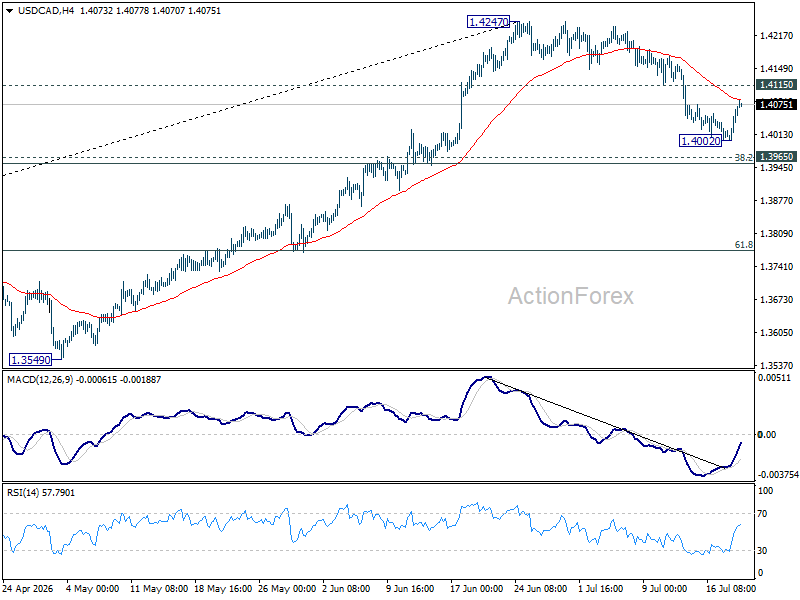
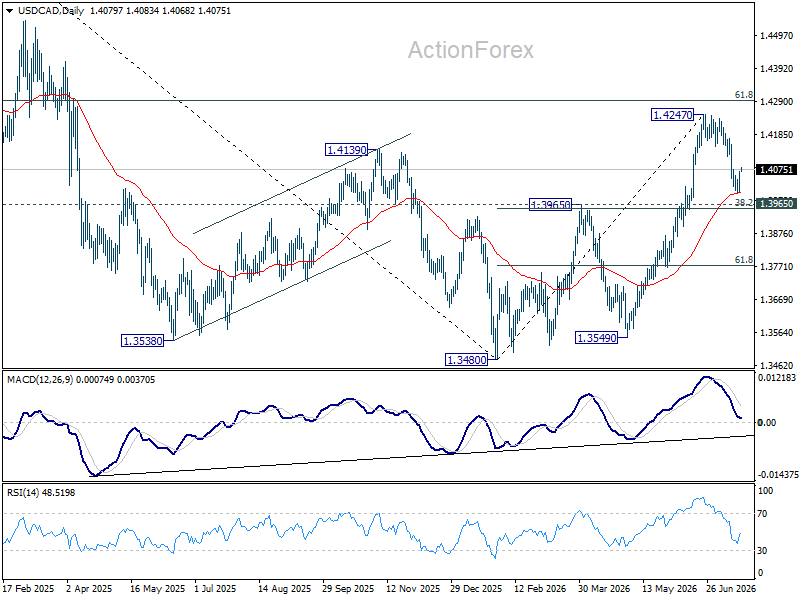
Technically, USD/CAD’s rebound from 1.4002—supported by the 55-day exponential moving average and a key Fibonacci retracement level at 1.3954—suggests the prior decline from 1.4247 was corrective. A decisive break above 1.4115 resistance could reignite the long-term uptrend from the 1.3480 low, potentially targeting the 1.4247 peak again.

Also Read
- AUD/USD Rises to Four‑Week High, Awaiting Australian Jobs Report to Confirm Trend
- XRP Surges 4% as Traders Monitor Triangle Breakout Targeting $1.35
- BTC/USD Forex Signal – July 21: Bitcoin ETF Inflows Keep Climbing
- Chainlink Exchange Reserves Decline 12% as Institutional Adoption Accelerates with DTCC Partnership


