



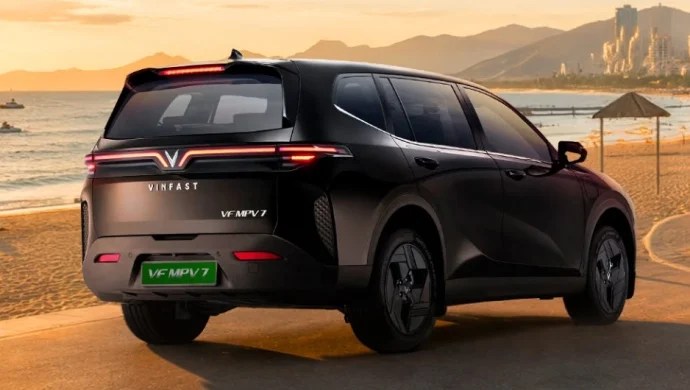

Vingroup is opening a third Asian manufacturing front for its electric vehicle ambitions. The Vietnamese conglomerate, best known for its EV maker VinFast, plans to invest US$500 million in a flagship plant in the Philippines, the country’s Department of Trade and Industry (DTI) announced Wednesday.
The facility is designed to produce 200,000 vehicles annually at the outset, serving both domestic buyers and export markets. Construction is slated to begin in the first quarter of 2027 and take 12 to 18 months, putting the earliest realistic start of production in 2028. Alongside four-wheelers, Vingroup also plans to introduce electric scooters to the Philippine market.
The DTI framed the project as more than a car factory, describing it as a potential base for Vingroup’s expansion into multiple industries in the country. Trade Secretary Cristina Roque said the investment reflects the Philippines’ growing status as a Southeast Asian hub for advanced manufacturing and green technology, promising “end-to-end support” for investors.
The Math Behind 200,000 Units
The headline capacity warrants scrutiny. BMI Country Risk and Industry Research projects the Philippines will sell 423,750 vehicles in total in 2026, of which only 32,776 will be EVs—a figure that includes plug-in hybrids. On those numbers, the plant could build roughly six times the country’s entire projected EV market for the year and nearly half of all new cars Filipinos are expected to buy. Even BMI’s more bullish 2030 forecast of 91,730 EV sales leaves the factory with substantial idle capacity.
The export clause, in other words, is the business case. ASEAN’s free trade framework allows vehicles meeting regional content rules to move across the bloc tariff-free, and the Philippines sits on busy shipping routes to the rest of Southeast Asia and beyond.
A policy wrinkle complicates the picture. Battery EVs imported into the Philippines are currently exempt from import tariffs and excise taxes until 2028—roughly when the plant is due to come online. That means a locally built VinFast would enjoy little tariff protection against imported Chinese models in its early years. Its advantage must come from elsewhere: tax breaks under the CREATE MORE Act, which extends incentives such as enhanced deductions and lower corporate income tax rates for registered projects, and faster permitting through the “Green Lanes” established under Executive Order No. 18 for strategic investments. If the import exemptions lapse after 2028, a local factory becomes considerably more valuable. The timing may be less coincidental than it appears.
A Familiar Playbook, Now in Its Third Country
The Philippine plant follows a template VinFast has already deployed twice. In Indonesia, it opened a US$300 million factory in Subang, West Java, about 120 km southeast of Jakarta, in December 2025, and pledged to spend US$1 billion to expand capacity to 350,000 vehicles annually. In India, where its plant is in Tamil Nadu, it announced plans that same month to invest US$500 million to triple output.
Manila’s courtship has been prolonged. In January 2024, President Ferdinand Marcos Jr. met Vingroup chairman Pham Nhat Vuong in Hanoi, where discussions covered dealerships, battery production, and nickel processing. Two and a half years later, those talks have materialized into a factory commitment.
The scooter strategy may prove the more compelling bet. Two-wheelers and tricycles are the workhorses of Philippine streets, and Marcos has repeatedly tied EV policy to replacing aging jeepneys and tricycles. VinFast has relevant experience: its ride-hailing affiliate Green SM has introduced e-scooters into Jakarta’s ojek economy, and the company has experimented with rentals to circumvent Southeast Asia’s affordability barrier.
Rivals Already Entrenched
VinFast will not have the road to itself. Chinese brands—including BYD, MG, GAC Aion, and Chery—are already pushing EV prices down in the Philippines with affordable SUVs and crossovers. BYD has also built manufacturing capacity in Thailand, which has positioned itself as a regional EV production hub, while Indonesia has leveraged its nickel reserves to attract battery and EV makers. Japanese incumbents such as Toyota and Mitsubishi, which assemble vehicles locally, still dominate the Philippine market and are leaning on hybrids, a format many buyers prefer while charging infrastructure remains scarce.
At home, VinFast is a heavyweight, accounting for 42 percent of Vietnam’s domestic car sales in August 2026, bolstered by its own charging network and taxi fleets. Abroad, it is a challenger with a modest brand, competing in a regional EV race that has become crowded quickly. Even its home turf is being contested, with Tesla now incorporated in Vietnam.
Can the Balance Sheet Carry It?
The larger question is financial. VinFast reported unaudited second-quarter 2026 revenue of VND30,340.9 billion (about US$1.2 billion), up 85 percent year-on-year—impressive growth. But its loss from continuing operations widened 128 percent to VND31,189.2 billion (about US$1.2 billion), meaning it lost slightly more than it earned.
The total net loss of VND1,414.9 billion (about US$54 million) appears far healthier, but only because of a gain from discontinued operations. That is an accounting effect, not evidence that the core business is turning around.
VinFast has long relied on financial backing from Vingroup and its founder to fund expansion, and the Philippine project is being announced under the parent’s banner. That may be deliberate. The DTI’s talk of a multi-industry base suggests the conglomerate, not just the carmaker, is putting its name behind it.
For the Philippines, which is still building out a network of only about 1,600 charging points, the plant is a welcome signal that it can compete with Thailand and Indonesia for EV manufacturing. Whether that signal translates into reality depends less on ribbon-cuttings in 2028 and more on whether the ships leaving Philippine ports are full.
Also Read
- AI Minister Reveals Government Uncovered 500 Vulnerabilities Amid Global Cyber Security Scramble
- Salfit Medical Crisis Deepens as Israeli Forces Keep Northern Entrance Closed
- IMF Projects Pakistan Economy to Shrink 1.3% in Current Fiscal Year, Rebound to 6.6% Growth by 2027
- Kim Aris Breaks Five-Year Silence with Detained Mother Aung San Suu Kyi