






In April 2026, I made the difficult decision to cancel my private sports club membership. With the stock market correcting again due to escalating tensions in Iran, combined with rising oil prices and stubborn inflation, it felt like the right moment to trim expenses and simplify our family’s budget.
The membership itself cost $185 per month. On top of that, I paid $25 per guest to bring my two children along, which added another $50 per visit. With roughly four visits a month, the costs quickly compounded.
Earlier in the year, I had already cut the cable package, saving about $70 a month. I found that watching NBA and NFL games through 10 to 15 minute highlight clips on my phone was perfectly sufficient. Reclaiming both money and hours of screen time felt like a worthwhile trade, regardless of broader economic conditions.
As the primary financial provider for a family of four, maximizing the gap between my income and our expenses brings a deep sense of security. The era of saving 50% to 70% of my income during my finance career has passed. That impressive savings rate has steadily declined as the cost of living has surged.
This is the delicate math that dual unemployed parents, or DUPs, navigate while trying to remain at home until both children leave the nest. My advice to anyone considering this path: do not attempt it without one partner first achieving financial independence.
Evaluating the Two Cuts and Their Real Impact
Eliminating cable proved more challenging than I initially anticipated. With the Olympics underway and my loyalty to the Golden State Warriors, I purchased a $39 digital antenna from Target. The antenna delivered a clear Olympic broadcast, and I gradually grew accustomed to catching highlights on YouTube.
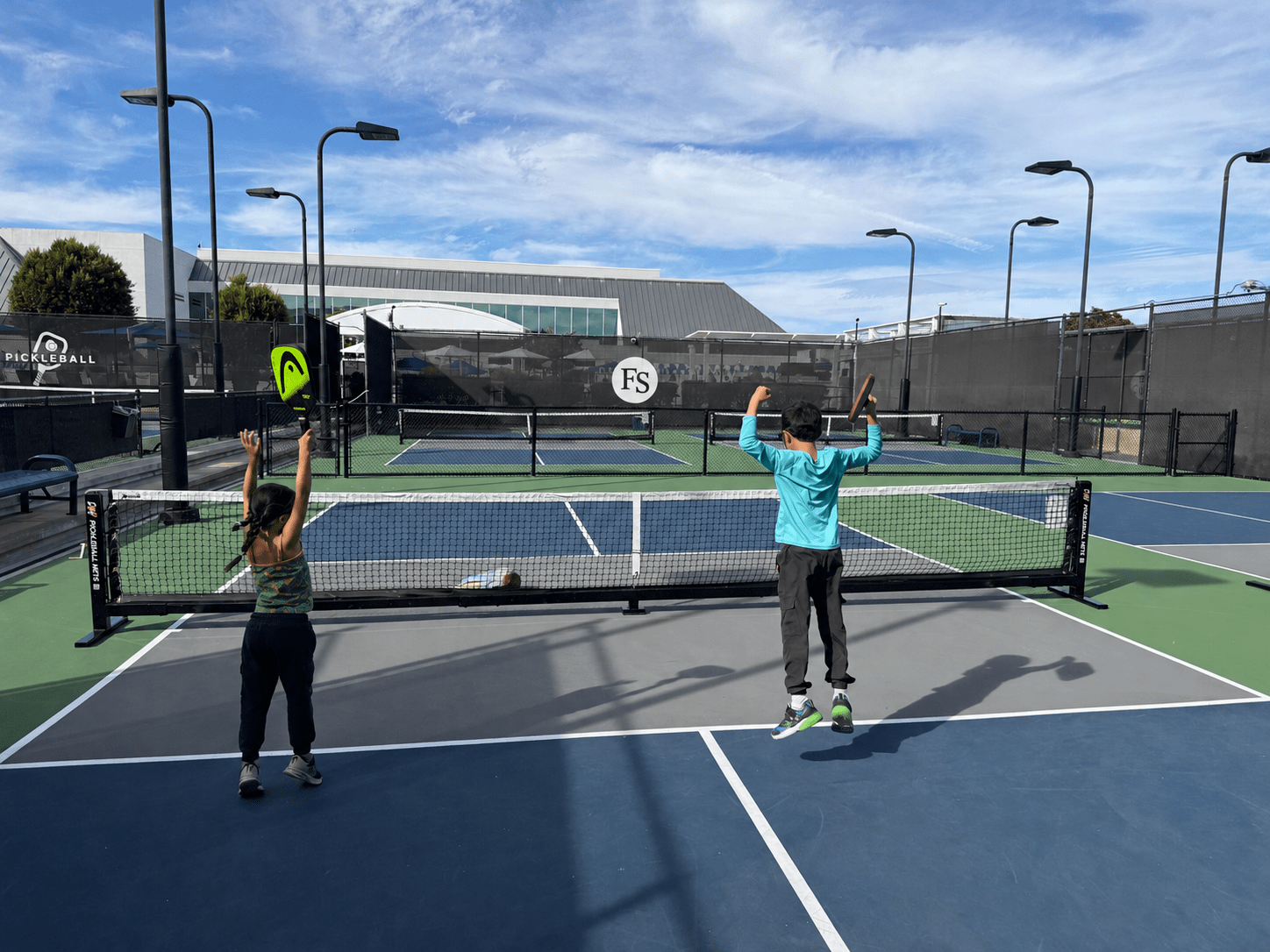
Canceling the club, however, was the greater sacrifice. The facility offered swimming, tennis, pickleball, ping pong, a full basketball gym, a well-equipped workout room, relaxing hot tubs, and an on-site dining area. It was a wonderful, secure environment to spend an entire day with children.
The club was also located 20 miles away, requiring a 30 to 40 minute drive in each direction. The activation energy to make that trek was substantial, particularly after spending my mornings writing and playing pickleball from 6am to 9:30am. When you factor in four or five hours at the club, an entire day disappears.
We adapted by visiting public parks more frequently. Reclaiming 60 to 80 minutes of driving each Sunday by staying local was a genuine improvement. Dedicated pool time and stroke practice would have to be sacrificed, though both children are strong enough swimmers to have passed the safety test and can be left unattended in the pool if needed.
A Welcome Rebound in the Financial Markets
Then the market behaved exactly as markets tend to do. Since we trimmed expenses in April, the S&P 500 has climbed from roughly 6,600 to over 7,600 today. This provided significant relief after the index had sold off to 6,368 on March 29, 2026. As an investor whose portfolio is a more substantial income source than active earnings, I felt considerably better about our overall financial position.
Acting as any rational household CFO would, I revisited the numbers using tools like Empower and Boldin to determine whether we could responsibly increase our spending again.
The answer was clearly yes, even without consulting the tools. However, I chose not to resubscribe to cable. I had fully adapted to life without it, and the experience had returned approximately one hour per day to my schedule. I have reinvested that time into writing for Financial Samurai and developing my next book, Your Children Will Be OK.
I then evaluated the prospect of rejoining the club at $185 per month. The decision was an emphatic yes. There was, however, one significant obstacle.
The guest fee had increased from $25 to $100 per person. This translated to $200 in guest fees for each visit with my two children. Four Sundays a month would total $985 for a club I had just left on principle.
I delayed making a final decision. Fortunately, I was scheduled to spend a month in Hawaii visiting my parents.
The Turning Point That Brought Me Back to a Private Club
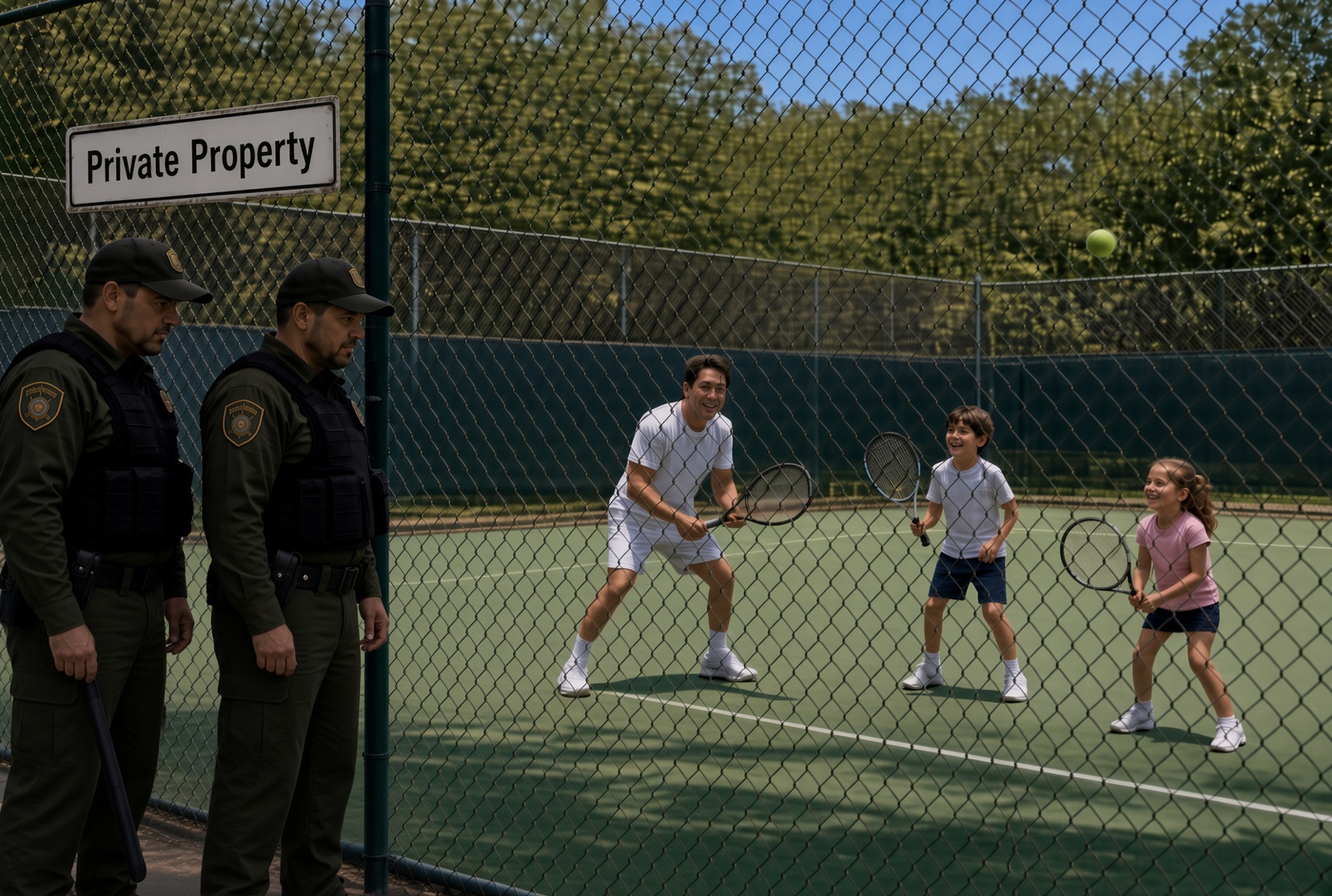
If you have followed Financial Samurai since August 2026, you already understand what shifted my perspective. Two stern park rangers approached me on an empty public tennis court near my home while I was teaching my own children how to play. It was 3:15pm on a Thursday afternoon, a time when the majority of people were at work.
I spent weeks reading thousands of comments and reflecting on the experience. Here is the conclusion I reached.
I have no desire to be approached by two armed individuals wearing batons and bulletproof vests again while I am out with my six-year-old and nine-year-old. If the rangers had been friendly, the situation might have felt different. Instead, they were stern and unforgiving, even asking me to provide proof that I was the father of the children I was with.
I then confronted a deeper question: what was the purpose of saving and investing 50% to 75% of my after-tax income for 13 years if not to enhance the lives of the people I love? Refusing to spend $185 per month on a club my children genuinely enjoy, especially after leaving my career in 2012 with approximately $3 million that has continued to grow with the market, is not frugality. It is stinginess disguised as financial discipline.
The Finite Window for Quality Time With Children
Then I performed the more important calculation, the one that ultimately sealed the decision. The golden window for actively spending time with your children is only about 12 years, not 18. They are already aging out of the playground phase. Eventually, they will prefer spending five hours on a Sunday with friends rather than with dad.
I recognize this reality because I was that child. From sixth through eighth grade in Kuala Lumpur, all I wanted was to go skateboarding with my friends and grab food afterward. I had no desire to come home to tired parents and explain a poor grade in class. I am beginning to notice that my nine-year-old is also starting to want less time with me than in previous years.
While I cannot control how strangers interact with my family in public spaces, I can control the environment we choose to inhabit.
A protective instinct awakens when you are responsible for young children. Their safety becomes an absolute priority. A deserted park in a quiet corner of San Francisco on a Thursday at 3:15pm, devoid of other visitors, still did not provide the sense of security I needed.
At the private club, anyone seeking to engage with us must first present a membership card at the front desk. There is no absolute guarantee we will never face another uncomfortable encounter. However, the likelihood decreases significantly when there is a controlled point of entry.

Understanding the True Cost of a Private Club Membership
My monthly dues are $185. That is the figure I had carried in my mind as the cost of membership, and it was the number I felt comfortable eliminating in April.
However, dues were never the sole expense. As a single member bringing two children, I was paying $25 per guest, twice per visit, four Sundays each month. That added another $200 to the monthly total. The membership I canceled was actually costing $385 per month, or $4,620 annually. I had been underestimating my own expense by more than half.
Then the guest fee increased from $25 to $100. Applying the same calculation with the new rate: $185 plus $800 equals $985 per month. This totals nearly $11,820 per year simply to play tennis and pickleball with my own children.
At that point, I explored making the children members instead. Two junior memberships plus my own brought the household total to $450 per month, or $5,400 per year. This approach saves roughly $6,400 annually compared to paying guest fees, and it eliminates the mental arithmetic at every visit.
Dues represent the entry fee. Guest fees, food minimums, locker rentals, special assessments, and that initiation fee you may have forgotten about are where the true cost resides.
How Troubling Is This Reality?
I attended public high school, public college at William & Mary, and public graduate school at Berkeley for my MBA. I pay approximately $100,000 per year in property taxes, a portion of which funds the very public parks and infrastructure where the incident occurred.
Apparently, that contribution is insufficient to feel welcome at a public park.
For the first time in 25 years, I felt like an outsider in San Francisco. That is a sensation I recognize immediately and have experienced before.
I immigrated to America in 1995 and settled in Northern Virginia, where the Asian population represented roughly 5% of the community at the time. Racial remarks and subtle prejudice were simply part of the environment. You learned to navigate it without complaint, much like enduring August humidity. Changing how others perceive you is difficult, so conserving your energy becomes essential.
When I moved to San Francisco in 2001, a majority-minority city, the environment shifted dramatically. For 25 years, I never once felt like a guest in this city. That sense of belonging is profound. Most individuals who grew up as part of the majority in their hometown have no concept of what it means to suddenly become the exception.
Here is what I failed to fully appreciate until recently. Moving to San Francisco was itself a significant purchase. This ranks among the most expensive cities in the world, and part of what I acquired through that high cost of living was a profound sense of belonging. I simply never categorized it as a line item in my budget.
Curating Your Ideal Environment
We frequently discuss how money purchases houses, vehicles, and freedom from work. We rarely acknowledge that it also buys the ability to choose the people who surround you.
A city. Then a neighborhood, a school, then a club. Each represents the same transaction at a progressively smaller scale, and each demands a higher price per square foot of comfort than the previous one.
In my 20s and 30s, my options were limited because my financial resources were modest. When someone made me feel unwelcome, I absorbed it quietly. I found common ground and remained pleasant, because I had not yet built enough passive income to walk away from difficult situations.
Now, at 49 with two young children, my tolerance for unnecessary conflict has diminished while my protective instincts have intensified. The crucial difference today is that I possess the financial means to leave when necessary. On Wall Street, this was referred to as “f you money.” It is a valuable option to have.
This is the truly unfortunate aspect. Choosing private spaces is not about status. I have no interest in the prestige associated with joining a private organization. What I value is belonging and the right to be left undisturbed, and only a select few can afford that privilege.
I am deliberately selecting a set of tennis and pickleball courts to enjoy with my children, while continuing to play on public courts with my friends. Many individuals lack the luxury of such selection, which is precisely why public courts should remain welcoming spaces for everyone.
As I outlined in my backwards tax identification proposal, the wealthiest taxpayers going private arguably benefits everyone else by reducing congestion on public courts. However, it remains deeply unfortunate that feeling unwelcome in public spaces is driving people toward private alternatives.
This is how tribes form. Someone makes you feel unwelcome, so you seek a place where that will not happen. Then you become the one controlling access behind the door.
What Wealth Genuinely Provides
For years, I questioned whether private schools, private lessons, and private clubs justified their costs. Regarding tuition, I developed a guideline: earn at least five times the net annual tuition per child before opting for private education. Secure your financial foundation before committing to luxury expenses.
As a father, my perspective has evolved. Peace of mind carries tremendous value, and I am willing to pay for it. This is why every affluent person I know maintains life insurance. They could technically self-insure, yet they choose to pay for the assurance that their surviving heirs will never face financial decisions under duress.
Both my wife and I attended public elementary schools where physical altercations were routine. Survival of the fittest fosters resilience in some children while devastating the spirits of others. The challenge is that you cannot predict which category your child will fall into until it may be too late, and most parents with the financial means refuse to take that risk.
This brings me to my deepest fear. If something happened to my children that money could have prevented, how would I carry that burden?
This is the same reasoning that led me to trade my Honda Fit for a Range Rover Sport the year my son was born. Had we been struck in that Fit with its paper-thin doors and suffered harm to my wife or son, I would have never forgiven myself. Money must be deployed to enhance life; otherwise, aggressive saving and investing lose their purpose.
If you are seeking motivation to save more, invest more, and take calculated risks to outperform average returns, add these two priorities to your list: your children’s safety and your own peace of mind.
Optionality is the ultimate objective. You may never need to exercise it. However, on the day you require it, you will be profoundly grateful you secured it.
Questions for Readers
Have you ever transitioned to a private option following a specific incident, rather than for status or convenience? What moment triggered that decision for you? Additionally, what public space have you quietly abandoned, whether a park, a pool, a library, or a stretch of sidewalk, because it no longer felt comfortable? Finally, what is peace of mind genuinely worth to you in dollars per month, and have you ever calculated that figure honestly?
The One Protection Money Cannot Guarantee
Every purchase discussed in this article protects my children while I remain present. The club, the vehicle, even the city I selected. None of these safeguards serve them if I am no longer here.
That was the one vulnerability I could not address with a membership fee, so I addressed it with term life insurance instead. My policy extends until my youngest child completes college.
If you have young children and lack life insurance, or if your existing policy predates your second child’s arrival, take three minutes to compare quotes on Policygenius. The service is free, requires no commitment, and aggregates multiple carriers in one convenient location. The version of this decision you will regret is the one you continue to postpone.
Also Read
- South Korea court gives church leader two years in jail for bribery
- Ankara Outlines Black Sea Grain Corridor Proposal, Holds Talks with Moscow and Kyiv
- Kimberly-Clark’s Kenvue Acquisition: Strategic Growth Amid Litigation Risks
- France Braces for Pivotal Election Year as Left-Wing Parties Remain Deeply Divided


