








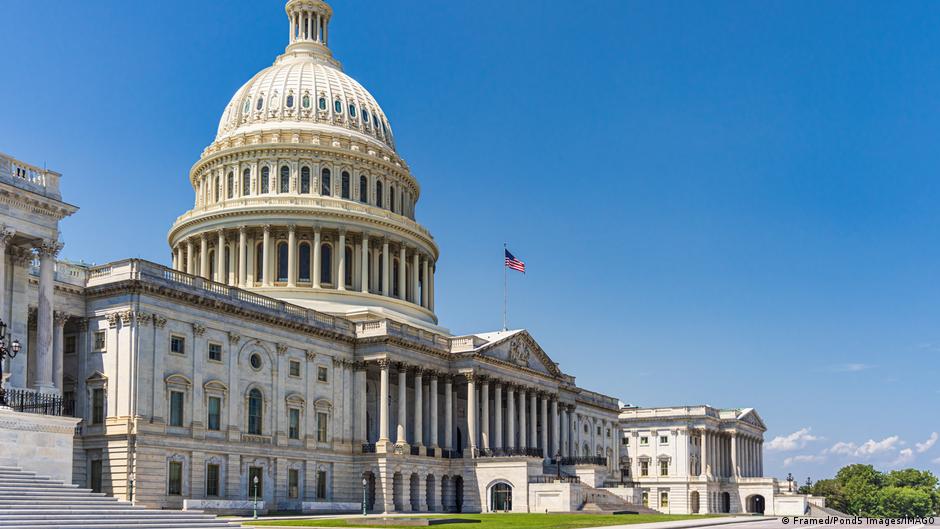
While women comprise roughly 51% of the United States population, that figure is not mirrored in the composition of the US Congress, where only 28.4% of members are women. Nevertheless, with 152 women currently sitting in the House of Representatives and Senate, the total has never been higher in American history. The number of female governors across the 50 states has also reached a record level, with approximately 14 — 28% — holding the office.
There are several reasons why female representation in the US Congress remains comparatively low. “Some of them are structural: There are rules and processes in place in our political system that make it harder for any newcomers to break in,” says Kelly Dittmar, director of research at the Center for American Women and Politics (CAWP) at Rutgers University. “Historically, women were newcomers.”
Senate seats only come up for election every six years. Members of the House of Representatives serve two-year terms, but there is no limit to the number of times they can stand for reelection, so in theory they can remain in office for decades.
As Dittmar points out, election campaigns in the US are extremely expensive. Women have historically had less access to networks of wealthy donors — who, like many party leaders, are still most likely to be men. Leading male politicians are also more likely to recruit men to stand as new candidates. Finally, cultural biases also play a role: “Stereotypes and expectations about what women can and should do.”
The elections on November 3 will decide whether more or fewer women will sit in the US Congress over the next two years. All 435 seats in the House of Representatives and 35 of the 100 seats in the Senate are up for election in the midterms. In 36 states, voters will also decide who will take office in the governor’s mansion.
House of Representatives: Female Democrats Outnumber Female Republicans Three to One
125 of the 435 representatives in the House are women. As in the Senate, and also regarding gubernatorial posts, they are not evenly distributed between the two parties: there are more women among the Democrats than among the Republicans. Currently, 95 women serve as representatives for the Democrats, compared to 30 for the Republicans.
“There is a far less robust support infrastructure for women within the Republican Party,” says Dittmar. She notes that organizations specifically dedicated to recruiting, training, and funding women candidates are almost all either on the Democrat side or non-partisan. She adds, “A lot of the [Republican] party leaders don’t see an electoral incentive or pressure” to recruit more women. Diversity is more important to Democrat voters, who place greater value on seeing women among their elected representatives.
The Republicans currently hold a majority in the House of Representatives, meaning they also get to appoint the Speaker or majority leader. The position is currently held by Mike Johnson. Only one woman has held this powerful post to date: Nancy Pelosi, who was the Democrats’ Speaker from 2007 to 2011, and again from 2019 to 2023.
US Senate: Even Higher Bar for Women
Women currently make up 27% of the US Senate — 16 Democrats and 11 Republicans. Each of the 50 states is represented by two senators. The term of office is longer in this chamber of Congress, and the majority of officials here represent far more voters than the representatives in the lower house.
According to Dittmar, it is even harder for women to win a seat in the Senate. “With the Senate, it’s an opportunity and timing issue,” she says. Each seat comes up for election every six years. There are 100 in total, and every two years only a third of them are available. This leaves little opportunity for women who have not previously sat in the Senate to advance. A state-wide senatorial campaign is also more expensive than the equivalent campaign for a seat in the House of Representatives — and studies indicate that female candidates are generally less wealthy than their male counterparts.
For one senatorial candidate, the November midterms could prove historic. If the Democrat Peggy Flanagan wins in Minnesota, she will be the first Native American woman to sit in the US Senate. Flanagan is Ojibwe, otherwise known as Chippewa, an indigenous people from the Great Lakes region spanning the US and Canada.
Flanagan currently holds the post of lieutenant governor of Minnesota. Polls suggest that her chances are good, as she holds a slight lead over her rival, the Republican Michele Tafoya, a former sports reporter and advisor to conservative politicians.
First Black Woman State Governor?
Ten of the current 14 female governors are Democrats, while four are Republicans. Six of the 14 are standing again, including Sarah Huckabee Sanders, the governor of Arkansas, who served as President Trump’s press secretary during his first term in office.
For the first time in US history, it is possible that a Black woman may be elected as a state governor. In Minnesota, the Democrat Tim Walz — Kamala Harris’s vice-presidential candidate in the 2024 election — is not standing for reelection. The main rivals for his seat are the Democrat Amy Klobuchar and the Black Republican Lisa DeMuth. Meanwhile, the Black Democrat Keisha Lance Bottoms is running for governor of Georgia.
Kelly Dittmar does not believe DeMuth will win in Minnesota — the state is regarded as solidly Democrat. Klobuchar is also well known among the people there; she has represented Minnesota in the US Senate since 2007.
In Georgia, however, according to Dittmar, the situation is different: “That race is considered a toss-up, 50-50.” Dittmar believes that Bottoms “absolutely has a chance to be the first Black woman governor.” Former President Barack Obama is her most prominent supporter, while President Trump has declared his support for the Republican candidate, Rick Jackson.
Also Read
- Child Among Seven Killed in Gaza on Anniversary of US-Backed Ceasefire
- Russian Airstrikes Kill 15 in Zaporizhzhia as Trump Backs Down on Russian Diesel Sanctions
- Sanchez Launches Election Campaign Amid Intensifying Housing Crisis Protests
- Businessman Named Hitler Mussolini Elected Mayor in Peruvian Andes


