






The Electoral Commission of Zambia has officially declared incumbent President Hakainde Hichilema as the winner of the presidential election held on August 13.
His primary opponent, Brian Mundubile, secured 38% of the vote according to official results released the previous week. Nevertheless, Mundubile has repeatedly stated his intention to contest the outcome, declaring that his National Reconciliation Party for Unity and Prosperity (NRPUP) “shall not relent” regardless of any obstacles encountered.
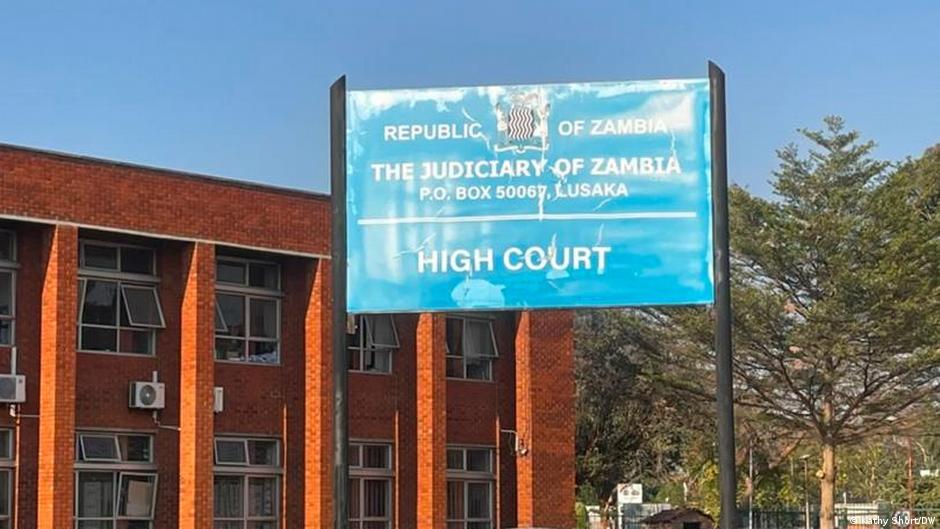
This legal challenge emerges against a troubling backdrop: Zambia’s courts have been entirely shuttered since August 24, with officials citing unspecified “security concerns.”
The timing of these closures has sparked significant concern regarding opposition access to judicial election safeguards during this pivotal phase of the post-election period, particularly as scattered reports of irregularities continue to emerge.
Election dispute continues to unfold
The Law Association of Zambia (LAZ) has urgently called for the restoration of court access and the implementation of alternative arrangements to address pressing legal matters.
LAZ President Arnold Kaluba emphasized that security protocols must not compromise access to justice or undermine judicial independence.
“Such measures must be lawful, proportionate and implemented in a manner that preserves access to justice and respects the constitutional independence and autonomy of the judiciary,” he asserted.
Similarly, the Human Rights Commission of Zambia has voiced apprehensions. Its chairperson, Pamela Towela Sambo, cautioned that disruptions to judicial functions could jeopardize fundamental rights, including access to fair trials and legal remedies.
“[If] the right to a fair trial is delayed, there is increased risk of arbitrary detentions, while access to remedies is effectively blocked,” she remarked.
‘Irregular’ submission of petition documents
The election dispute has now taken an unexpected turn: Zambia’s Chief Justice Mumba Malila acknowledged on August 25 that he had received documents purporting to be a presidential election petition via his personal email address.
Malila characterized the submission method as “highly irregular,” particularly given the current restrictions preventing normal legal procedures. He stated that he nonetheless forwarded the documents to the Constitutional Court to assess whether they constituted a formally filed petition.
This distinction carries significant weight: the mere receipt of these documents does not confirm that a presidential election petition has been officially lodged.
This development coincides with the continued court closures, intensifying concerns about how election-related legal challenges can be properly filed and adjudicated.
Our time is now: Zambia’s youth running in elections
To view this video please enable JavaScript, and consider upgrading to a web browser that supports HTML5 video
Government continues to cite security concerns for court closure
Meanwhile, the presidency has dismissed claims that the court closures were designed to obstruct or interfere with challenges to the election results.
Hichilema’s chief communications specialist, Clayson Hamasaka, described the security measures as “intelligence-led and preventive,” noting that they extended across multiple government institutions beyond the courts and were intended to safeguard officials, institutions, and the general public.
He further maintained that individuals with legitimate grievances retain the right to pursue legal remedies.
However, during the election itself, voting had already been suspended at certain ballot boxes due to reports of violence. Additionally, questions regarding media independence had arisen in the lead-up to the vote.
Concerns regarding access to justice and public trust persist, particularly given these circumstances. Maurice Nyambe, Zambia’s Executive Director of Transparency International, emphasized that the country requires robust institutions capable of resolving political disputes.
“At this stage of the electoral process, Zambia does not need fewer avenues for resolving political disputes. It needs stronger, accessible, and trusted institutions through which those disputes can be peacefully resolved.”
Political commentator and human rights activist Laura Miti similarly questioned the absence of a comprehensive public explanation for the closures, writing on Facebook: “if you are going to unprecedentedly close the courts, you owe the nation an explanation beyond a blanket — there is a security threat.”
A test beyond the ballot box
Zambia has historically been regarded as one of Southern Africa’s more stable multiparty democracies, earning a reputation for political stability and peaceful transfers of power.
However, the current dispute arises at a moment when democratic institutions throughout the region are facing heightened scrutiny over contested elections and political transitions. Consequently, the resolution of this situation will likely attract attention well beyond Zambia and the southern African region.
For Zambians, the stakes extend beyond the rivalry between Hichilema and Mundubile; the fundamental question concerns how political disagreements can be peacefully resolved through independent, accessible, and trusted institutions.
This sentiment is perhaps most poignantly captured on the streets of Lusaka, where a resident simply told DW: “We are anxious and afraid because we do not know the truth about what is happening.”
Can Zambia trust election referee?
To view this video please enable JavaScript, and consider upgrading to a web browser that supports HTML5 video
Edited by: Sertan Sanderson
Also Read
- Extreme Heat Threatens Belgium’s Iconic Fry Industry as Potato Harvests Shrink
- Israel exports 6 times more arms per capita than US, 19 times more than Russia
- CIA Director Ratcliffe Meets Russian Intelligence in Moscow; Kremlin Confirms No Meeting with Putin
- Boston Scientific Cyberattack Halts Global Operations and Delays Shipments


