






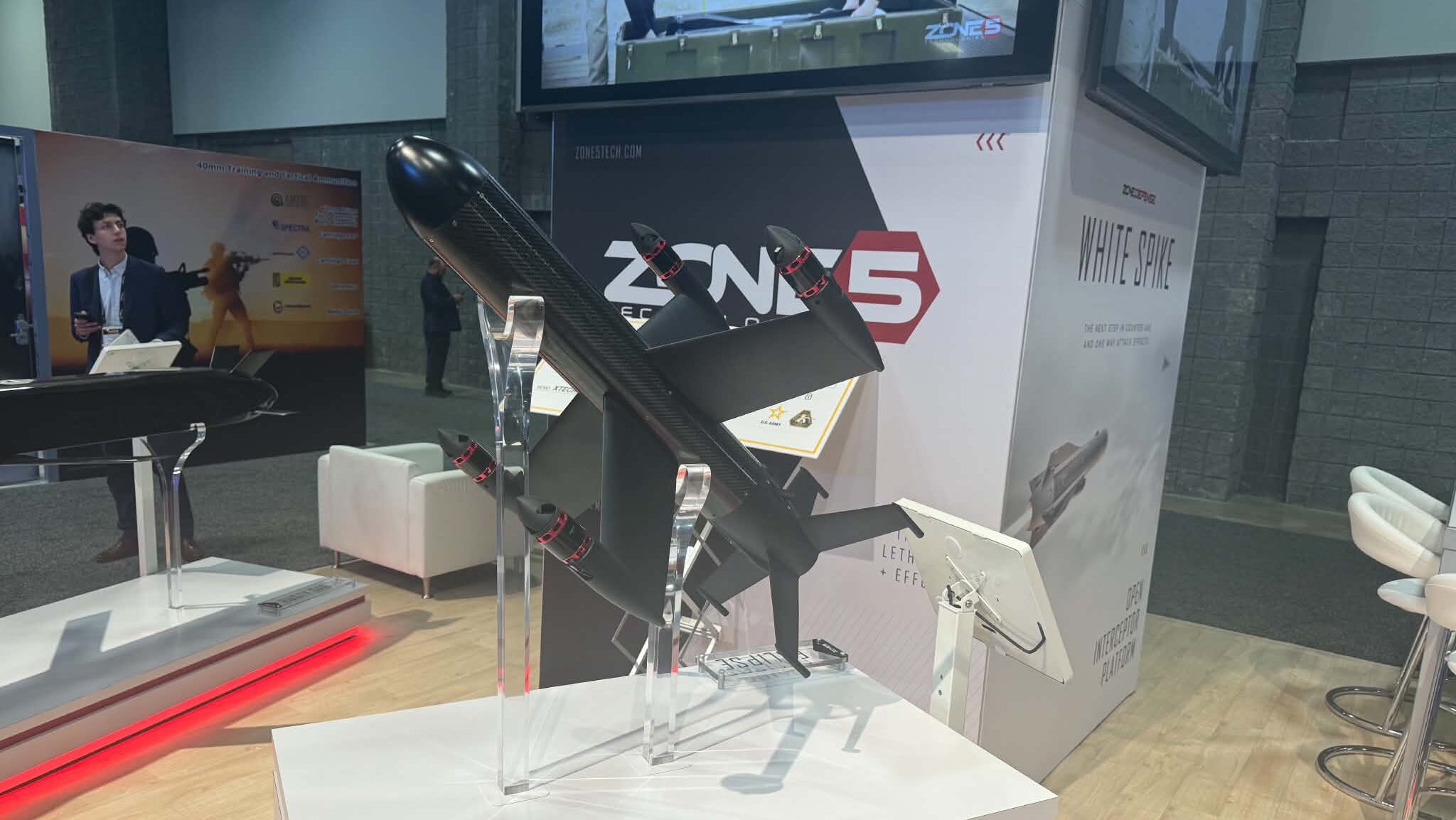
WASHINGTON — Defense startup Zone 5 is expanding into the growing counter-drone technology sector with the unveiling of a new interceptor named “Eclipse,” designed to counter high-speed, unmanned aerial threats.
Unveiled publicly for the first time at the Association of the United States Army conference in Washington, the Eclipse represents a cost-effective and reusable solution to neutralize sophisticated drones, according to Zone 5 CEO Thomas Akers.
Akers noted that the counter-drone market is increasingly focused on smaller interceptors, which often struggle against more advanced drone capabilities. He believes Zone 5 has carved out a unique position with a larger, modular interceptor that can adapt to diverse mission requirements.
Despite its size—approximately 39 inches in length and 32 inches in width—the Eclipse showcased at the company’s booth demonstrates versatility in payload configurations. According to Akers, the system is capable of carrying either a high-powered microwave to disable drone electronics or a kinetic warhead to physically destroy targets. Company specifications indicate the Eclipse can perform vertical takeoffs and landings, exceed speeds of 200 knots (230 mph), and travel distances beyond 30 miles.
The Eclipse program remains in development, with Akers estimating another six months before entering production. Initially targeting the U.S. market, the company plans to scale manufacturing to hundreds of units monthly, though pricing details were not disclosed due to variable payload options influencing final costs.
Akers emphasized that Eclipse complements Zone 5’s layered defense portfolio, which includes the drone-mounted firearm system Paladin and the White Spike anti-aircraft missile. The company’s expanding lineup also features the cruise missile Rusty Dagger currently being exported to Ukraine and under consideration by the Pentagon.
Zone 5’s growing capabilities caught the attention of Norwegian defense contractor Kongsberg, which acquired the company earlier this year. Akers stated the acquisition provides an “immediate step change” in accessing international resources and supply chains.
While Zone 5 continues to operate independently within the U.S., the company now presents a unified front under the Kongsberg brand globally. This partnership expands vendor relationships and enhances supply chain resilience beyond domestic sources.
Moving forward, Akers confirmed Zone 5 will maintain focus on developing affordable cruise missiles and systems capable of defeating Group 1-4 drones. A key objective involves scaling annual missile production to thousands of units while enhancing product effectiveness through Kongsberg’s technological expertise.
In addition to ongoing projects such as a Navy maritime strike contract and a Pentagon-wide containerized munitions initiative, Zone 5 is well-positioned for the Air Force’s Family of Affordable Mass Missiles (FAMM) program. Valued at potentially tens of thousands of units over multiple years, FAMM includes Zone 5 alongside other defense innovators like Anduril and CoAspire.
However, uncertainty surrounds future procurement timelines. Following initial funding from the One Big Beautiful Bill for FY2026, the Air Force had planned for additional budget reconciliation measures to support FY27 purchases—a plan now complicated by doubts over further legislative action.
Akers warned that delays or shortfalls in appropriations could have ripple effects across the defense industry. “If multi-year procurement doesn’t proceed as scheduled, that sends a clear signal to industry,” he said. “Appropriation shortfalls mean there will be a recoil, and it won’t be limited to just FAMM.”
Also Read
- Kenya Identifies Third Ebola Case Linked to Initial Patient Cluster
- The Austin Powers steamroller: How to trade CoreWeave’s slow moving crisis
- Zelenskyy Warns NATO of Russia’s Expanding Ambitions, Takes Swipe at Trump at EU Summit
- Standardizing Language and Data Is Crucial for Responsible AI in Defense


