



Countries bordering the Persian Gulf are once again caught in the crossfire between the United States and Iran.
At the NATO summit in Ankara on Wednesday, President Donald Trump declared that the interim agreement to halt hostilities with Iran had collapsed. Iran’s chief negotiator, Mohammad Bagher Ghalibaf, countered that the accord—signed in mid‑June as a memorandum of understanding—had suffered serious breaches.
Overnight, the United States launched airstrikes on targets inside Iran, prompting Tehran to strike 85 U.S. military installations in Bahrain and Kuwait. Nonetheless, every Gulf state stands to lose if the conflict intensifies.
US, Iran exchange strikes for second night
To view this video please enable JavaScript, and consider upgrading to a web browser that supports HTML5 video
Bahrain
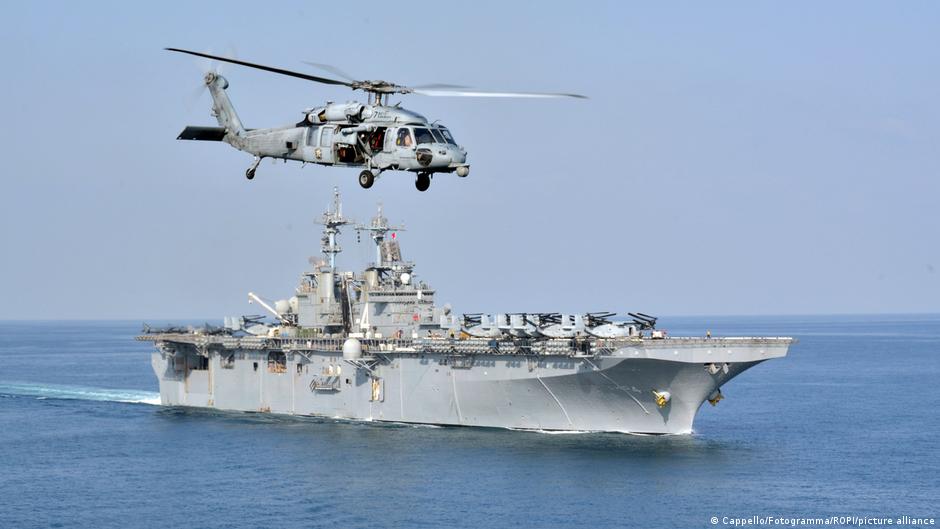
Bahrain hosts a major U.S. Navy base, and Iranian strikes have directly hit the island nation.
Because Bahrain is one of the smaller Gulf states, its military facilities lie close to homes and businesses; even limited fighting can disrupt daily life.
Politically, Bahrain occupies a delicate spot. Like its neighbors, it is a monarchy that suppresses most political dissent, yet its ruling family is Sunni while the majority of the population is Shiite.
Iran, a Shiite theocracy, could exacerbate internal tensions if hostilities continue. Bahraini authorities have detained hundreds of individuals accused of posting anti‑war sentiments online, expressing sympathy for Iran, participating in protests, or allegedly spying for Tehran.
Kuwait
Kuwait accommodates the largest concentration of U.S. bases in the Middle East, including two airfields and roughly 13,500 personnel—many of them contractors—making it a prime target for Iranian strikes.
Historically, Kuwait pursued a cautious foreign policy, often acting as a mediator and emphasizing non‑involvement in regional conflicts, a stance shaped by Iraq’s 1990 invasion. However, Iran’s attacks on Kuwaiti soil due to the U.S. presence may shift this approach. Observers note that Kuwaiti protests against Iranian strikes have grown more vocal.
Saudi Arabia
Although Iranian officials warn that any nation hosting U.S. troops is at risk, Tehran has not yet struck Saudi Arabia during this round of fighting. The kingdom houses a major U.S. air force base.
After years of rivalry with Iran for regional influence, Saudi Arabia insists that diplomacy is the only way for Gulf states to coexist peacefully.
The kingdom would rather concentrate on its Vision 2030 economic agenda than become embroiled in a war it says it never sought.
Saudi leaders aim to prevent the conflict from spreading and to safeguard vital oil infrastructure, experts say. Iran’s intermittent closure of the Strait of Hormuz has forced Riyadh to reroute some of its crucial oil exports via an alternative pipeline to the Red Sea.
Generally, Saudi officials have tried to maintain a balanced stance, engaging directly with both Washington and Tehran. At one point, Saudi Arabia denied the United States use of its airspace to bomb Iran, though later reports suggested the Saudis may have conducted their own undisclosed strikes against Iranian targets.
Can Gulf nations close the gap between Iran and the US?
To view this video please enable JavaScript, and consider upgrading to a web browser that supports HTML5 video
United Arab Emirates
The United Arab Emirates also hosts a significant U.S. air base. Iran has previously targeted the Emirates but has not done so this week.
Nevertheless, renewed hostilities in the Middle East could further tarnish the reputation of hubs such as Abu Dhabi and Dubai as financial and commercial centers—a reputation that underpins the Emirati economy’s shift away from oil dependence.
The UAE has also managed to divert some of its oil exports from the Strait of Hormuz through an inland pipeline, yet a prolonged conflict could jeopardize that alternative route.
Qatar
Qatar is home to Al Udeid air base, the largest U.S. military installation in the Middle East. At the same time, Doha maintains relatively good relations with Tehran, with which it shares a vast natural‑gas field. Iran has not struck Qatar directly this week, although its earlier attack on a Qatari vessel at sea helped spark the current round of bombing.
Some analysts describe Qatari diplomats as among the best in the world. They have frequently served as mediators in the U.S.–Iran dispute, including in drafting the memorandum of understanding that first halted hostilities in June.
Oman
Oman, which does not host a major U.S. military facility, has maintained amicable ties with both Washington and Tehran and has acted as a conduit for back‑channel diplomacy between the two governments. Like Qatar, the avenues Oman can offer for further talks may prove valuable in the coming weeks.
Edited by: M Gagnon
Also Read
- Oil Prices Surge Following Iran’s Tanker Attacks in Hormuz Strait
- Tech Trade Rotation: Software Stocks Outperform Semiconductors as AI Narrative Shifts]
- Trump Confronts NATO Allies at Ankara Summit Over Greenland, Iran, and Spain
- Dignified Commemoration: Over 5,000 Participants Join Bosnian Peace March Honoring Srebrenica Victims