







Pope Leo visiting Augustinian Missionary Centre during his apostolic visit to Algeria. PHOTO/FILE/VATICAN.
Catholic congregations worldwide are observing the Solemnity of All Saints today, with the Mass readings and Gospel calling the faithful to pursue holiness, practice humility, and stay devoted to God despite the pressures of daily life.
Central to today’s observance is Jesus Christ’s teaching on the Beatitudes, which presents a radical vision of blessedness. Rather than linking happiness to wealth, power, fame, or success, Jesus declares that the poor in spirit, those who mourn, the meek, the merciful, and peacemakers are the ones who receive God’s favor.
The Beatitudes are eight blessings taught by Jesus Christ during his famous Sermon on the Mount, recorded in the Gospel of Matthew 5:1–12. The word Beatitudes comes from a Latin word meaning blessings or supreme happiness.
Delivered from a mountainside to his disciples and the gathered crowds, as recorded in Matthew 5:1–12, this teaching overturns traditional notions of success and happiness. It holds up compassion, integrity, forgiveness, and faithfulness as the cornerstones of a life that pleases God.
Jesus promises that the poor in spirit will inherit the Kingdom of Heaven, that those who mourn will be comforted, and that the meek will inherit the earth. He also assures those who hunger and thirst for righteousness that they will be satisfied, that the merciful will receive mercy, and that the pure in heart will see God.
His message also extends to peacemakers, who will be called children of God, and to those persecuted for the sake of righteousness. Jesus urges his followers not to abandon their faith when they are insulted, mistreated, or falsely accused on his account, promising them a great reward in heaven.
The first reading, from the Book of Revelation (7:2-4, 9-14), offers a powerful vision of the destiny awaiting God’s faithful people. John describes an extraordinary multitude standing before God’s throne and the Lamb, dressed in white robes and holding palm branches.
This multitude comes from every nation, race, people, and language, showing that God’s salvation is not limited to any single nationality, culture, or community. Their unified proclamation of salvation through God and the Lamb celebrates the triumph of faith over suffering, persecution, and death.
An elder explains that these are individuals who have endured great tribulation and have washed their robes white in the blood of the Lamb. The imagery points to the redemptive sacrifice of Jesus Christ and to the hope that those who remain steadfast will share in God’s eternal glory.
The second reading, taken from the First Letter of John (3:1–3), reinforces this message by reminding Christians of their identity as children of God.
It describes God’s love as a gift that gives believers a new identity and a future filled with hope. Although the full reality of what they will become has not yet been revealed, Christians are promised that they will ultimately be like God when they see him face to face.
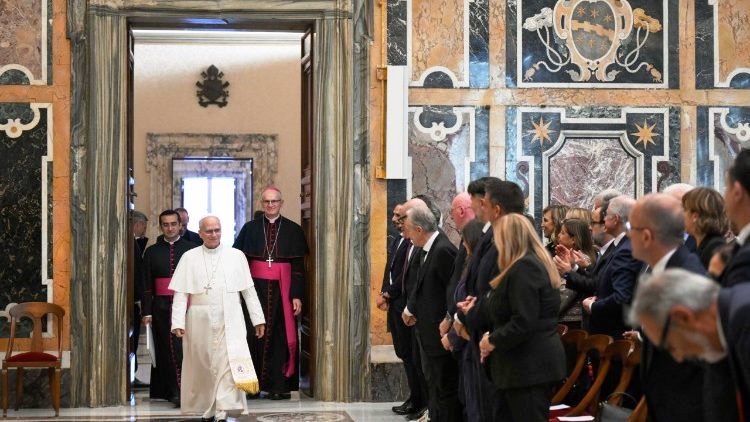

Pope Leo at a function at The Vatican. PHOTO/VATICAN.
The reading also calls believers to pursue purity, reflecting God’s holiness through their actions, relationships, and everyday choices.
Together, the three readings frame All Saints’ Day as more than a commemoration of holy men and women from the past. They present a challenge to Christians everywhere to become living examples of faith, love, justice, mercy, and peace.
Reflecting on the significance of the Beatitudes, Pope Leo XIV, in his homily on 1 November 2025, described them as a new interpretation of reality and the central teaching of Jesus.
The Pope observed that qualities the world often regards as weakness—poverty of spirit, mourning, humility, and peacemaking—take on deeper meaning when viewed through the lens of God’s Kingdom. He presented Jesus as the supreme teacher whose life offers the model by which Christians should understand and navigate the world.
Today’s celebrations therefore carry a powerful message: holiness is not reserved for a select few, nor is it achieved through extraordinary public recognition. It begins with ordinary people choosing to live according to Christ’s teachings.
As Catholics celebrate All Saints’ Day, the invitation is clear: to become instruments of God’s love, stand with the suffering, forgive those who wrong them, defend justice and pursue peace.
Ultimately, the readings remind the faithful that sainthood is not merely about being remembered for a holy life, but about living faithfully today in preparation for eternal life with God.
Also Read
- Heidi Klum Debuts Macabre Severed Hand Costume at 25th Annual Halloween Bash
- Avelo Airlines CEO Highlights Hard Work, Authenticity, and Vulnerability as Cornerstones of Success
- Midterm Elections Poised to Reshape Municipal Bond Landscape: Key Investment Considerations
- German Gen Z Protests Escalate into Urban Riots with Widespread Looting


