AUD/USD has risen to its highest level in four weeks, yet the advance lacks a solid domestic foundation. The Australian dollar has been lifted by a supportive global backdrop—risk appetite improving across Asia, a broad weakening of the US dollar, and a surge in copper prices amid worsening supply disruptions in Chile. Additional buoyancy came from New Zealand, where stronger‑than‑expected inflation data pushed the kiwi higher and added momentum to the wider antipodean complex.
These tailwinds are largely external. Whether the Aussie can sustain its gains will largely hinge on Thursday’s Australian labor‑market report. Employment has shown little net movement over the past two months, posting a –40.7 k decline in April followed by a 40.3 k rebound in May, raising concerns that tighter monetary policy, higher energy costs, and geopolitical uncertainty are beginning to curb hiring. Consensus forecasts anticipate a 15 k increase in June employment, with the unemployment rate expected to hold steady at 4.4 %.
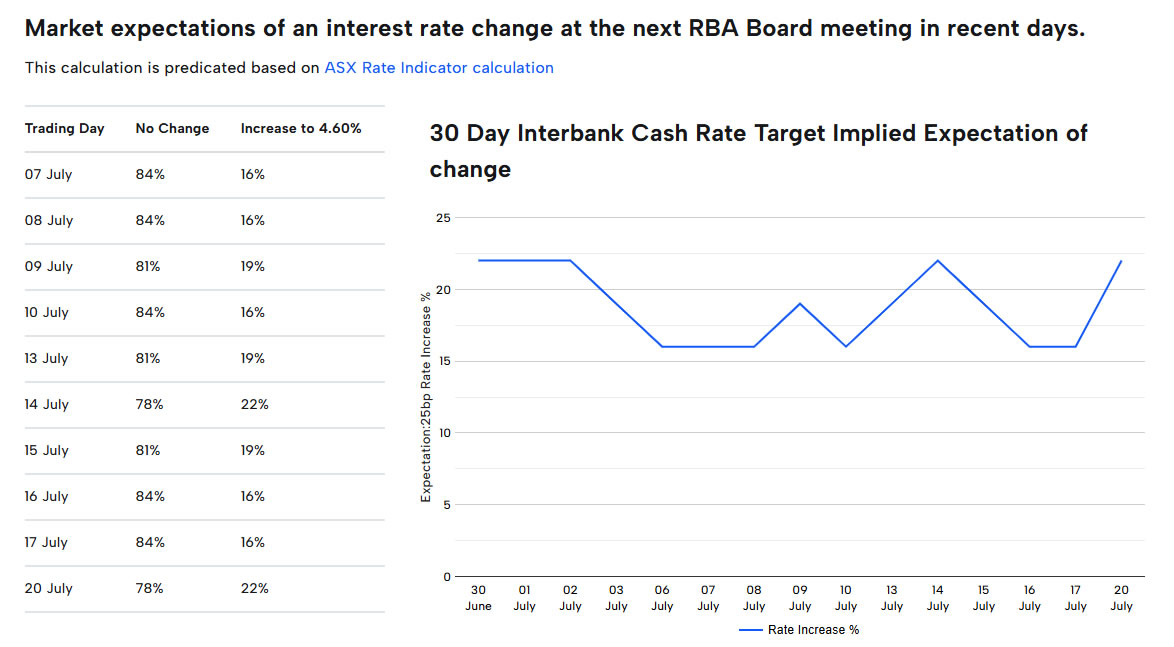

A weaker‑than‑expected report would reinforce the view that policy tightening is gaining traction and further diminish expectations for an August rate hike. Conversely, another solid employment gain would underscore economic resilience and revive the debate over additional tightening.
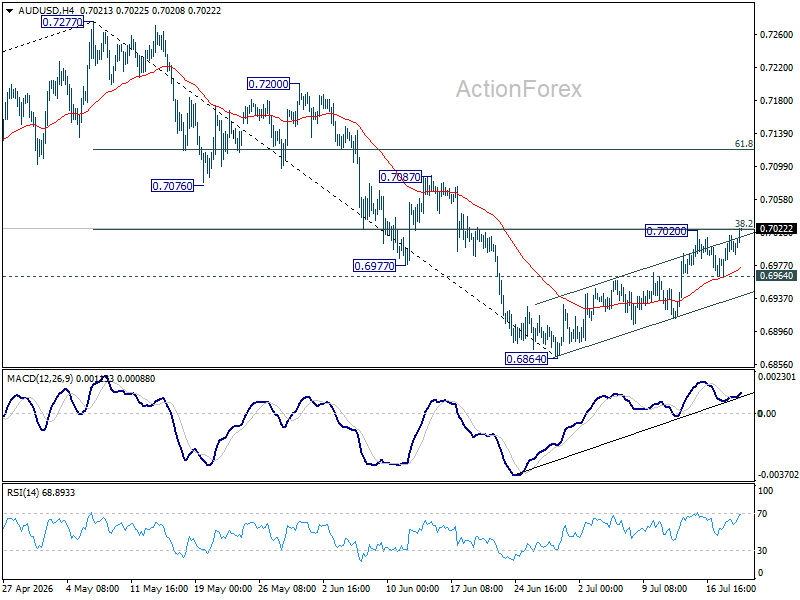
Technically, AUD/USD’s break above the 0.7020 interim high signals that the rebound from 0.6864 is regaining momentum. A decisive move past the 38.2 % Fibonacci retracement of the 0.7277‑to‑0.6864 decline at 0.7022 would suggest the entire drop from 0.7277 is complete, opening the path toward the 61.8 % retracement near 0.7119 and potentially higher.
However, a rejection at 0.7022 followed by a breach of the 0.6964 support level would indicate that the rebound has run its course as a corrective move, setting the stage for a resumption of the decline from 0.7277 toward the 0.6864 low.