



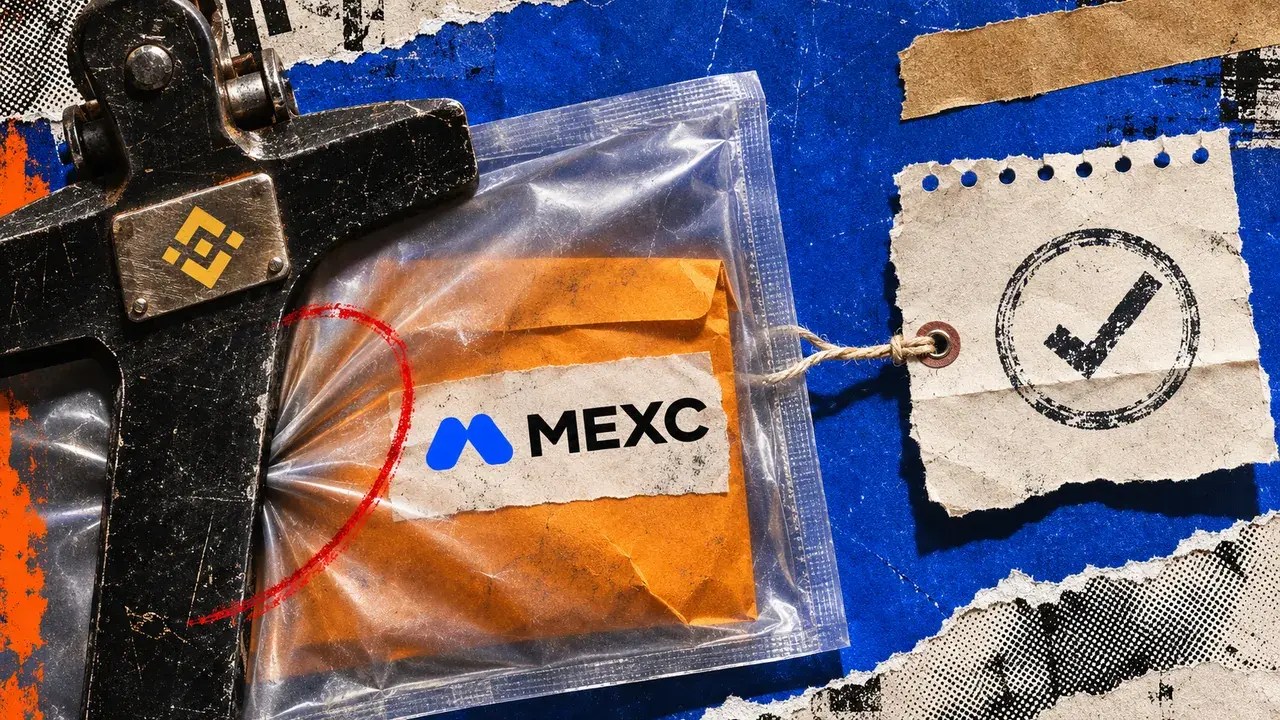
Sending crypto from MEXC to Binance does not guarantee immediate access. A transaction can clear on the blockchain while Binance still blocks the deposit from being traded once the user logs in.
Binance has informed customers that it reviews incoming MEXC deposits before crediting them. In the opposite direction, Binance has stated it will decline outgoing transfers to MEXC entirely.
A U.S. order prohibiting covered financial institutions from sending or receiving funds involving MEXC takes effect December 10. Binance announced its own policy a month earlier, citing the Treasury Department’s findings.
MEXC can continue matching buy and sell orders in the markets it still operates, while one of the world’s largest exchanges has already warned traders that it will restrict transfers between the two platforms.
Treasury Targets MEXC Fund Transfers
On November 6, the Treasury’s Financial Crimes Enforcement Network (FinCEN) determined that MEXC is a foreign financial institution of primary money-laundering concern tied to Russian illicit finance.
Acting under Section 9714 of the Combating Russian Money Laundering Act, the agency issued a Federal Register order banning transfers to and from MEXC through covered U.S. financial institutions.
The ban has no scheduled expiration and extends to MEXC’s foreign operations and successor entities. It covers both cryptocurrency and traditional currency, with Bitcoin explicitly named.
Foreign financial firms can process dollar payments through correspondent banking relationships with U.S. banks.
FinCEN considered restricting those accounts but determined that approach would leave other transfer channels untouched. It instead chose to block transfers passing through covered institutions, even when MEXC holds no account with the institution processing the payment.
Exchanges and payment providers outside that group may implement their own restrictions, though those policies require separate confirmation.
FinCEN estimates MEXC processed at least $16.7 billion in likely illicit activity over the five years through May 2026. The figures include roughly $129 million MEXC allegedly facilitated directly with Garantex after the Russian crypto exchange was sanctioned, and about $4.1 million involving successor Grinex after it was also sanctioned.
FinCEN also cites transfers linked to Iran and North Korea, as well as cybercrime proceeds. The agency acknowledges that legitimate customers use MEXC, but says the identified financial risks justify restricting transfers involving the exchange.
In a public response on November 7, MEXC said it was operating normally and that customer assets remained secure. The exchange said it launched an independent review of its anti-money-laundering and sanctions controls and plans to engage with regulators.
Reports indicated net outflows from tracked MEXC wallets following the announcement.
When Other Exchanges Restrict MEXC Transfers
Binance can decline a withdrawal because it controls the account from which the funds would leave.
When cryptocurrency arrives from another platform, however, the network can process the transaction without the recipient’s permission.
FinCEN acknowledges this limitation in its order. Binance’s notice shows what happens once funds arrive: the exchange can withhold credit while reviewing the transfer and potentially restrict or close the customer’s Binance account.
Funds remaining at MEXC stay in that account unless the customer moves them separately.
Blockchain settlement does not force a receiving exchange to credit a customer balance.
Binance describes platform policy, not a documented individual incident. FinCEN binds covered US financial institutions. A confirmed blockchain transaction does not guarantee immediate account credit; account restrictions are possible, not certain.
Business risk for exchanges grows more serious if customers and professional market makers—the firms that maintain available buy and sell orders—lose additional ways to fund accounts or move proceeds.
Moving balances between exchanges is part of how those firms keep funds available where needed.
MEXC says changes at third-party issuers ended its Asia-Pacific card program on November 11 and its Global Card on November 18.
Global Card customers can no longer use their cards for purchases. MEXC says it will credit remaining card balances to customers’ spot accounts within three business days of a November 21 snapshot.
This leaves customers with an exchange balance rather than a working payment card, since spending it requires a card issuer.
In France, MEXC announced its wind-down in October, before the Treasury acted. Its schedule halted euro deposits and withdrawals for French accounts on November 18, while crypto withdrawals remain available until March 5, 2027.
Trading restrictions begin in stages, and French accounts enter withdrawal-only mode on January 25.
On November 20, DefiLlama showed more than $1 billion in MEXC spot trading over 24 hours. That figure measures platform-wide trading, including customers outside France, and says little about whether an individual French account can accept deposits, place new orders, or withdraw remaining funds.
After December 10, the practical reach of FinCEN’s order will depend partly on which banks and exchanges handle a trader’s money and what restrictions those firms impose.
Binance has already told customers how it intends to handle MEXC transfers. Other firms may take different approaches, which traders will discover when they attempt to withdraw a balance, deposit it elsewhere, or spend it through a payment service.
Also Read
- USD/CAD Weekly Outlook: Neutral Bias as Pair Consolidates Near Key Resistance
- Dollar Rate in Pakistan Today, Saturday 21 November: NBP Rate Rs276.90, Open Market Rs280.00
- Inside Variational’s $1.5 Billion Derivatives Ambition — and the Counterparty Risk Traders Can’t Dodge
- Sky’s stUSDS Lending Vault Yields Nearly 30%, but 99.96% of Assets Are Unavailable for Immediate Withdrawal