







Bitcoin breached the $85,000 mark as extensive short liquidations fueled the digital asset’s most powerful rally since January.
According to CryptoSlate, BTC climbed more than 5% in 24 hours to $85,193, extending its 35-day gain to roughly 29%. The price briefly eased to $84,545 before breaking through resistance levels that had capped its recovery for much of the year.
Bearish traders bore the brunt of the move. CoinGlass reported approximately $750.5 million in leveraged crypto positions liquidated within 24 hours, with over $648 million—about 86%—coming from short positions. Around 137,386 traders were liquidated.
Bitcoin accounted for roughly $360 million of the total, while Ethereum saw nearly $171 million in liquidations. The largest single loss was an $11.29 million BTC-USDT position on Binance.
The liquidation wave coincided with aggressive buying in Bitcoin derivatives markets. CryptoQuant data showed Binance net taker volume surging from about $11 million to $618 million within an hour as European trading began, indicating a sharp shift toward buyers.


CryptoQuant linked the shift partly to improving geopolitical sentiment, with investors reacting to potential US-Iran diplomatic progress. Declining oil prices as markets priced in talks also supported a broader risk-on environment despite regional tensions.
Elevated leverage further amplified BTC’s moves. Bitcoin open interest stood at roughly $28.83 billion, near its May record, leaving a large pool of derivatives positions vulnerable to additional volatility.
This positioning could continue to aid Bitcoin if prices rise and more shorts are forced to cover. Conversely, it leaves the market exposed to a sharper reversal.
If Bitcoin loses momentum, leveraged long positions could unwind rapidly, turning the same mechanics that accelerated the rally into selling pressure.
Bitcoin clears long-term bear-market markers
Breaking above $85,000 also pushed Bitcoin through technical levels traders had monitored for months as signs the downturn was ending.
Bitcoin closed above its 50-week moving average last week for the first time since November 2025, ending a 45-week stretch below the threshold. Galaxy Digital Head of Firmwide Research Alex Thorn noted that previous recoveries of this measure have often confirmed that Bitcoin had already established its bear-market low.


The signal has not been flawless. Galaxy research shows Bitcoin has previously reclaimed the 50-week average only to fall back below it, including during the 2021-2022 bear market.
CryptoQuant CEO Ki Young Ju highlighted another closely watched level after Bitcoin moved back above its 365-day moving average near $83,000. He said holding that threshold could encourage momentum traders and institutional investors who had remained sidelined during the decline to return.
In light of this, Bitcoin analyst Joe Consorti argued the market was tentatively entering a “bull market.”
However, the breakout’s strength has yet to produce a comparable increase in underlying network activity.
Blockchain analysis firm Santiment said new and active Bitcoin addresses remained near median levels between July 24 and September 20, even as the price broke higher. Social activity rose to 1.23 times its baseline and transactions over $100,000 climbed to 1.18 times normal levels, but neither reached a two-month high.

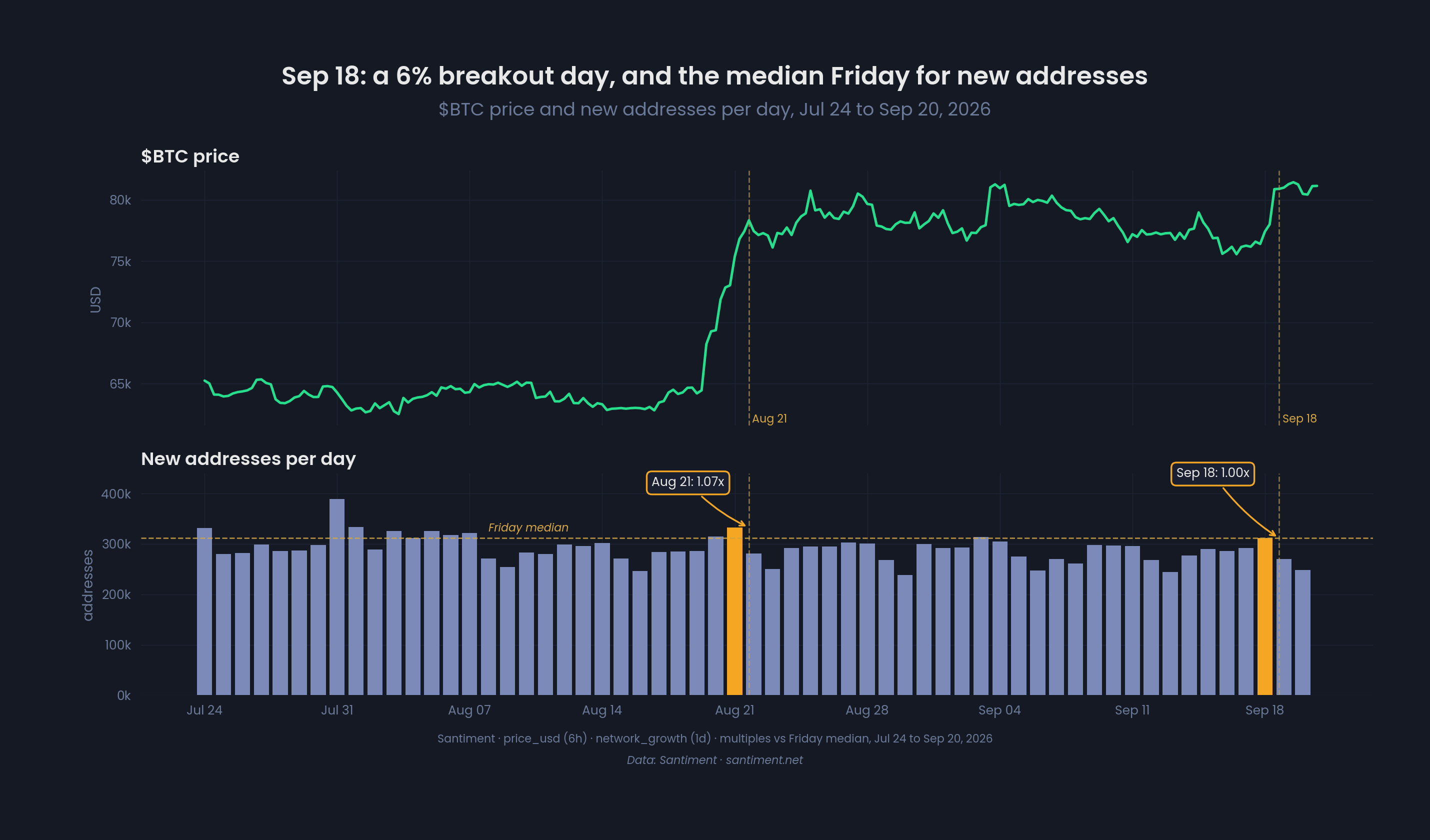
The contrast was visible against Bitcoin’s August 21 rally, when the asset gained nearly 7%. That move generated more wallet activity despite producing a less significant technical breakout, with new addresses reaching 1.07 times baseline and active addresses climbing to 1.14 times.
Santiment noted that 10 weekdays over the past two months produced more new wallets than the latest September 18 breakout session.
Derivatives activity has been much stronger. Open interest jumped about 9% on September 18 and has remained elevated, reinforcing the gap between leveraged market participation and activity on the Bitcoin network itself.
This divergence makes the rally’s durability increasingly dependent on whether fresh spot demand emerges. Forced buying from short liquidations can propel Bitcoin through resistance, but its impact diminishes as bearish positions are cleared. Holding above $85,000 will require new capital to replace traders forced to buy back losing bets.


