




- A designer collaborating with NASA and agricultural specialists has developed a coffee that simulates the flavor of beans grown on Mars.
- The “Brew_Lab” project was created by MA student Sarah Ali.
- The initiative examines how climate change may reshape the availability and composition of global coffee supplies.
In a collaboration with experts from NASA and the UK’s Royal Botanical Society, industrial designer Sarah Ali has produced a coffee designed to taste as if it were grown on Mars a century from now.
The “Mars 2126” blend—which utilizes an “edible scent” added to standard coffee—is the centerpiece of Brew_Lab. This project features a futuristic vending machine capable of brewing three distinct coffees, each representing a different point in the future based on current climate projections.
Ali, 35, developed the project as the culmination of her MA in Material Futures at Central Saint Martins, University of the Arts London. The work was showcased at Milan Design Week in April 2026, and remains on display at the CSM degree show until June 21.
“This is very much a climate futures project,” Ali told TechRadar. “The concept of Mars stems from the idea that if we continue on our current path, Earth may be unable to sustain our essential needs in 100 years.”
“It is speculative,” she added, “but I found it fascinating that NASA is already researching the nature of food and drink on Mars. There is significant investment in that area.”
The Arabica Successors
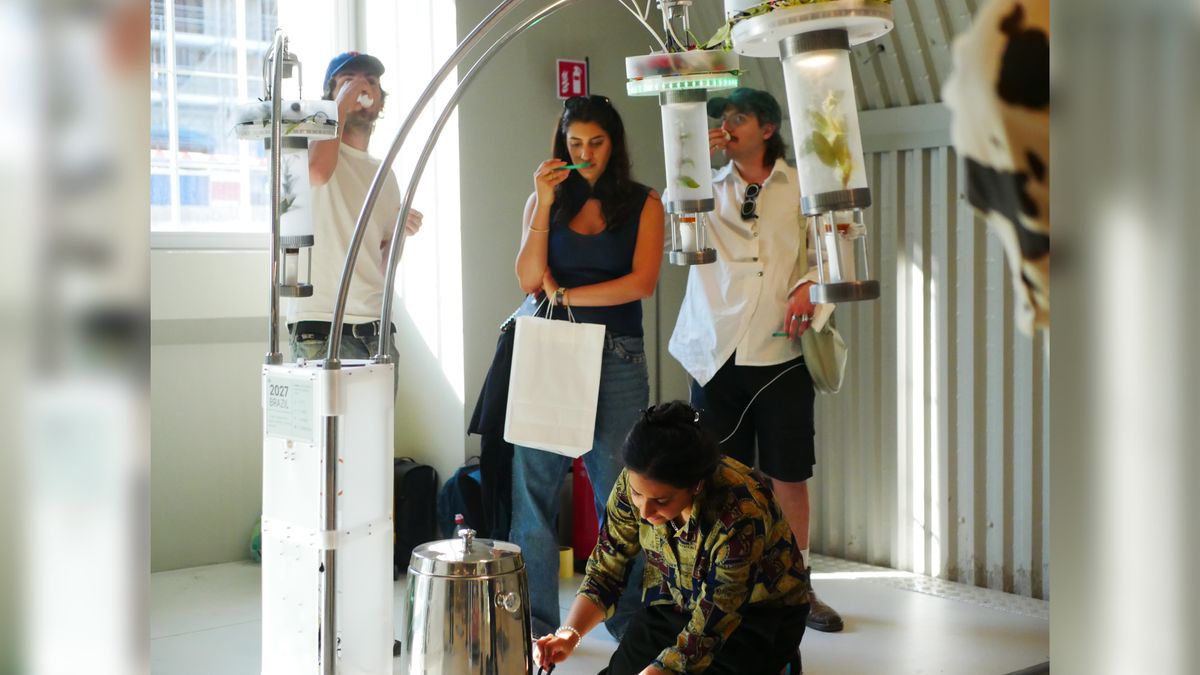
Beyond the Martian experience, the project offers a taste of coffee predicted for Sierra Leone in 2080. This version utilizes the revived *stenophylla* species, a bean far more resilient to climate change than the industry-standard Arabica.
The third flavor, “Brazil 2027,” highlights the fragility of the Arabica bean, citing University of Florida data which suggests crop yields could plummet by as much as 80% by 2050.
To create these specific scent profiles, Ali employed machine learning models integrated with data from Dr. Gioia Massa of NASA and Dr. Aaron Davis of Kew Gardens, a leading expert in coffee botany.
“Dr. Davis has studied 127 different coffee species, yet only 7 to 12 are likely to survive into the future,” Ali explained. The Martian brew utilizes hardy *racemosa* beans; Ali noted that NASA’s agricultural research helped her account for how lower gravity influences taste perception.
“I chose Mars because it represents an extreme scenario,” Ali said. “Extreme scenarios allow us to truly understand the current trajectory and think differently about how to avoid or prepare for such a future.”
While a “Martian” setting on home coffee machines remains a distant possibility, Brew_Lab provides a provocative glimpse into the evolution of one of the world’s favorite beverages.

Also Read
- Ballista Spider’s Aggressive Ant Trap Captured in Queensland Rainforests
- Genetic Code Expansion with Machine Learning Can Bridge the Lab to Market Gap
- Anthropic gets US government’s permission to redeploy its Mythos cybersecurity AI model
- How to watch New Zealand vs Belgium: Free Streams & TV Channels for FIFA World Cup 2026