






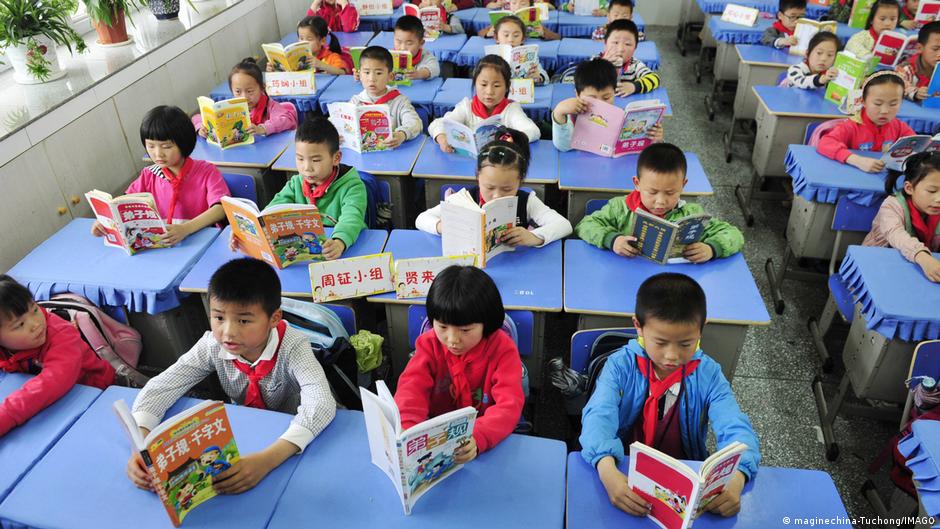
English remains the dominant global language, with one in five people worldwide actively using it. However, in China, mathematician Tang Jiafeng challenges its mandatory status as a graded core subject in schools, advocating for its removal from elementary, secondary, and higher education. He argues that China’s emphasis on English surpasses any other nation and criticizes the practice of introducing English before students master their native language. “English is just a tool—it’s sufficient to use it,” Tang states, urging an end to the reverence for Western cultural emulation. This stance gained traction online, sparking debates about the relevance of English in China’s educational system.
China: Studying instead of Playing
To view this video please enable JavaScript, and consider upgrading to a web browser that supports HTML5 video
English as a Required Subject since Third Grade
In China, English is a graded core subject starting in third grade and is standardized on par with Chinese and mathematics in critical exams, including the high school graduation test. Tang questions the allocation of resources, noting English’s limited relevance to most students’ future careers. His academic credibility grew after several of his students achieved full scores on state math exams, including six students in a single 2011 class.
AI Translation Challenges Traditional Teaching
Tang’s critique resonated widely online, with many questioning the need for intensive English study when AI tools can translate content instantly. Some propose adjusting scoring systems, such as reducing the high school exam’s English score from 150 to 120 points. A related image shows students preparing for the national high school exam in Guizhou, highlighting the rural-urban divide in educational access.
The demand for private tutoring and English proficiency requirements for graduate studies further burden students, potentially deterring STEM talent. Critics warn that reducing English instruction could undermine China’s global academic competitiveness. Hu Xijin, former editor-in-chief of the Global Times, counters that English skills are vital for global citizenship and rural students’ equitable access to international knowledge. He cautions against politicizing the debate between foreign languages and Chinese cultural heritage.
Why Mandarin Chinese courses are growing in African schools
To view this video please enable JavaScript, and consider upgrading to a web browser that supports HTML5 video
Shift in Language Education Priorities
Chinese universities are adapting by integrating English with specialized fields like law and technology. The trend mirrors historical educational reforms, such as the Qing Dynasty’s Self-Strengthening Movement, which emphasized foreign knowledge acquisition. Today, China’s global influence in areas like AI and robotics underscores the evolving balance between English fluency and indigenous innovation.
Also Read
- Man Charged With Aiding Russian Spies in UK Sabotage Scheme
- Treasury Announces Up to $6 Billion Buyback of Long‑Term Securities Amid Rising Bond Yields
- California’s Non‑Ultra‑Processed Food Seal: An Ambitious Test for Public Health
- Blackstone Inc (BX) Reaches Above 4% Dividend Yield as Share Prices Decline


