






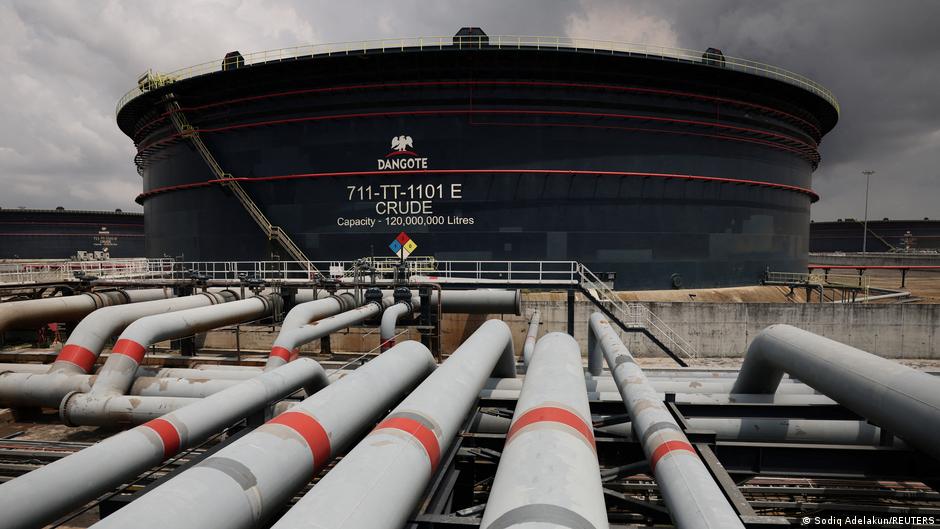
Aliko Dangote, Africa’s wealthiest industrialist, is turning to the Nigerian public to help finance the next phase of growth for his massive oil refinery. Dangote Industries has announced plans to raise approximately $1.6 billion (€1.4 billion) through an initial public offering (IPO).
The proceeds from this public offering are earmarked to support a $14.3 billion expansion project designed to more than double the refinery’s production capacity. Specifically, the initiative aims to boost output from 700,000 barrels per day (bpd) to 1.4 million bpd. The expansion will also incorporate new petrochemical and refining units, which are intended to decrease Nigeria’s dependency on imported petrochemical products and enable the production of various diesel grades.
This ambitious undertaking would establish the facility as one of the largest single-site refining complexes globally. In addition, Dangote’s strategic vision includes the development of a processing plant in Kenya, expanding his industrial footprint from the Atlantic to the Indian Ocean through partnerships with East African governments.
Despite his immense wealth, Dangote is relying on public backing to fuel this expansion. Image: Noushad Thekkayil/NurPhoto/picture alliance
### An African Success Story
Since commencing operations in 2024, the Dangote Petroleum Refinery has begun to transform Nigeria’s fuel landscape. The facility has emerged as one of the few global enterprises to capitalize on ongoing supply disruptions stemming from geopolitical conflicts in the Middle East.
The refinery has become a critical supplier of petroleum and other fuels both domestically and internationally, achieving a milestone by turning Nigeria into a net exporter of refined fuels upon reaching full capacity in early 2026.
Following a $476 million loss throughout 2025, the refinery reported an after-tax profit of $1.82 billion in the first half of 2026. With the company’s trajectory on an upward trend, analysts question why Dangote is seeking public investment at this juncture.
### Why Go Public?
Ayodele Oni, an energy analyst and partner at Bloomfield Law Practice in Lagos, explained that the public offering could be a transformative move, reshaping who benefits from Dangote’s expansion. Oni noted that equity raised from millions of Nigerian and international shareholders would protect the company from relying exclusively on costly dollar-denominated debt, replacing it with permanent Naira capital—a crucial match for a business now generating substantial revenue in the local currency.
Furthermore, transitioning to a publicly listed entity introduces quarterly accountability to shareholders, a level of transparency that Oni believes is essential for securing long-term investments and attracting international partners. He asserted that this strategy establishes a sustainable framework for Dangote, permanently lowering its cost of capital for all subsequent phases of development.
### Why Nigeria’s largest refinery is importing US oil
To view this video please enable JavaScript, and consider upgrading to a web browser that supports HTML5 video
### For ‘the People’
Oni characterized the deal as a fundamental restructuring of risk-bearing and reward-sharing, highlighting “the people” as the primary beneficiaries of the IPO. However, making refinery ownership accessible to ordinary Nigerians does not automatically translate to widespread affordability.
The shares are priced at 525 Naira (€0.34/$0.39) each, with a minimum purchase requirement of just 10 shares out of the 4.1 billion ordinary shares offered. At the signing ceremony in Lagos, Dangote stated that the initiative aims to ensure that “the majority of our drivers, our cooks, our servants, our managers, everybody will have an opportunity to have a stake in the refinery.”
### Nigeria cost-of-living protests turn violent
To view this video please enable JavaScript, and consider upgrading to a web browser that supports HTML5 video
### Deep Inequality, Deeper Pockets
In a nation where nearly two-thirds of the population lives in extreme poverty according to Nigeria’s National Bureau of Statistics, the minimum investment can equate to 10% of the minimum wage—for those lucky enough to be employed.
While entry-level and manual laborers at Dangote earn nearly four times the national minimum wage, this still amounts to roughly $150 monthly in an environment of soaring inflation, particularly in fuel prices. For the vast majority of Nigerians, any personal financial gain from investing in the country’s oil sector remains an unrealistic aspiration.
Charles Asiegbu, a policy and economic analyst and consultant for various Nigerian organizations, remarked that Dangote’s “for the people” narrative could serve as a “psychological masterstroke” for those with the means to invest. He explained that broad-based ownership could unite numerous Nigerians under a single platform, altering their perception of the refinery.
“With millions of shareholders, the enterprise would transition from a private business to a national asset in the public consciousness,” Asiegbu noted.
### Dangote’s current success is linked to the ongoing crisis in the Strait of Hormuz — but what happens when the Middle East returns to normal?
Image: Majid Asgaripour/WANA/REUTERS
### IPO Excites Investors
Nigerians capable of investing in Dangote appear to be embracing this mindset. Olamilekan Oladehinde, a Nigerian retail investor, expressed his excitement about participating in the share launch. He noted that Dangote has evolved beyond a private enterprise into a vital national asset addressing systemic challenges, such as domestic fuel shortages.
“They’re trying to expand, and that’s something I am very proud and happy to identify with,” Oladehinde stated. “The fact that it’s also owned by a Nigerian makes me more than happy, and that’s why I will be buying a stake in the company,” he added.
### Risks and Opportunities
Despite warnings from market experts about the cyclical nature of the refining industry and potential risks, Oladehinde remains confident in his investment decision. Oni cautioned that Dangote is currently benefiting from favorable Middle Eastern market disruptions, but warned that fortunes could shift once tensions in the Strait of Hormuz subside, potentially leading to market saturation from regional competitors.
However, Oni highlighted Dangote’s inherent strengths: “The Middle East disruption showed that a refinery on Nigeria’s Atlantic coast can supply Europe and the Americas faster than the Gulf can—and, at 700,000 bpd, the plant has already proven the model, so the expansion is about scale on an existing site, which is the cheapest capacity anyone can build.”
Oladehinde aligned himself with this optimistic outlook, concluding, “I believe the time has come for us. We can’t lose this momentum.”
### Africa’s fuel crisis: Is Dangote the answer?
To view this video please enable JavaScript, and consider upgrading to a web browser that supports HTML5 video
Also Read
- JPMorgan Double-Upgrades AI Infrastructure Firm IREN After Landmark Nvidia Partnership
- A 13-Year-Old Turned a Free Trading Card of a Viral Racoon Into $20,100: ‘Every Dime Is Going to Her College Fund’
- Kalshi Expands into U.S. Stocks and Commodities with Perpetual Futures Contracts
- China Calls for Global AI Cooperation Amid Growing Safety Concerns


