




While constructing a terrace in their backyard this spring, a homeowner in Denmark’s Rebild municipality unearthed an extraordinary archaeological treasure: over 40 pounds (18.5 kilograms) of thousand-year-old silver. Analysis confirms the find as the largest Viking Age (793–1066 CE) silver hoard ever documented in Denmark.
The cache comprises approximately 700 silver objects, including bars, jewelry, 47 complete coins and coin fragments, and a small Thor’s hammer amulet—an artifact commonly associated with Norse religious practice. Roughly 320 items were contained within a clay vessel, with the remainder scattered in the surrounding soil. The hoard’s total mass is nearly triple that of the previous record-holder from Denmark’s Viking period.
One silver bar bears a runic inscription reading “hutu,” which researchers suggest may represent a personal name or ownership mark. The anonymous finder described the moment of discovery: “It should have been just a few hours of hard gardening work removing stubborn grass, stones, and gravel for a new tiled terrace, but it turned out to be the biggest surprise of my life.”
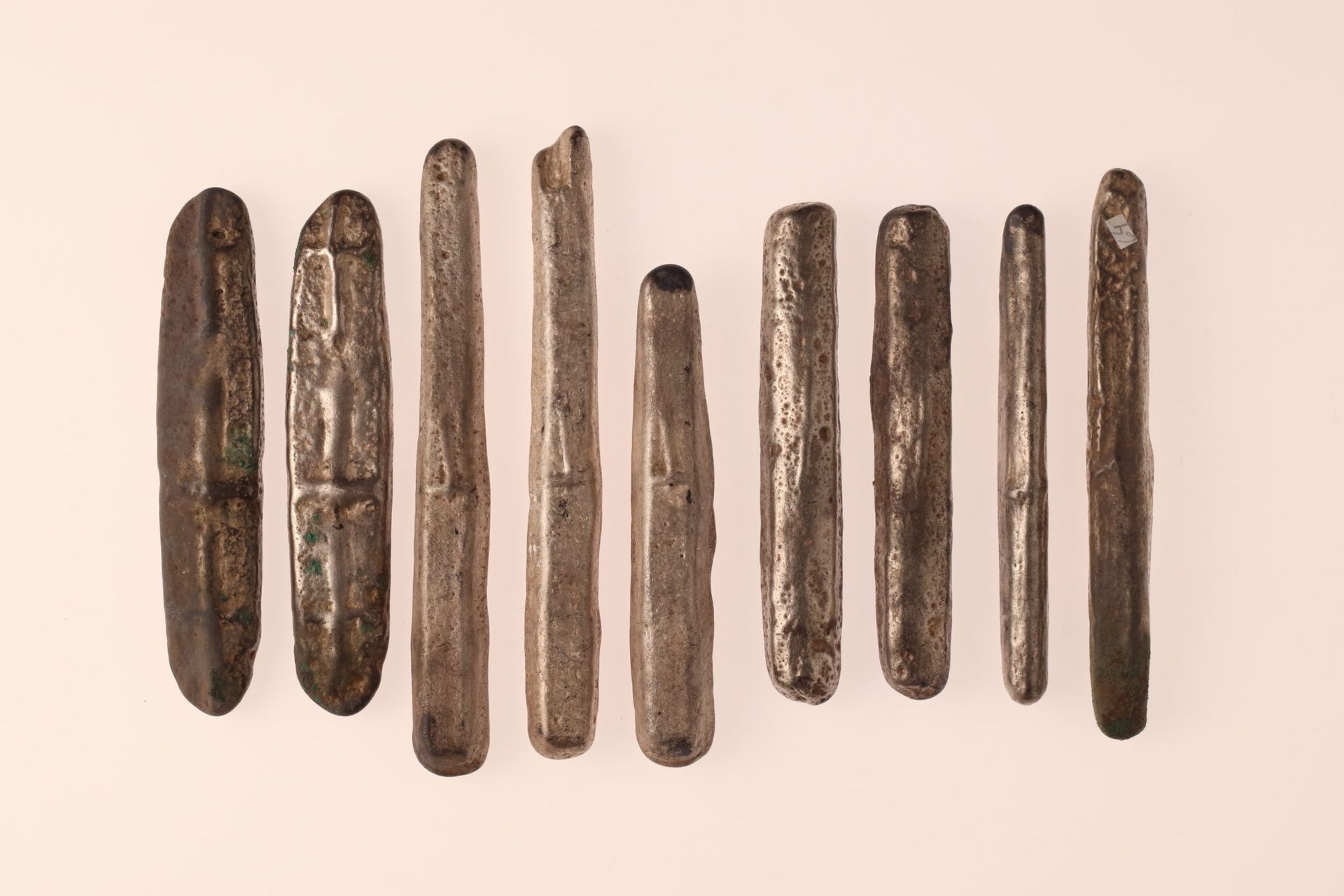
Image credit: North Jutland Museums
During the Viking Age, silver bars represented concentrated wealth.
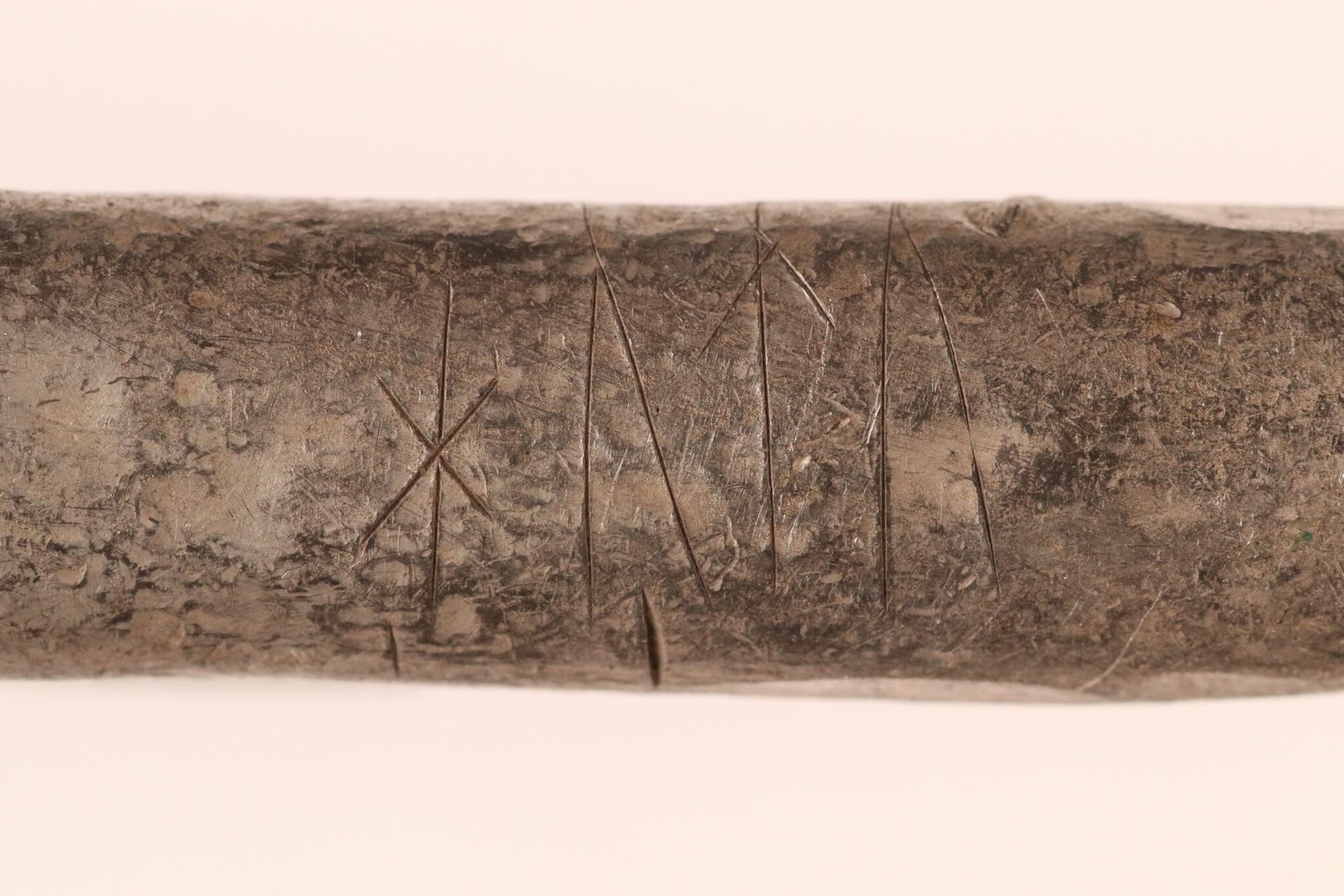
Image credit: North Jutland Museums
The runic inscription, spelling “Hutu,” likely denotes a personal name.
The coin assemblage includes two Anglo-Saxon pennies minted under King Edward the Elder (reigned 899–924 CE), dating the deposition to the 10th century. Islamic coins are also present, and together with the Anglo-Saxon issues, they attest to the expansive trade networks linking Viking Age Denmark with both Western Europe and the Islamic world. This aligns with recent research demonstrating that Viking-age Danish coinage incorporated silver sourced from melted Islamic dirhams.
According to Torben Sarauw, cultural heritage manager at the North Jutland Museums, the hoard illuminates how Viking Age Danes stored, organized, and concealed wealth. “When we analyze the weight of the silver objects, the treasure reveals information about the economic practices of the Viking Age,” Sarauw explained. “The treasure does not only consist of beautiful objects. Most of them are part of a structured value system by weight.”

Metrological analysis confirms that all silver bars and select bracelets and fragments conform to specific weight standards, indicating the hoard functioned as a deliberate wealth reserve rather than a random accumulation. “The treasure so clearly shows how silver functioned as wealth and a means of payment in the Viking Age,” Sarauw added. “It’s like finding a safe from the Viking Age.”
The motivation for burial remains uncertain. The cache may have been hidden near a Viking settlement, alongside a since-vanished road, or in a remote, concealed location. Resolving this question would require extensive archaeological investigation, which is precluded by the developed nature of the discovery site.
The hoard has been submitted to the National Museum of Denmark for formal assessment and valuation.