






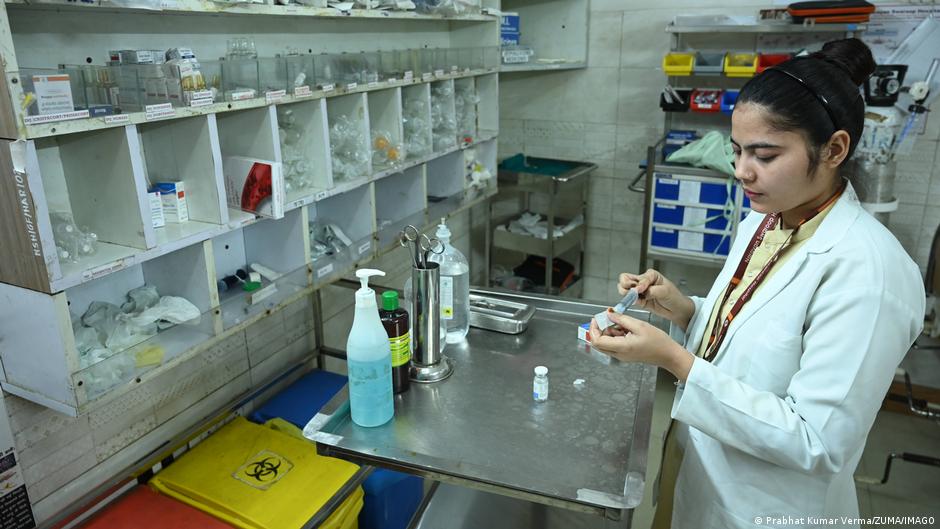
Angel Verghese, 25, has a clear roadmap for her career. A nursing graduate from Welcare College of Nursing in Kerala, India, she has already passed the NCLEX, the mandatory US licensing exam for registered nurses.
She is currently focused on gaining the professional experience required before sitting for the IELTS English proficiency test. Her ultimate goal is to relocate to New York, where her brother is already established.
“I have always aspired to work in the United States,” Verghese told DW. “The US offers superior opportunities for professional development and building a stable future. I understand the process is lengthy, but I am prepared to wait.”
Germany looks to India to address skilled labor shortage
To view this video please enable JavaScript, and consider upgrading to a web browser that supports HTML5 video
For many young nurses in Kerala, the United States remains the premier destination. While the path often involves years of rigorous testing, documentation, and waiting, the prospect of higher wages, career advancement, and international experience remains a powerful motivator.
This demand is fueled by a systemic shortage within the American healthcare sector. The US Bureau of Labor Statistics predicts that approximately 189,100 registered nursing positions will open annually between 2024 and 2034, a trend driven by an aging population and high retirement rates.
As hospitals turn increasingly to international recruitment, India has emerged as a vital source of highly trained healthcare professionals.
Is the US experiencing a vaccine crisis?
Why African nurses are moving to Germany
To view this video please enable JavaScript, and consider upgrading to a web browser that supports HTML5 video
Why African nurses are moving to Germany
To view this video please enable JavaScript, and consider upgrading to a web browser that supports HTML5 video
The Long Road to Immigration
Because Indian applicants face significant employment-based immigration backlogs, many nurses must wait over a decade before receiving a US immigrant visa.
Despite these delays, recruitment continues steadily across Kerala.
“We are continuing to process applications,” said Louie Terence, operations manager at Tiju’s Academy, a training center for overseas licensing and language exams. “Kerala’s nurses are exceptionally trained, proficient in English, and recognized for their dedication. The US remains the preferred destination due to competitive salaries and long-term career prospects.”
To maximize their time during the wait, many nurses begin the immigration process early. Agencies assist them in passing the NCLEX, verifying credentials, and securing job offers from US-based sponsoring hospitals. Once an immigrant petition is filed, candidates receive a priority date, securing their place in the visa queue.
“We continue to file US petitions despite the backlog, with the hope that the process will eventually be streamlined,” a senior official from Affniks International, a leading recruitment agency, told DW.
Strategic Career Moves
Few nurses remain stationary in India during the waiting period. Instead, many build their professional portfolios in the UAE, Saudi Arabia, the UK, or Germany, gaining international experience and higher earnings until their US priority date arrives.
Rajkrishna S Iyer, a US immigration attorney, notes that the US remains the ultimate goal despite the hurdles. “Many nurses still aspire to work in the US, but due to the long backlog, they often work elsewhere for several years first. Sometimes, changing life circumstances cause them to rethink their plans, while others are vulnerable to recruitment agents who may not provide full transparency,” Iyer explained.
Ancy Philip has experienced this transition firsthand. Moving from Kerala to California in 2006 during a period of aggressive international recruitment, she is now a US citizen and long-term hospital employee.
“The process was much simpler back then,” Philip said. “While the shortage remains severe due to the aging population, the immigration backlogs have made the path much more difficult. Migration has slowed to a trickle compared to previous years, but Kerala nurses still maintain an exceptional reputation for being committed, highly skilled, and professional.”
A Global Nursing Powerhouse
Kerala’s status as a global nursing hub is rooted in generations of missionary-run education, English-language proficiency, and a tradition of migration. Today, its graduates are found in major medical centers from London and Dubai to New York.
“Demand remains high, even if backlogs have slowed the pace of migration,” said Renu Susan Thomas, president of the Kerala chapter of the Trained Nurses Association of India. “The Indian Nursing Council’s curriculum aligns well with US standards, which facilitates smoother credential evaluation.”
Statistics support this trend. According to the Migration Policy Institute, India is the second-largest source of immigrant-registered nurses in the US, following the Philippines. Additionally, the institute estimates that nearly 80,000 Indian-born physicians practice in the United States.
Current data from healthcare workforce agency Sparrth indicates that approximately 32,000 Indian-born nurses work in the US, representing roughly 6% of all immigrant nurses. Furthermore, India produced the second-highest number of NCLEX candidates in 2024, with 5,869 graduates sitting for the exam.
This international reputation has been further solidified by the global healthcare shortages exposed by the COVID-19 pandemic.
“Hospitals invest heavily in training, but retaining experienced staff is a major challenge when skilled nurses seek overseas opportunities,” said orthopedic surgeon Dhananjay Gupta. “An experienced scrub nurse is an essential part of a surgical team and cannot be replaced instantly.”
Also Read
- President Zelensky Removes Key Defense Minister Behind Ukraine’s Drone Advancements
- US clears nearly $2 billion in precision weapons for Saudi Arabia
- Agropur Divests Fine Cheese Division to Lactalis Group
- Morgan Stanley Upgrades Rocket Companies, Predicting Strong Gains Despite Declining Loan Demand


