




Earth could survive the sun’s transformation into a red giant, according to new research using advanced stellar models and observations of a nearby dying star. The findings, published in Astronomy & Astrophysics, challenge earlier assumptions about the planet’s fate as the sun expands and sheds mass over the next five billion years.
The sun, currently a stable yellow dwarf, will exhaust its hydrogen fuel in roughly five billion years, triggering a phase where it expands into a red giant and later a larger asymptotic giant branch (AGB) star before ending as a white dwarf. During this evolution, Earth faces a critical balance: the sun’s increased tidal forces pulling the planet inward versus the star’s mass loss, which would push Earth outward.
Astronomer Mats Esseldeurs, a doctoral candidate at KU Leuven, explained the dual forces at play. “The fate of Earth depends on a delicate balance between these two effects,” he said. “If tidal interactions dominate, Earth is engulfed. If mass loss dominates, Earth escapes to a wider orbit.”
Previous studies produced conflicting conclusions due to uncertainties in modeling solar mass loss and tidal interactions. To refine predictions, the team observed L2 Puppis, a 200-light-year-distant star in the constellation Puppis that is currently dying. This star may lose up to one-millionth of its mass annually, offering insights into the sun’s potential future.
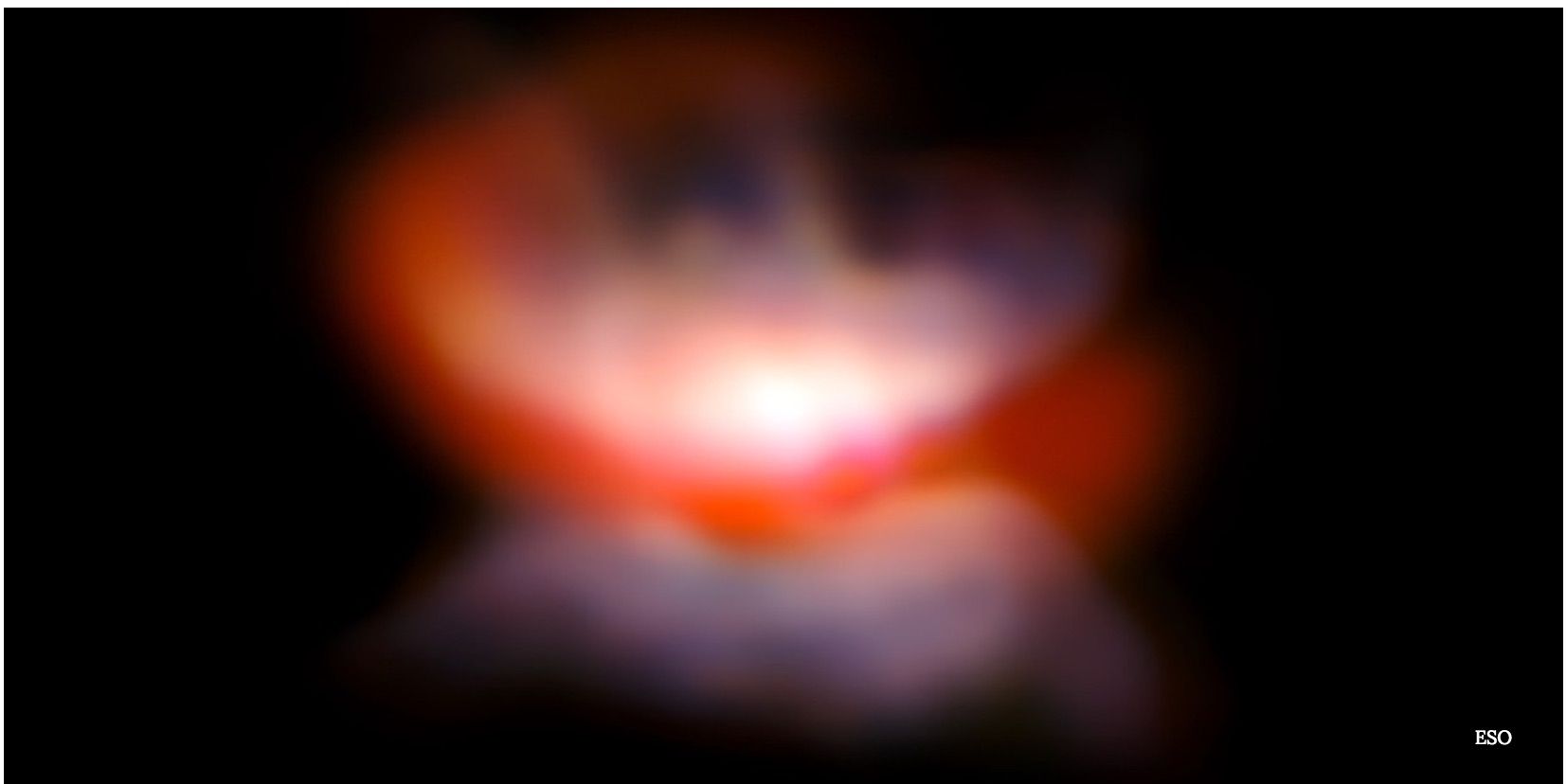
Using advanced gravitational models accounting for the internal structure of evolved stars, the researchers simulated the inner solar system’s orbital evolution through the sun’s lifespan. Their projections suggest Earth will survive as the sun expands, shifting to an orbit just outside the star’s expanded radius.
Esseldeurs noted that current observations of sun-like stars indicate Earth’s survival is likely, though more precise data is needed. “The largest uncertainty no longer comes from the tidal calculations, but from how much mass the future sun will lose,” he said.
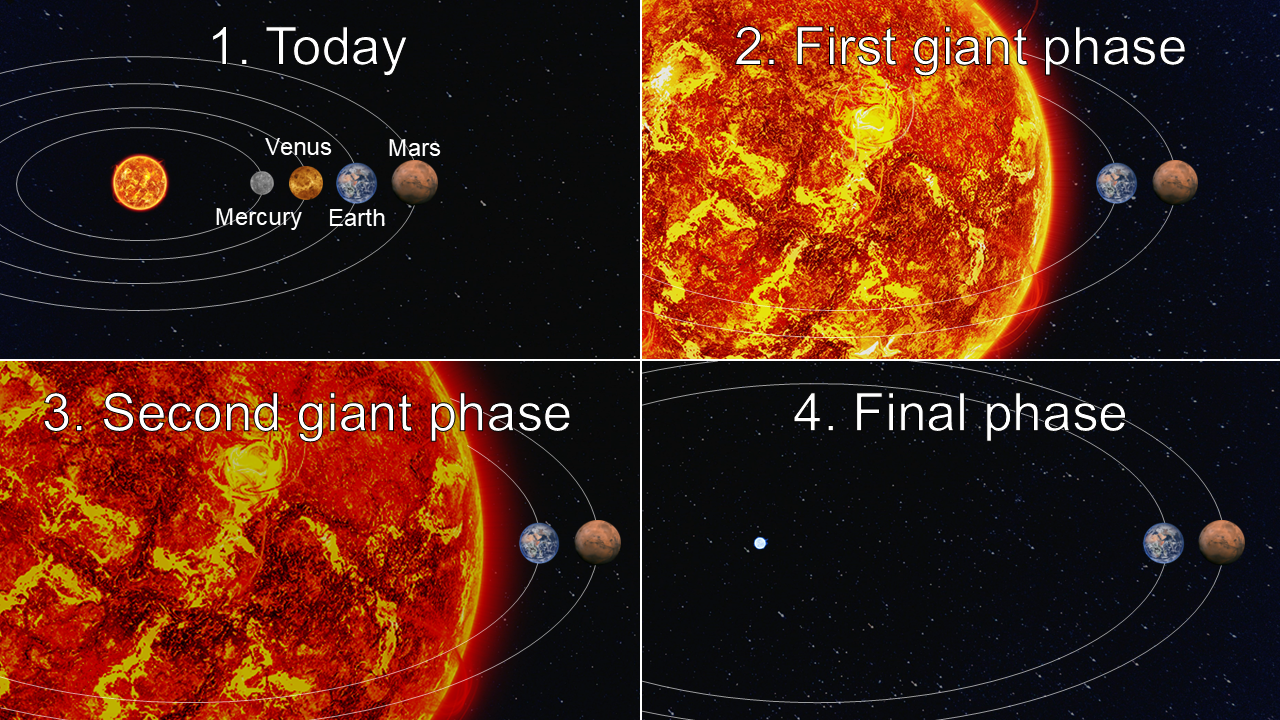
However, Mercury and Venus are not expected to survive, as their closer proximity to the sun makes them vulnerable to being engulfed during the sun’s expansion. Observations of white dwarf systems further support this outcome, with some showing remnants of destroyed planets while others preserve intact worlds.
Future missions like the European Space Agency’s PLATO telescope, set to launch soon, will observe planets around aging stars, improving our understanding of this cosmic timeline. These efforts aim to resolve the uncertainties surrounding planetary survival in the face of stellar evolution.