






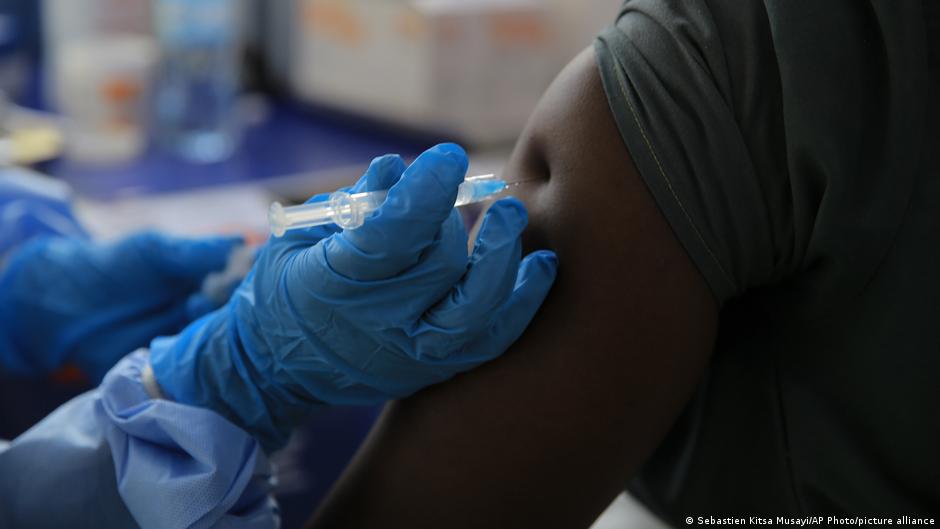
In 1976, a mysterious illness emerged near the Ebola River in what was then Zaire, now the Democratic Republic of the Congo (DRC), marking the first scientifically documented Ebola epidemic. Five decades later, the DRC is again the epicenter of a major outbreak, this time driven by the less common Bundibugyo species of the genus Orthoebolavirus. First identified during a 2007 outbreak in Uganda’s Bundibugyo district, the virus resurfaced in the DRC in 2012.
Missed Opportunities for Preparedness
How does a pathogen known for decades continue to infect thousands without a licensed vaccine or approved treatment? Torsten Feldt, a tropical medicine specialist at Düsseldorf University Hospital, views this as a critical missed window. “We encountered the Bundibugyo virus in two prior outbreaks—in Uganda in 2007 and the DRC in 2012—giving us ample time to develop vaccines and therapeutics. That opportunity was not seized, costing valuable time during the current crisis.”
Leonie Mayer of the German Center for Infection Research (DZIF) and the University Medical Center Hamburg-Eppendorf concurs. While pre-clinical development could have advanced earlier, she notes that efficacy can only be definitively proven during an active outbreak. Mayer led a recent study investigating whether Ervebo, a licensed vaccine targeting the Zaire ebolavirus, offers cross-protection against other species.
Congo’s Ebola crisis: Fear, mistrust and a growing outbreak
To view this video please enable JavaScript, and consider upgrading to a web browser that supports HTML5 video
Ebola as a Vaccine Candidate
Immunologically, Ebola presents a more tractable target than highly mutable viruses like influenza or immune-evading pathogens like HIV. Its relative stability makes it a strong candidate for vaccine development. “It should be relatively straightforward to develop a vaccine against Bundibugyo,” Mayer suggests.
This creates a paradox: scientifically feasible, yet no licensed prevention exists for the currently circulating strain. Mayer explains that resources are finite; development cannot proceed for every potential pathogen as a precaution. Prioritization favored the Sudan virus, where vaccine candidates are further advanced.
Diversity Within the Genus
Complicating matters, “Ebola” comprises several distinct, highly dangerous orthoebolaviruses: Ebola virus (EBOV, formerly Zaire), Sudan virus (SUDV), and Bundibugyo virus (BDBV). Ervebo is licensed solely for the Zaire variant, offering limited utility in the current outbreak.
Additionally, the Bundibugyo virus appears less virulent than its Zaire counterpart. While seemingly positive, this lower lethality may hinder containment, as infected individuals remain mobile longer, potentially transmitting the virus unknowingly.
Cross-Reactive Immune Responses
Mayer’s DZIF team examined whether Ervebo elicits immune responses against non-Zaire species. The study detected cross-reactive T-cell responses against Bundibugyo and, to a lesser degree, Sudan virus. “We now know immune cells can likely recognize the Bundibugyo virus,” Mayer states. However, the data cannot confirm whether this response confers actual protection or merely mitigates disease severity—a critical knowledge gap.
Barriers to Emergency Deployment
Given a licensed vaccine with promising immunological data, why not deploy it immediately? Mayer outlines the ethical and scientific dilemma: administering a vaccine of unproven efficacy is ethically fraught. Furthermore, mass deployment would confound efforts to measure true efficacy, as case declines could stem from other interventions or the epidemic’s natural trajectory.
Jürgen May, a tropical disease specialist at the Bernhard Nocht Institute, warns that mass vaccination without efficacy data risks a false sense of security, erodes public trust, and renders rigorous study impossible. Mayer emphasizes community acceptance: “If we vaccinate widely and the vaccine proves far less effective than hoped, communicating that failure is extremely difficult. In a worst-case scenario, communities may reject future, more effective vaccines.”
Operational Hurdles to Containment
The current outbreak underscores that medical countermeasures alone are insufficient. Armed conflict, inaccessible terrain, attacks on health facilities, and gaps in contact tracing severely impede containment.
Feldt notes that while diagnostic capacity for Bundibugyo has improved, logistical access remains a bottleneck. “In remote or conflict-affected regions, samples often require long-distance transport,” he explains. A recent Nature article echoes this: the challenge is no longer detection, but the speed of response. Finding Ebola has become easier than stopping it.
Toward a Pan-Ebola Solution
Researchers see the current crisis as a potential catalyst. The Tumaini study, now underway in the DRC, is evaluating multiple candidates—including Ervebo and a Moderna mRNA vaccine—to generate the first reliable efficacy data against Bundibugyo.
Whether these interventions can curb the current outbreak remains uncertain; realistic timelines suggest widespread availability may not arrive before mid-2027. “Ideally, we will develop cross-reactive pan-Ebola vaccines,” says Christof Geldmacher, co-author of the DZIF study. While that long-term goal is active, the immediate priority remains an effective vaccine specifically for the Bundibugyo variant.
This article has been translated from German.
Also Read
- Labubu Mania Shows Signs of Cooling as Collectors Move on to New Trends
- Bulk Carrier Involved in Gulf of Oman Incident; UKMTO Confirms Military Participation
- Real Madrid’s 3‑0 Victory Over Valencia Levels Points with Barcelona at the Top of La Liga
- Drone Strike Kills Three Soldiers at Colombian Military Installation


