







From gravitational waves to time travel, science has long been woven into the fabric of “Star Trek”. Although the franchise has never hesitated to imagine the impossible, much of its enduring appeal lies in making even the strangest scenarios feel convincing.
That is where a science adviser comes in. The goal is not to guarantee that every detail is scientifically exact, but to understand the science well enough to recognize where creative license can be taken—and how to bring those choices to life on screen.


Erin Macdonald
Science adviser
Erin Macdonald is an award-winning writer, science communicator, producer, and science advisor. She is best known for her work on “Star Trek”, where she has even appeared as a version of herself across several iterations of the franchise. Her science communication work has also brought her to NPR, the BBC, CBS, and StarTalk Live.
Space.com: How did you end up getting into the field of science advising?
EM: After I finished my Ph.D. and did a bit of research, I realized academia just wasn’t really for me. So I moved into engineering, but I missed teaching and connecting with students. I kept looking for ways to do more public science communication. I’m a big sci-fi fan, so I started attending conventions and giving solo panels and workshops that were essentially, “Here’s the physics behind faster-than-light travel,” and “Here’s all the science in ‘Star Trek’.”
SCIENCE BEHIND THE CAMERA
This article is part of a series called “Science Behind the Camera” that explores the role of science advisors. From shaping engaging stories to informing set design and script rewrites, these experts help craft some of the most compelling narratives on screen.
Through those talks—and just the way life unfolds—I met a lot of people on the convention circuit. I decided I wanted to move to Los Angeles. I discovered that science advising was an actual profession, so I relocated while still working as an engineer.
CBS and “Star Trek” caught wind of my presentations and invited me to speak at their official licensed “Star Trek” events. That’s how I ended up on their radar. A couple of years later, with so many “Star Trek” shows in production, they were looking for a science adviser for “Star Trek: Discovery”. [Editor’s Note: “Star Trek: Discovery” ran for five seasons (65 episodes) from September 2017 to May 2024 on CBS] That went well, and they brought me on as an in-house science adviser.
Space.com: You’ve now advised on how many shows?
EM: Six “Star Trek” shows, though I’m starting to lose count of the films and other projects I’ve been brought in for, whether one-off consultations or larger engagements. It’s been a wonderful experience.
I think succeeding in Los Angeles and Hollywood comes down to treating every job as an audition for the next one. You work on a show, everyone disperses to new projects, and when they think of someone who’d be a good fit, they give you a call. I’ve been very fortunate that way.
Space.com: What does the day-to-day look like for a science adviser?
EM: Every job I’ve taken has been different. When I get pulled in to talk about a new project, it could be almost anything.
The role I enjoy most is being brought in when a show is just getting off the ground and the writers’ room is taking shape. They’ll invite me to sit in and help develop the ideas and stories as they evolve. If questions come up in the moment, I can answer them on the spot. That’s the ideal scenario, because you can get ahead of potential problems while the plots are still being built.
A lot of the time, when you’re doing something wild like that, I’ll just say, “Great, don’t explain it. Do your thing. Try not to science it.”
Erin Macdonald
Another version of the job is receiving finished production scripts. The team has been through the whole process and is close to filming when they ask, “Hey, can you take a look at this?”
That can be both a blessing and a curse. It’s less work, but you have far less room to course-correct if there are significant plot problems. You have to work within the existing story and make the science as accurate as possible. In that situation, my advice often becomes, “Don’t explain it. Cut these lines. You’re creating problems for yourself. Leave the rest alone.”
The third type of work—something many of my colleagues do—is set design. Advisers are brought in during set construction or post-production to make sure what appears on screen looks convincingly scientific.
The classic example is the person who writes all the equations on “The Big Bang Theory”. Every one of those whiteboards? That’s a scientist coming in to fill them in.
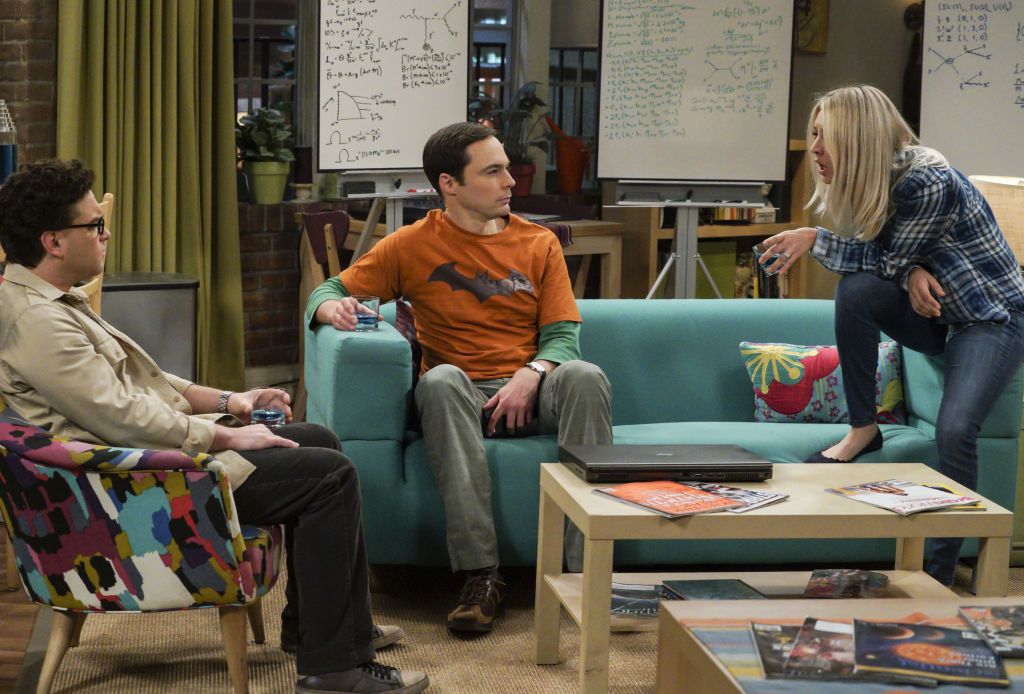
I worked on a Hulu show called “Good American Family”. It isn’t a science show at all, but one of the characters is a kid who’s fascinated by physics. I came in, wrote out all the equations, and coached the young actor on how to deliver the technical lines.
The process can vary enormously. Even within “Star Trek”, my working relationship has been different from one series to the next. That variety is part of what makes the job exciting, though I think it also shows people just how multifaceted the role can be.
Space.com: Out of all your 7 years of experience in science advising, is there a particular scene, moment, or script you’re especially proud of?
EM: There are definitely a few that are close to my heart. Let me share a couple of examples.
One was the season two finale of “Star Trek: Lower Decks”. I didn’t join until season two, and at the end the showrunner came to me and said, essentially, “I have this vision, but we need to build the ‘Star Trek’ science around it.”
He had a scene in mind and wanted to construct a story to support it. Together we devised a plot involving an asteroid belt full of charged particles that interfere with the ship’s protective shields. There was plenty of satisfying technobabble, too. It was a lot of fun. Watching that episode, it feels like a genuinely authentic “Star Trek” story precisely because of all the science woven through it. I’m very proud to have contributed to that.
If you spend your time just criticizing the science in films and TV, this is not the job for you.
Erin Macdonald
Another favorite is the musical episode of “Star Trek: Strange New Worlds”. It was one of the first times the show took a big swing. The series has become known for those ambitious swings, but this was among the earliest. Usually, when we’re doing something that outlandish, I’ll say, “Great, don’t explain it. Do your thing. Try not to science it.”
Here, though, they pushed back and told me, “No, no, no. We need a scientific explanation.”
So we worked closely together and developed a detailed rationale. What I’m especially proud of is the ready room scene they built—[Editor’s note: a ready room scene is a dramatic sequence typically set in a command office before a major battle or mission]—where Spock lays out everything that’s happening. It may be one of the longest ready room scenes in “Star Trek” history. It goes, “And then this happens, and then this, and here’s why, and here’s why, and here’s why, and here’s what we need to do.”
It’s delightfully goofy, but a remarkable amount of real science went into that episode, and it was a genuinely fun process.
Space.com: I would be remiss if I didn’t bring up the creation of Dr. Erin. How did that character come about, and how have you felt about the character’s impact?
EM: It’s really funny. The character of Dr. Erin has now appeared across multiple series, video games, and comic books, which absolutely delights me.
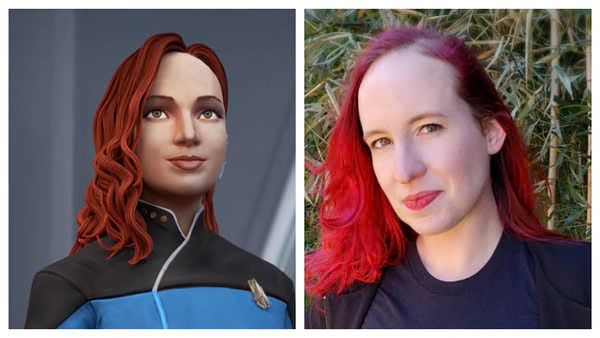
It all began on “Star Trek: Prodigy”, a series aimed at younger viewers. The team wanted me to do more than keep the science accurate—they also asked me to handle more traditional science communication and help create a character, a kid who dreams of becoming a scientist, and to explore what that journey is like. That character is Rok-Tahk, and she’s absolutely adorable.
As season one drew to a close and the kids headed to Starfleet Academy, the showrunners decided, “She has to meet Dr. Erin. She is who she is because of Erin.” That was one of the greatest honors of my career. It was just a quick, one-line mention—the character wasn’t even named in the episode.
Space.com: Is there anything you wish you could change from your perspective?
EM: Yes, there are a few things that still haunt me a little.
Some shows I was deeply involved with—we really clicked, and I helped shape the story. There’s very little I’d change about those. But other projects handed me the script at the eleventh hour. Looking back, would I have suggested a different plot direction? Absolutely. But by then it was too late to course-correct.
A great example came in “Star Trek: Discovery”. There was an episode in which the crew tries to ride gravitational waves out of a nebula, as one does. They filmed the ready room explainer moment and depicted the gravitational waves as literal sine waves—like the ocean waves most people picture. I was collaborating with the visual effects team and pushed back, explaining, “These are really compression waves.” You could still argue the crew was riding them outward, but the motion is much more like how sound waves travel. They’re compression waves.
To their credit, they animated the corrected version and added it to the scene. But as audiences watched, they felt the way we described the phenomenon clashed with what they were seeing. It was pulling viewers out of the moment, so the team had to revert to the original.
It was funny, because when that episode aired, three or four of my former gravitational-wave colleagues reached out with the same message: “Erin, you had one job.”
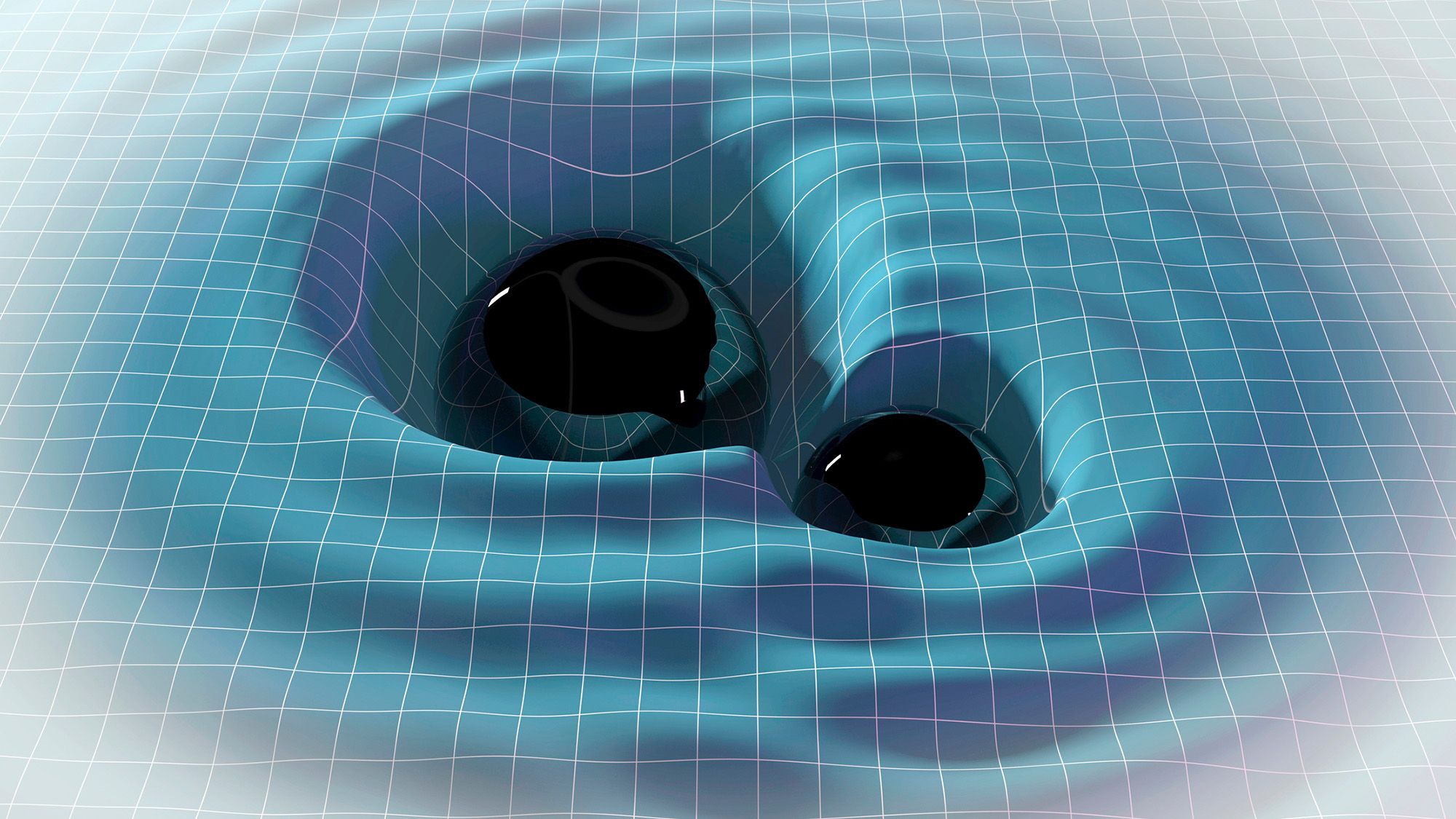
Another quick example came in season one of “Strange New Worlds”, when Spock says, “We’re being pulled into the black hole.”
That’s one of those lines that isn’t technically accurate. Objects fall into black holes—they aren’t sucked in. It’s a widespread misconception I try to counter often. Black holes don’t vacuum things up; it’s simply the effect of intense gravity. In that scene, though, Spock is being deliberately condescending and talking down to La’an, so he’s simplifying the language for a general audience. That’s a case I can live with.
Space.com: Is there anything else you think our readers should know about science advising?
EM: I often meet people who—delicately or not—tell me, “I could do your job. I’d be a great science adviser.” I think what has made me effective is that I approach the work with a very “yes, and” mindset.
Above all, I’m a fan. If your instinct is to spend your time criticizing the science in films and TV, this isn’t the job for you. You have to work with the story you’re handed and understand its mission.
Here’s a quick anecdote. I worked on a film called “Space Cadet”, a stoner comedy on Amazon, and they’d struggled to find a science adviser because everyone kept trashing the script. It’s absurd, goofy, and fun. Their pitch was simple: “We just want someone who can make sure the NASA characters say what NASA people would actually say. That’s it.”
And I said, “Perfect, let’s do it.”
The job isn’t for everyone. Storytelling comes first.
Editor’s note: This interview has been edited and shortened for length and clarity.


