






EU militaries continue to rely heavily on US weaponry, as demonstrated at the July NATO summit in Ankara where US firms secured lucrative contracts at the Defense Industry Forum.
European governments are boosting local production of critical missiles. A recent memorandum of understanding between Lockheed Martin and Rheinmetall will jointly produce ATACMS missiles in Germany, marking a step toward greater European self‑sufficiency while still respecting US partnership.
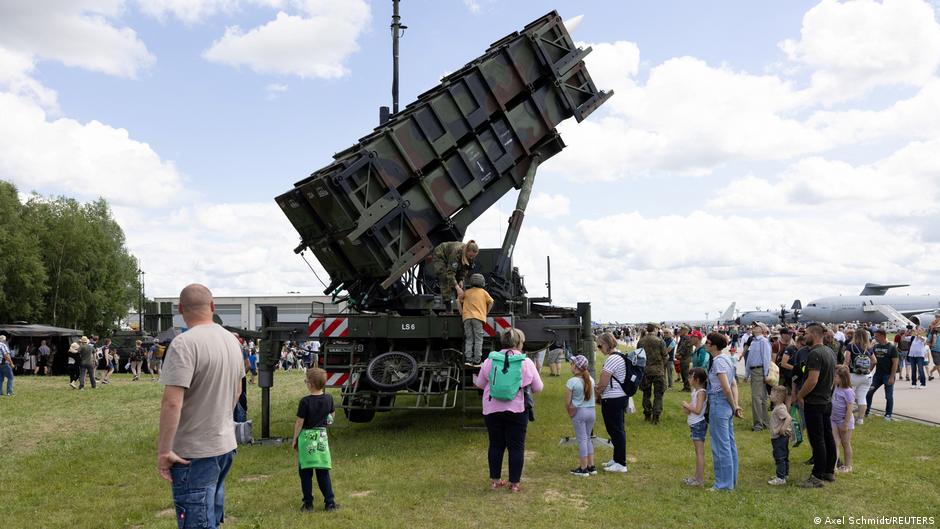
Patriot air‑and‑missile defense systems remain the most visible symbol of European NATO members’ dependence on the United States. Deployed for decades across the alliance, they have more recently safeguarded key assets in Ukraine.
To reduce this reliance, European nations are fielding alternative platforms. France and Italy have developed the SAMP/T NG high‑altitude interceptor, which incorporates advanced sensors for ballistic‑missile detection and is scheduled to enter service around 2027.
Germany’s Diehl‑built IRIS‑T medium‑range system is already operational in Ukraine, offering a 40 km range and 20 km altitude. The next‑generation IRIS‑T SLX, due in 2029, will extend reach to 80 km and 30 km.
Germany to buy more Tomahawks from US
In the strike realm, European forces still depend on US systems such as the Tomahawk cruise missile for deep‑precision attacks. At the NATO summit, Germany signed a memorandum of understanding with Washington to acquire Tomahawks and Typhoon ground‑launch systems. Chancellor Friedrich Merz called the deal a critical gap‑filler for German defenses, highlighting Europe’s short‑term reliance while long‑range strike projects mature.
The European Long‑Range Strike Approach (ELSA) brings together six nations—including France, Germany and the United Kingdom—to develop conventional ground‑launched missiles, the Euro Multi Missile Launcher, sophisticated cruise weapons and affordable long‑range drones (500–2 000 km). Interim capabilities are expected to reach operational status by the 2030s.
Optimism for DECODER
EU combat operations still lean on US sensor, satellite and command networks for the “kill chain”—target identification, force deployment, strike execution and destruction. The Ukraine war has showcased the growing importance of drones on the front lines and deep behind enemy lines. The Drone and Counter‑Drone European Resolve (DECODER) initiative aims to give EU militaries indigenous drone and counter‑drone capacities, reducing that dependence.
Development is currently fragmented across national borders, but DECODER is intended to harmonize efforts among all 26 EU member states, Norway and Ukraine, whose operational experience is considered vital. The European Commission estimates that the framework will require €3.5 billion to €5 billion in funding by 2033.
Drone warfare: German startup draws on Ukraine’s experience
To view this video please enable JavaScript, and consider upgrading to a web browser that supports HTML5 video
IRIS²: Europe’s answer to Starlink
Starlink’s broadband service has become a battlefield asset in Ukraine, prompting the EU to develop IRIS²—a multi‑orbit satellite network of 290 satellites for defense and secure government communications. The constellation is expected to be operational by 2030 at a cost exceeding €10 billion.
NATO continues to operate an AWACS fleet derived from the US Boeing 707 for airborne surveillance, command and control, and battlespace management, based at a German air base in Geilenkirchen. In Ankara, NATO announced formal negotiations with Sweden’s Saab to replace the aging AWACS with GlobalEye early‑warning aircraft, slated for delivery by 2030.
FCAS project fails
Despite the sophistication of fifth‑generation F‑35 fighters now being procured across many European nations, the continent’s reliance on US platforms remains evident. The EU’s ambitious Future Combat Air System (FCAS) programme, which envisioned a sixth‑generation fighter integrating swarming drones and a combat cloud, collapsed amid disputes over management, technology sharing and national interests—particularly between France and Germany.
This collapse represents a significant setback for European strategic autonomy at a time when reducing dependence on the United States is a priority for the bloc.
Also Read
- Syria’s Transitional Parliament Convenes for First Session After Assad’s Ouster
- Charred Landscape Reveals Devastation in Spanish Village at Heart of Deadly Wildfires
- Investment Strategy for Late 2026: Should You Bet on Celsius’s Recovery or Opt for a Coca-Cola and PepsiCo Split?
- Taliban Tightens Grip on Herat: Escalating Restrictions and Crackdown on Dissent


