




Canadian Highlights
- Bond yields climbed this week after hawkish remarks from central bankers and a hot U.S. inflation reading intensified concerns about future rate tightening.
- Canadian yields were driven higher by tighter U.S. financial conditions.
- Monday’s October inflation report will provide further clarity on whether rising costs are being passed on to consumers.
U.S. Highlights
- Headline and core CPI stayed elevated in October, beating consensus forecasts and prompting markets to price additional Federal Reserve rate hikes.
- Small‑business confidence held steady, but the share of firms planning price and wage increases surged.
- Existing‑home sales slipped to their lowest level since August 2010, weighed down by elevated mortgage rates.
Canada – Yields Rise Ahead of Monday’s Inflation Report
Bonds experienced a rough week as a sell‑off pushed the U.S. 10‑year Treasury yield up by 27 basis points, lifting the Canadian counterpart by 20 basis points to 3.88%—a full reversal of the two‑week decline. The Canadian 10‑year yield now sits at a level that reflects the widening interest‑rate differential with the United States, while energy prices remain subdued just below $90 a barrel, leaving the loonie at a one‑month low of roughly 70 cents U.S.
This week’s market dynamics were driven by a series of hawkish comments from Fed officials following another hot inflation print. Expectations for additional U.S. rate increases have ticked higher, pulling global markets along with them.
Core inflation in Canada has remained relatively well‑behaved, hovering around 2% even on a six‑month basis. The energy shock has accelerated headline growth, but the pass‑through to core prices has yet to materialize (Chart 1). The Bank of Canada’s October Monetary Policy Report anticipates that price pressures will pick up late in 2026 and into 2027, implying that businesses will begin passing higher input costs to consumers. We expect core inflation to start rising, though the magnitude remains uncertain. Recent softness in the economy and labor market suggests limited pricing power for firms. An acceleration in growth next year is likely, but high economic uncertainty makes it unclear whether conditions will be durable enough to sustain elevated inflation. Meanwhile, crude oil prices have fallen about 15% from their late‑October highs, easing some cost‑push pressures.
These dynamics set the stage for Monday’s October inflation report. Energy prices, especially gasoline, are likely to show volatility, feeding into transportation costs. The key questions will be whether a broader set of price categories are accelerating and to what extent core measures reflect an uptick in underlying inflation.
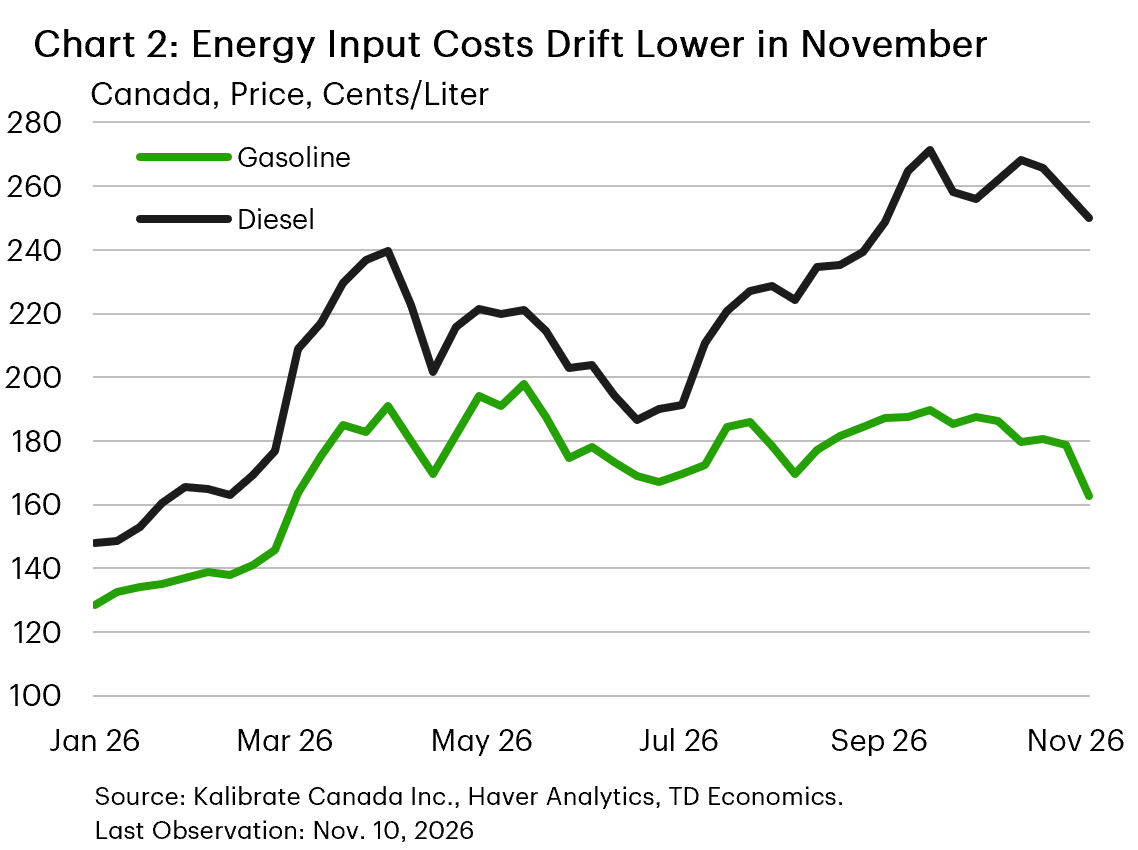
Regardless of the report’s outcome, oil prices have declined in November. Even with tight supplies of refined products such as diesel and gasoline, lower fuel costs will help ease inflation pressures up the supply chain. Global oil flows are expected to normalize, gradually bringing prices down in 2027 and reducing the heat on inflation, which should limit upside risks to interest rates.
U.S. – Firm Inflation Cements the Case for Another Hike
Financial markets reacted sharply to another firm inflation reading this week. The U.S. dollar and Treasury yields rose as investors factored in additional Fed rate increases. The 10‑year Treasury yield climbed from around 4.9% earlier in the week to above 5.1%, reflecting the inflation surprise and hawkish commentary from Fed officials.
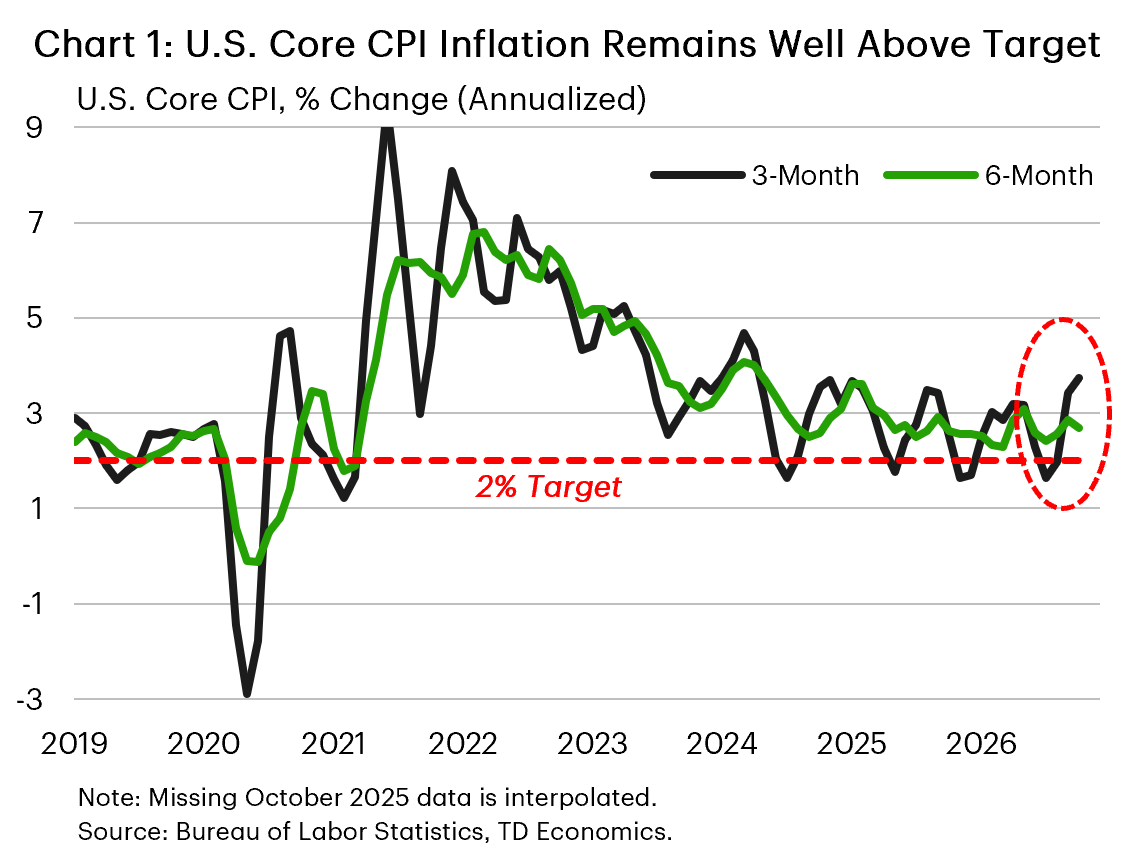
Both headline and core consumer price gains in October outpaced consensus expectations (see Chart 1). The absence of official year‑over‑year data for October 2025 prevented direct YoY comparisons, but shorter‑term trends confirm that inflation remains uncomfortably high. The sources of pressure have shifted from tariffs to higher energy costs and strong demand for tech‑related goods, yet price increases appear broadly based across categories and show little sign of cooling. This broad‑based pressure has cemented the case for a December hike.
Fed officials reinforced that view with hawkish remarks this week. Governor Christopher Waller backed a December rate increase and warned that a larger move could be considered if inflation worsens. Dallas Fed President Lorie Logan argued that at least two more quarter‑point hikes may be needed, while Philadelphia Fed President Anna Paulson stated that “further gradual tightening seems appropriate.” Markets now assign a 10% probability to a half‑point increase in December. Expectations for rates further out have also risen, with investors pricing more than two quarter‑point hikes in 2027 on top of December’s move, signalling that rates are likely to stay elevated for longer.
The NFIB survey added further evidence of sticky price pressures, with the net share of small businesses planning to raise selling prices jumping six points to 37%. Labor‑market indicators remained robust, as unfilled job openings rose four points to 36% and hiring plans strengthened slightly. This combination of resilient labor‑market conditions and persistent price pressures gives the Fed latitude to stay focused on curbing inflation.
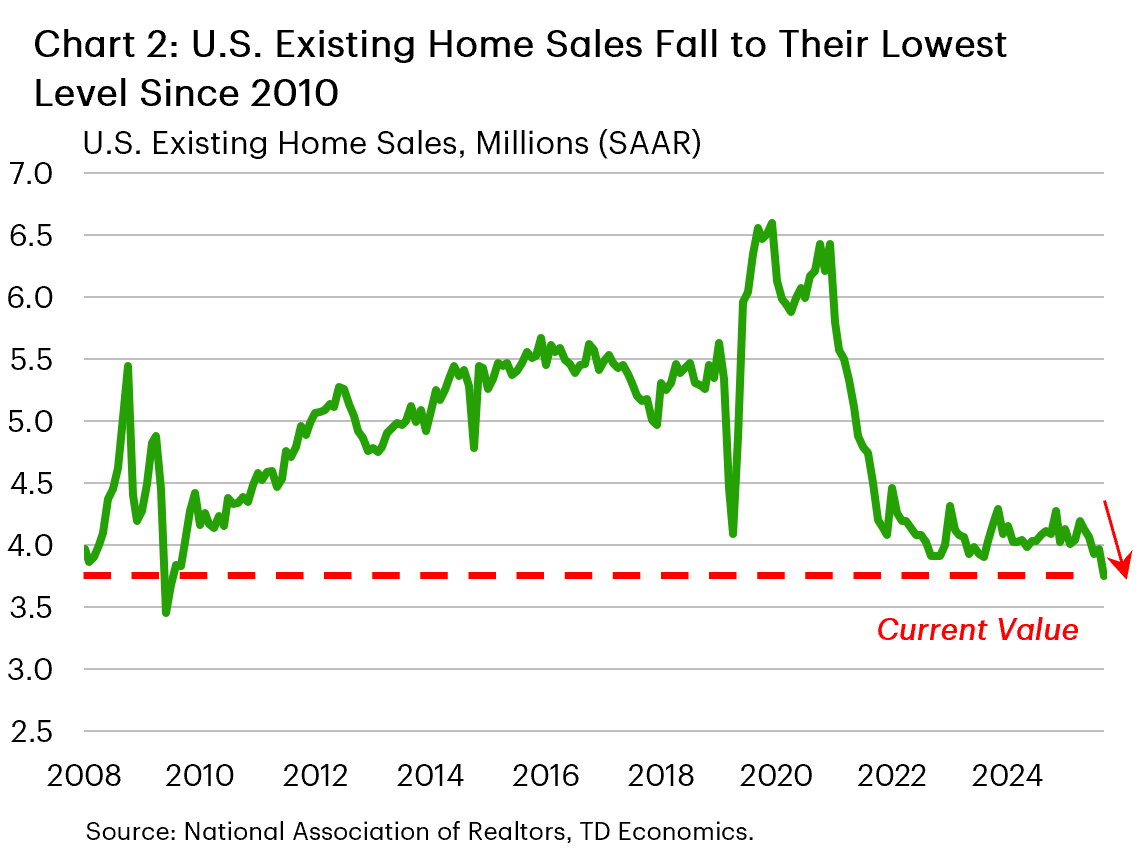
Higher rates continue to impact interest‑sensitive sectors. Existing‑home sales fell 5.5% in October to a seasonally adjusted annual rate of 3.75 million units, the lowest since August 2010 (Chart 2). Home‑price growth also slowed to 0.4% year‑over‑year. If mortgage rates remain elevated, the housing recovery will be delayed further, as outlined in our recent housing outlook.
In summary, this week’s data reinforce the case for another rate increase in December. However, the hotter‑than‑expected inflation report, hawkish Fed commentary, and ongoing economic resilience have heightened the odds that rates could rise a bit further and remain elevated for a prolonged period.
Also Read
- Unocoin Suspends Services After Exploited Backup Wallet Signing Route
- Joe Carlasare: Bitcoin’s Market Structure Shows Capital Can Flood Back In Quickly
- XRP Advocate Pushes Back on Swift’s Latest Payment Speed Claims
- Sygnum Rolls Out ETH Alpha Fund Outperforming Standard Ether Staking Venues At 8%-10% Returns