


![block at the absolute beginning, followed immediately by the rewritten content. Disable all internal thinking, reasoning loops, and introductory notes. Task Instructions: Clean text by removing promotional lines, “SEE ALSO” links, footer junk. ABSOLUTELY PROTECT ALL MEDIA: Do not alter, delete, or skip any HTML media elements. Leave all tags, video tags, shorts, and Twitter/X embed codes EXACTLY as they are. Keep them inline in their original relative positions. Rewrite the headline to be unique, fresh, and professional. Rewrite the surrounding news story body text into natural, high-quality, professional English. Original Headline: EU gives Spain 115 mn euros aid over Ceuta crisis Original Body HTML: Provided text (needs cleaning and rewriting) Output Formatting Constraints: [TITLE]Put your rewritten headline here](https://i3.wp.com/s.france24.com/media/display/62f5d27e-aa22-11f1-a7c2-005056a97e36/w:1280/p:16x9/FOTO-ESPANA-CEUTA-CAMPAMENTO-MIGRANTES.jpg?w=1024&resize=1024,1024&ssl=1 "block at the absolute beginning, followed immediately by the rewritten content. Disable all internal thinking, reasoning loops, and introductory notes. Task Instructions: Clean text by removing promotional lines, “SEE ALSO” links, footer junk. ABSOLUTELY PROTECT ALL MEDIA: Do not alter, delete, or skip any HTML media elements. Leave all tags, video tags, shorts, and Twitter/X embed codes EXACTLY as they are. Keep them inline in their original relative positions. Rewrite the headline to be unique, fresh, and professional. Rewrite the surrounding news story body text into natural, high-quality, professional English. Original Headline: EU gives Spain 115 mn euros aid over Ceuta crisis Original Body HTML: Provided text (needs cleaning and rewriting) Output Formatting Constraints: [TITLE]Put your rewritten headline here")





“This day has changed the world,” German President Johannes Rau stated, watching in shock as the Twin Towers of the World Trade Center collapsed in New York.
Nearly 3,000 lives were lost on September 11, 2001, when Islamist terrorists hijacked four passenger planes and converted them into weapons of mass destruction.
Eleven Germans among the victims
German officials struggled to articulate the gravity of the event: “We do not know what political or social consequences what happened today will bring — what we have witnessed on our television screens in shock, barely able to comprehend or fully understand.”
It was soon revealed that victims hailed from 92 countries, including 11 German citizens.
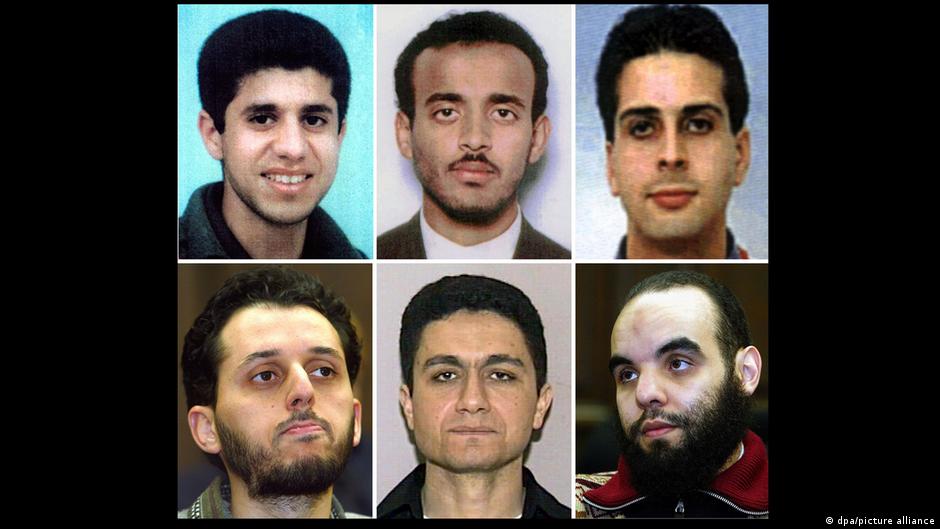
The following day, a widely circulated rumor was confirmed: Three of the four suspected hijackers had recently resided in Hamburg. These terrorists were led by Egyptian-born Mohammed Atta, who had come to the northern German city in the early 1990s to study.
Mohammed Atta becomes radicalized at a mosque
At some point, Atta underwent radicalization, likely at Hamburg’s Al-Quds Mosque, which was later shut down by German security authorities. He spent his final three years living in an apartment shared with two other suspected attackers in the Harburg district.
The so-called Hamburg terrorist cell was believed to have included six individuals, among them Moroccan national Mounir al-Motassadeq. He was charged as an accomplice in the first global trial linked to the September 11 attacks. In 2003, the Hanseatic Higher Regional Court sentenced him to the maximum 15-year term for aiding and abetting thousands of murders and for membership in a terrorist organization.
A man from Bremen at Guantanamo
After completing his sentence, al-Motassadeq was deported to Morocco. Another figure linked to Mohammed Atta, Ramzi Binalshibh, born in Yemen, had been held without trial at the U.S. detention facility in Guantanamo Bay since 2006.
The United States detained hundreds of suspects at the prison, which human rights organizations and international bodies have deemed in violation of international law. Among them was Murat Kurnaz, born in Bremen. He was released in August 2006 after nearly five years held without evidence proving his involvement in the attacks.
Kurnaz later recounted his experiences in a book adapted into a 2013 film.
Guantanamo still open 20 years on
To view this video please enable JavaScript, and consider upgrading to a web browser that supports HTML5 video
Frank-Walter Steinmeier before investigative committee
Meanwhile, German Bundestag investigative committees sought answers about Kurnaz and other suspects’ wrongful scrutiny by intelligence agencies. As then-Foreign Minister and current President Frank-Walter Steinmeier testified, the inquiry centered on why German security authorities rejected Kurnaz’s possible return in 2002, despite his Turkish passport.
“No one doubts, and neither do I, that Mr. Kurnaz suffered terribly in Guantanamo,” Steinmeier said. “That is why we sought to ensure his treatment conformed to the rule of law. But at the same time, please understand that we were also obligated to ensure security in our own country.”
Gerhard Schröder voiced ‘unconditional solidarity’
The Kurnaz case underscored the challenges facing German policymakers post-attacks. Chancellor Gerhard Schröder addressed parliament the following day, declaring: “Yesterday, September 11, 2001, will go down in history as a dark day for all of us.”
He expressed condolences from the German people to President George W. Bush and pledged, “Germany offers unconditional solidarity. We stand ready to provide any assistance the United States requests, including identifying and pursuing those responsible for these despicable attacks.”
Bundestag passes anti-terror laws
Schröder’s remarks paved the way for stringent legislation. Weeks after the attacks, the Social Democratic/Green coalition introduced its first security package, increasing funding, personnel, and powers for police and intelligence agencies.
Religious groups previously granted special protection could now face bans if their activities violated Germany’s Basic Law, rooted in democracy and freedom. Just four months post-attacks, Germany’s Anti-Terrorism Act took effect. Intelligence agencies gained access to bank, airline, and telecom data. Immigration laws tightened, enabling data-mining searches to identify potential sleeper agents like Atta.
The Federal Constitutional Court halted such searches in 2006, deeming them unlawful without specific threats. Seven years later, Germany’s highest court ruled parts of its anti-terror database unconstitutional.
Germany signs up for the war in Afghanistan
The September 11 attacks triggered Germany’s long-term military engagement. The U.S. launched operations against the Taliban in October 2001, prompting Germany to join the conflict in December 2001. The war lasted 20 years, concluding in August 2021 with the Taliban’s return to power. International forces lost 3,600 lives, including 59 German Bundeswehr soldiers and three police officers.
President Rau’s words from that September day still echo: “This day has changed the world.”
Also Read
- block at the absolute beginning, followed immediately by the rewritten content. Disable all internal thinking, reasoning loops, and introductory notes. Task Instructions: Clean text by removing promotional lines, “SEE ALSO” links, footer junk. ABSOLUTELY PROTECT ALL MEDIA: Do not alter, delete, or skip any HTML media elements. Leave all tags, video tags, shorts, and Twitter/X embed codes EXACTLY as they are. Keep them inline in their original relative positions. Rewrite the headline to be unique, fresh, and professional. Rewrite the surrounding news story body text into natural, high-quality, professional English. Original Headline: EU gives Spain 115 mn euros aid over Ceuta crisis Original Body HTML: Provided text (needs cleaning and rewriting) Output Formatting Constraints: [TITLE]Put your rewritten headline here
- Apple debuts iPhone 18 Pro and first foldable phone
- Tate brothers to remain in US jail as they fight extradition to UK
- EVgo Announces Deployment of Over 400 Charging Stations in Partnership with Regency Centers


