



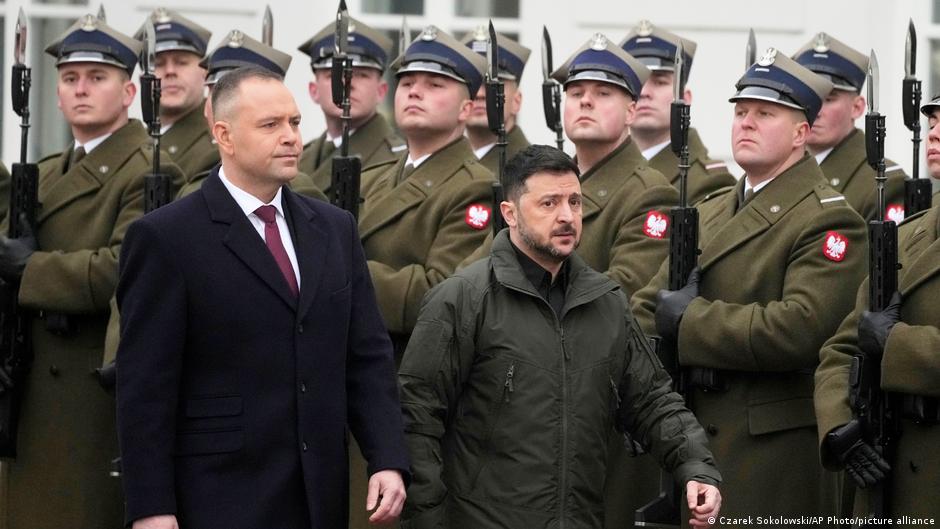
Relations between Poland and Ukraine have deteriorated significantly following Ukrainian President Volodymyr Zelenskyy’s decision to honor a military unit with ties to the Ukrainian Insurgent Army (UPA), which is historically linked to the deaths of up to 100,000 Polish civilians during World War II. Poland commemorates its victims of the UPA’s atrocities on its annual Day of Remembrance for the Volhynia Massacre, observed on July 11.
Since Russia’s full-scale invasion began in 2022, Poland has emerged as Ukraine’s largest European arms donor, supplying advanced weaponry such as Patriot interceptor missiles and tanks. This cooperation, initially bipartisan in Poland, has fractured amid rising domestic tensions over defense priorities.
Polish President Karol Nawrocki and Zelenskyy failed to resolve tensions during a NATO summit in Ankara. “Glorification of the UPA remains nonnegotiable,” Nawrocki stated, reinforcing his opposition to Ukraine’s EU accession ambitions. Meanwhile, far-right factions allege the coalition government jeopardized Polish military readiness by prioritizing Ukrainian aid.
National Movement leader Krzysztof Bosak criticized the government for secretly diverting Patriot missiles to Ukraine, claiming the weapons were essential for Poland’s own defense. Deputy Foreign Minister Marcin Przydacz acknowledged the diversion but defended the decision as strategically necessary. Law and Justice candidate Przemysław Czarnek accused Ukraine of exploiting Poland’s generosity.
To counter opposition backlash, Defense Minister Władysław Kosiniak-Kamysz disclosed Poland’s military aid expenditures: €3.8 billion since 2022, with €3.4 billion allocated in the coalition’s first two years. The government insists Patriot missile transfers did not compromise national security, as NATO and U.S. commanders approved the move.
Discussions over a delayed MiG jet-Drone exchange highlight ongoing friction. Ukraine demanded modernization of Polish MiG fighters before finalizing the 2026 deal, which Warsaw declined despite Kyiv’s insistence.
European Parliament Condemns Escalation
The European Parliament labeled Zelenskyy’s UPA honor “incompatible with EU values,” threatening to freeze bilateral cooperation. Zelenskyy defiantly rejected Polish demands, asserting, “No one can dictate how we honor our heroes.” Poland stripped Zelenskyy of its highest honor, the Order of the White Eagle, which Kyiv reciprocated by returning the medal.
Kyrylo Budanov, Zelenskyy’s chief of staff, warned of escalating tensions around July 11, citing intelligence about potential Polish provocations. The Volhynia massacre—orchestrated by UPA units to eliminate Polish civilians and create a Ukrainian nation-state—remains a visceral historical scar for Poland, particularly in regions like Volhynia.
Despite recurring diplomatic clashes, both nations remain committed to combating Russian aggression. However, differing approaches to arms transfers and historical memory threaten to fracture this alliance, raising concerns about regional security and European unity.
Historical Context and Political Fallout
The UPA’s brutal campaign during 1943-1952 targeted Polish communities in Volhynia and Eastern Galicia, aiming to establish a territorially contiguous Ukraine. This legacy fuels enduring Polish sensitivity to symbols glorifying the far-right UPA, which maintained close ties to German occupiers before its dissolution.
Poland’s July 11 national holiday, marked by ceremonies honoring massacre victims, exacerbates tensions. Ukrainian officials view the holiday as politically weaponized, while Polish conservatives frame UPA glorification as an affront to national dignity.
The Patriot missile dispute exemplifies divergent strategic priorities. While Poland emphasizes collective NATO defense, critics argue diverting weapons to Ukraine reduces Warsaw’s strategic reserves. The government counters that Russia constitutes an existential threat requiring maximum support to Kyiv.
As the 2027 parliamentary elections approach, Law and Justice seeks to frame the crisis as evidence of EU establishment incompetence, leveraging anti-Ukrainian rhetoric to rally nationalist voters. Analysts warn this could deepen polarization ahead of EU accession negotiations for Ukraine.
Also Read
- Iran state media says explosion in eastern Tehran province was controlled ammunition disposal
- Veteran Radio Host John Humphrys Critiques Successors for Shallow Portrayals, Inefficient Communication
- Hong Kong transport authorities eye toll adjustments for cross-harbour tunnels amid soaring post-reform traffic
- Russian Missile Attacks on Kyiv Result in Multiple Injuries and Structural Damage