






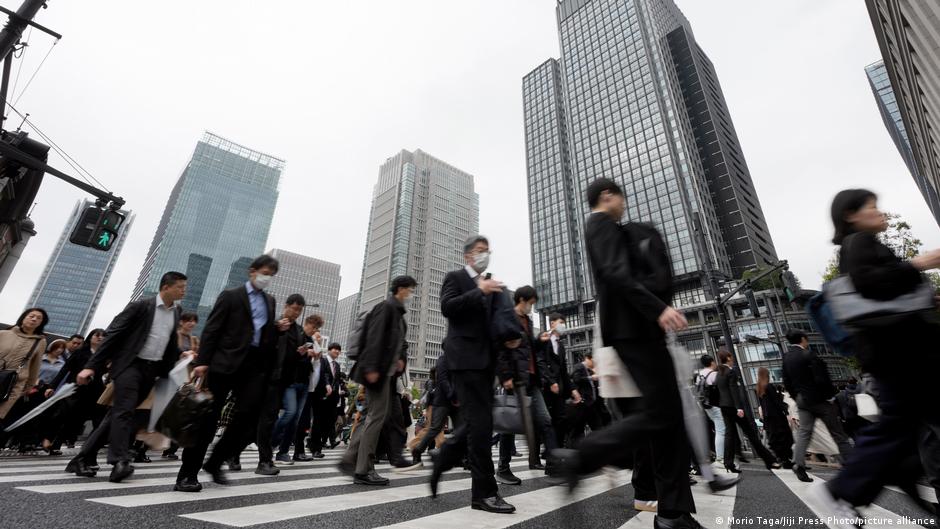
For Y.M., a Japanese man in his early 20s, his first job out of university at a real estate sales firm quickly became a grueling daily experience. Among his colleagues, he was consistently the one being berated.
According to his testimony featured on the website of Leadbrain, a Tokyo-based labor and human resources consulting firm, he sought a discreet way to leave because he was concerned about how coworkers would perceive him. Unwilling to burden his parents and determined to sidestep workplace confrontation — a widely held attitude among Japanese workers — he looked for an alternative path.
Rather than submitting his resignation in person, he turned to his phone and began searching for a resignation proxy service — a third-party agency capable of handling his departure without requiring direct interaction with his employer.
In Japan, disappearing from a workplace without notice is known as bakkkure, a concept somewhat parallel to “ghosting” in modern dating. For many foreigners, leaving a job without notice would be considered an irresponsible and hurtful act. Yet within the framework of Japanese social interaction, vanishing serves as a means to avoid direct conflict and preserve outward harmony.
Pay to Walk Away
Demand for these resignation agencies is surging. Albatross, one of Japan’s leading firms in this field, assists approximately 450 clients each month in quitting without confrontation. The company charges roughly €120 ($138.5) per client for a full-time position. The majority of its clients are young professionals in the service industry and manufacturing. The entire process can be completed within 15 minutes.
“The reasons why people request us to resign on their behalf range from physical violence to sexual harassment,” said Yuka Hamada, CEO of Albatross. “They are in a vulnerable position and lack the courage to quit on their own.”
Approximately one in three workers reported experiencing some form of workplace harassment, according to a survey of Japanese employees aged 20 to 49 conducted by consulting firm Shikigaku.
Harmony Above All Else
Traditional Japanese corporate culture emerged during the post-World War II economic boom and rests heavily on the “lifetime employment” system. Within this framework, loyalty is regarded as the highest virtue, and bosses often interpret resignations as personal affronts. As a result, many young employees dread the act of resigning in person.
“Announcing one’s intention to resign can feel not merely like ending a contract, but like disappointing others or failing to meet expectations one has previously worked to fulfill,” said Hiroki Nakamori, an associate professor at Rikkyo University’s Graduate School of Social Design Studies.
Japan is a fundamentally non-confrontational culture, and individuals are expected to conform when making commitments to their company and its prevailing norms.
“Those who disrupt harmony are not well received, so someone who wishes to leave may feel they should simply disappear without making much fuss,” said Hiroshi Ono, a professor of Human Resources Management at Hitotsubashi University Business School.
“Acting collectively and maintaining harmony is regarded as a sign of strength.”
This cultural imperative to avoid conflict runs deep. Even Japan’s 17-Article Constitution — the 7th-century foundation of modern Japanese governance — explicitly states: “Harmony should be valued and quarrels should be avoided.”
Ghosting With Consideration
Yet one can also ghost a job politely. “Clients may not say goodbye or express gratitude directly to the company. In such cases, the agency can deliver those words on their behalf,” said Albatross CEO Hamada.
This reveals the ultimate paradox of Japanese workplace culture: even when ghosting, the employee still feels compelled to observe meiwaku — the social obligation to minimize trouble for others and preserve collective order above all else. This principle extends to the removal of personal belongings from the workplace.
“Even if a client intends to completely vanish from their job, we still advise them to clear off their desk” before leaving, Hamada added.
Also Read
- The Growing Financial Burden Behind MoneyHero’s Southeast Asian Expansion
- Zambian health officials warn against wildlife consumption as anthrax kills dozens of animals
- Bitcoin and ethereum prices today, Monday, September 14, 2026: Crypto prices trying to hold as rate-hike expectations grow
- Veteran Pitcher Sonny Gray Weighs Retirement as Stellar Season Continues with Red Sox


