



[India Calls for Secure Maritime Corridors in the Black Sea]
India has urged Russia and Ukraine to guarantee safe passage for commercial shipping across the Black Sea, warning that attacks on merchant vessels endanger Indian seamen and threaten vital food and energy supplies.
New Delhi indicated that talks with both nations are currently underway.
“The targeting of commercial shipping and seafarers in the region must end, and free and unimpeded navigation and commerce through the international waterways must be restored at the earliest,” Foreign Ministry spokesperson Randhir Jaiswal said last week.
India represents over 12% of the worldwide seafaring workforce, employing 311,936 professionals according to a 2026 industry report. Recent attacks on merchant boats within and around the Black Sea have underscored the hazards faced by civilian crews.
The Turkish‑owned MV Royad Mammadov, a grain carrier heading from Ukraine, was set ablaze and subsequently sank after an attack on Monday, resulting in the deaths of two crew members. Three Indian nationals had been aboard when the incident occurred; they sustained injuries and were evacuated to Romania for medical care.
Ukrainian President Volodymyr Zelenskyy attributed the strike to Russia.
The Russian Defence Ministry stated that it had engaged two Ukrainian cargo ships in the Black Sea, though it did not specify which vessels were targeted.
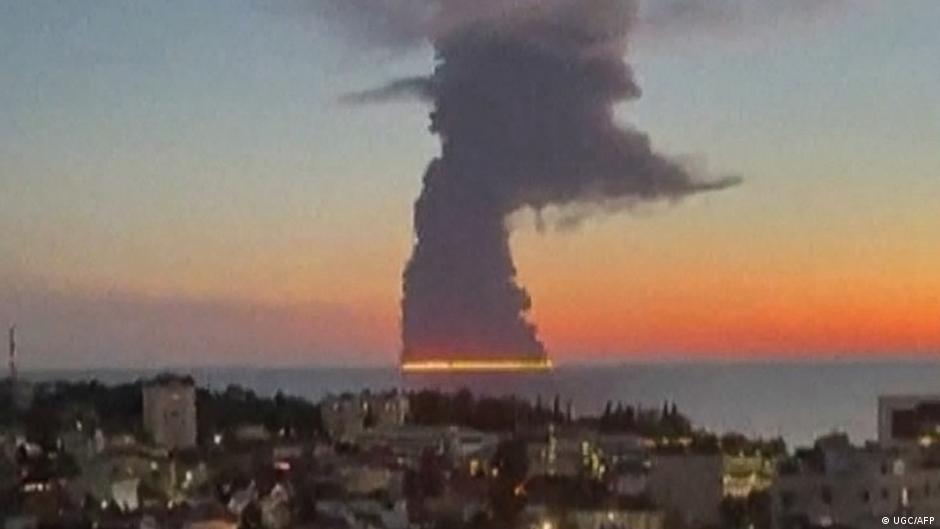
The Liberian‑registered oil tanker Aframax Rio was also recently damaged by unmanned vessels off the Black Sea coast near Sochi, per Russian authorities. The vessel was transporting twenty‑three Indians, who were all rescued.
How India has become Russia’s trade lifeline
To view this video please enable JavaScript, and consider upgrading to a web browser that supports HTML5 video
Can diplomacy deliver safety?
Anil Wadhwa, a former Indian diplomat, said India’s proposal to halt attacks on commercial shipping in the Black Sea covered energy infrastructure, safe passage for grain and energy exports, and an end to strikes on merchant vessels.
“Securing an ironclad guarantee depends entirely on a broader cessation of hostilities between Russia and Ukraine in the maritime theater,” Wadhwa told DW.
India’s close relations with Russia and expanding engagement with Ukraine give New Delhi access to both sides, but do not guarantee either will honor a shipping arrangement.
Ukraine’s Foreign Minister Andrii Sybiha has described India’s proposal for a possible ceasefire with Russia as the “broadest” of the four offers Kyiv has received.
Russia has not publicly endorsed a binding safe-passage deal proposed by India, despite welcoming New Delhi’s peace efforts.
Rajan Kumar of the Center for Russian and Central Asian Studies at Jawaharlal Nehru University said India could use its diplomatic leverage with Moscow to help bring the two sides towards an agreement.
“India could play a constructive role in facilitating dialogue between Russia and Ukraine, particularly on the issue of ensuring the safety of commercial shipping in the Black Sea,” Kumar told DW.
Working with other powers to reach a deal
He argued that India should also work with other influential countries from the Global South, particularly China, Brazil and South Africa.
“A coordinated approach with these countries could enhance their collective diplomatic leverage and strengthen their capacity to persuade both parties to adopt mutually acceptable arrangements for maritime security,” said Kumar.
India’s initiative comes as US President Donald Trump announced an “energy ceasefire” between Russia and Ukraine over the weekend, although its scope and implementation mechanism remain unclear.
Harsh Pant, vice president of the New Delhi‑based think tank Observer Research Foundation, said Trump’s intervention could help India’s efforts but might produce a narrower agreement that fails to address New Delhi’s wider concerns.
“The energy ceasefire could be an initial confidence‑building measure, whereas a Black Sea shipping arrangement requires additional commitments on attacks against merchant vessels, ports, maritime routes and the security of commercial traffic,” Pant told DW.
“India need not compete with Washington for the public credit of mediation. It could instead press for the inclusion of broader maritime provisions in any US agreement.”
Will India face a higher import bill?
Wadhwa said the proposed energy truce could also benefit Indian seafarers if it secured safe passage for energy cargoes.
(“Although Ukraine alleges that the Russians have already breached this so‑called truce, there will be pressure on both sides to allow energy cargoes safe passage. India is bound to gain as far as its crews are concerned in such a scenario,” he said.
The disruption to Black Sea shipping also has other implications for India such as delays in shipments of key commodities and higher transport costs.
“A prolonged Black Sea disruption would elevate India’s import bill mainly via higher freight on Russian crude and constrained soft oil supplies, with the strongest near‑term transmission to domestic edible oil prices and food inflation,” said Lekha Chakraborty, professor at the National Institute of Public Finance and Policy.
Edited by: Srinivas Mazumdaru
Also Read
- Netflix to shed 1,000 jobs in steepest cuts since 2022
- Delta Air Lines Unveils Major Upgrades to Delta One Business Class Cabin
- Sally Rooney’s publisher withdraws her books from UK sale over support for Palestine Action
- Michael Saylor Forecasts Bitcoin to Surpass $100K, Citing Legislative Setback as Bull Market Catalyst