



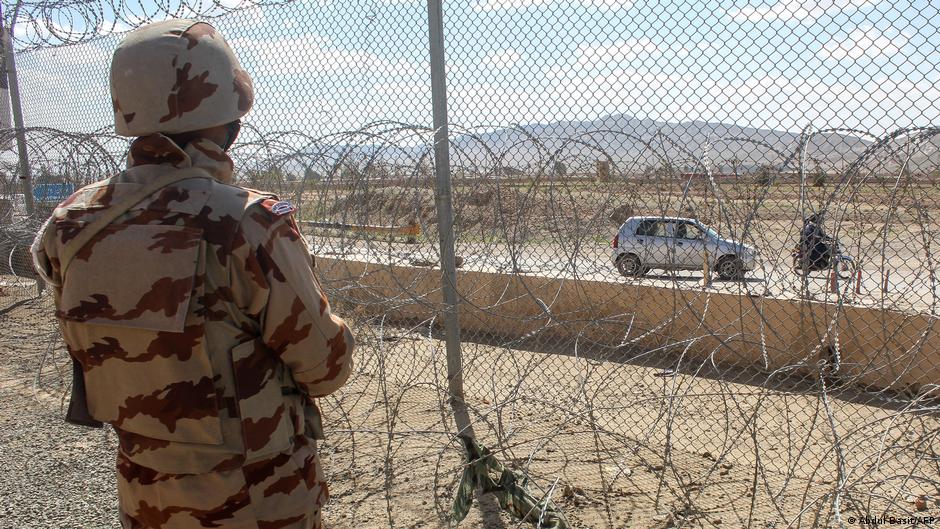
Pakistan and Afghanistan are currently experiencing escalating tensions, marked by repeated border clashes and strained diplomatic relations.
The recent escalation began in February 2026 when Pakistan initiated military strikes into Afghanistan targeting Taliban militants. In March, Pakistan’s defense minister declared the nation was at “open war” with Afghanistan, a statement underscoring the severity of the conflict. Since then, periodic violence has persisted, with Pakistan’s October strikes reportedly targeting Taliban-held “terrorist hubs”.
The core of the dispute centers on Pakistan’s allegations that the Taliban regime in Kabul harbors the Tehrik-e-Taliban Pakistan (TTP), a group conducting cross-border militant operations. The Taliban deny providing sanctuary to these militants.
Militants kill dozens of security officers in Pakistan
To view this video please enable JavaScript, and consider upgrading to a web browser that supports HTML5 video
India’s Diplomatic and Strategic Opportunities
The deteriorating relations between Pakistan and the Taliban present India with notable diplomatic and strategic opportunities, according to Shanthie Mariet D’Souza, an Afghanistan expert and founder of the Mantraya Institute for Strategic Studies.
The conflict has weakened Pakistan’s historical influence in Afghanistan while prompting the Taliban to pursue broader international engagements. D’Souza suggests India could respond by enhancing diplomatic outreach, providing humanitarian aid, developing infrastructure projects, and fostering trade, contingent on securing assurances that Afghan territory will not be utilized by anti-India militant groups.
However, D’Souza cautioned that this opportunity does not signify a fundamental strategic alignment between India and the Taliban. Afghanistan, under Taliban rule, is likely to adopt a diversified foreign policy rather than aligning exclusively with New Delhi.
She further notes that India lacks the geographical proximity, economic leverage, and security infrastructure necessary to supplant Pakistan’s role in Afghanistan. The possibility of the Taliban becoming a strategic ally remains highly improbable.
Former Indian ambassador to Afghanistan Amar Sinha emphasized that India’s engagement should not be interpreted as simply seeking advantage over Pakistan. He highlighted the unintended consequences of Pakistan’s military actions on Afghan civilians and stressed that the Taliban’s need for alternative partners drives their interest in regional cooperation.
Sinha clarified that while the conflict creates an opening for India, it does not automatically translate into a strategic partnership. The Taliban may pursue Indian collaboration while maintaining ties with China, Russia, Iran, and Gulf states, thereby preserving their strategic autonomy rather than shifting dependence from Pakistan to India.
The Cost of Closer Ties
Gautam Mukhopadhyaya, another former Indian ambassador to Afghanistan, views the Pakistan-Taliban tensions as an opportunity for India to reclaim strategic ground lost after the Taliban’s 2021 return to power.
He warned, however, that New Delhi’s historical treatment of Afghan nationals could undermine its credibility. Mukhopadhyaya pointed to restrictive visa policies affecting Afghan students, scholars, workers, and patients, noting that India’s security apparatus often categorizes Afghans as potential threats by default.
“Former Afghan partners have been left disappointed, even bitter,” he said. “A strategic relationship built on oppression cannot provide a stable foundation.”
‘Don’t send us back’: Afghan women in India fear deportation
To view this video please enable JavaScript, and consider upgrading to a web browser that supports HTML5 video
Geography and Trade Limitations
India reinstated air freight routes between Kabul and Delhi in December 2025, along with a link to Amritsar, but these corridors cannot easily replace Pakistan as a primary transit route. Bilateral trade between India and Afghanistan reached $908 million in 2025-26, while Pakistan- Afghanistan trade plummeted due to repeated border closures.
Taliban Foreign Minister Amir Khan Muttaqi highlighted the importance of strengthening ties with India during discussions with Indian envoy Yatin Patel in October. However, air freight costs and logistical challenges hinder India’s ability to fully capitalize on this opportunity.
New Delhi has sought to leverage Iran’s Chabahar port to enhance access to Afghanistan and Central Asia, but regional instability and Iran’s own challenges complicate these efforts. Analyst Gulshan Sachdeva noted that while India’s interests align with improving connectivity, the infrastructure and political conditions required to realize this vision remain uncertain. He emphasized that Russia and China are better positioned to shape Afghanistan’s economic integration, leaving India to navigate a complex landscape of competing priorities.
Islamabad’s Security Concerns
Pakistan accuses India of covertly supporting the Taliban regime, a claim made by diplomat Muhammad Jawad Ajmal at the United Nations in October. Islamabad alleges that India provides material and logistical aid to Taliban forces conducting operations against Pakistan, though these allegations remain unsubstantiated.
Pakistan further claims India supports the TTP and the Balochistan Liberation Army. India denies these charges, while the Taliban maintain their stance of non-involvement in cross-border militancy.
Ayesha Siddiqa, a Pakistan-based security analyst, offered a nuanced perspective on Islamabad’s security concerns. She noted that India’s growing engagement with Afghanistan is perceived as a threat by Pakistan’s military establishment, which views the situation through a predominantly security-focused lens.
Siddiqa argued that worsening relations between Karachi and Kabul could create a “two-front security dilemma” for Pakistan, heightening its geopolitical vulnerability. While India may find increased operational space in Afghanistan, the Taliban are unlikely to prioritize India over other global partners like China.
Why Pakistan is fighting the Taliban it once backed
To view this video please enable JavaScript, and consider upgrading to a web browser that supports HTML5 video
Also Read
- EU Grants Sakharov Prize to ICC as U.S. Sanctions Loom
- Ten councillors quit after leader’s fraud conviction
- Palestinian Official Decries West Bank Fragmentation Into ‘Prisons’ and ‘Battlefield’ Amid Escalating Settler Violence
- Coroner Honored by Emotional Testimony Surrounding Child’s Preventable Death