






Tehran officials are preparing for potential renewed airstrikes, according to media reports that the United States and Israel are evaluating new options to intensify their campaign against Iran.
The U.S. midterm elections on November 3 and Israel’s October 27 election have introduced a political dimension to the way both nations are handling the conflict, which began in late February.
Polling indicates that soaring energy prices linked to the Iran war are damaging Donald Trump’s Republican Party. On October 8, the president tweeted that the United States would not strike Iran before the midterms, referencing “productive discussions” with Tehran. The most recent U.S. strikes on Iran occurred in early September.
Once the elections conclude, Trump may feel less constrained politically.
Israeli Prime Minister Benjamin Netanyahu has run on a platform advocating regime change in Iran.
Report: Plans in place for ‘short’ US-Israeli operation
According to senior U.S. officials, the New York Times reported on Wednesday that the United States and Israel have drafted specific plans for a brief but intensive operation against Iran, targeting nuclear facilities, energy infrastructure, and Iran’s missile and drone arsenal.
An official told the newspaper that the objective is to compel Iran to make diplomatic concessions by further weakening its economy, as peace talks have stalled. The United States has also kept a blockade on Iranian oil exports through the Strait of Hormuz, reducing Tehran’s oil revenues.
Other outlets have reported similar plans in recent weeks. In early October, Axios reported that the Pentagon directed U.S. Central Command to finalize preparations for resuming major combat operations against Iran.
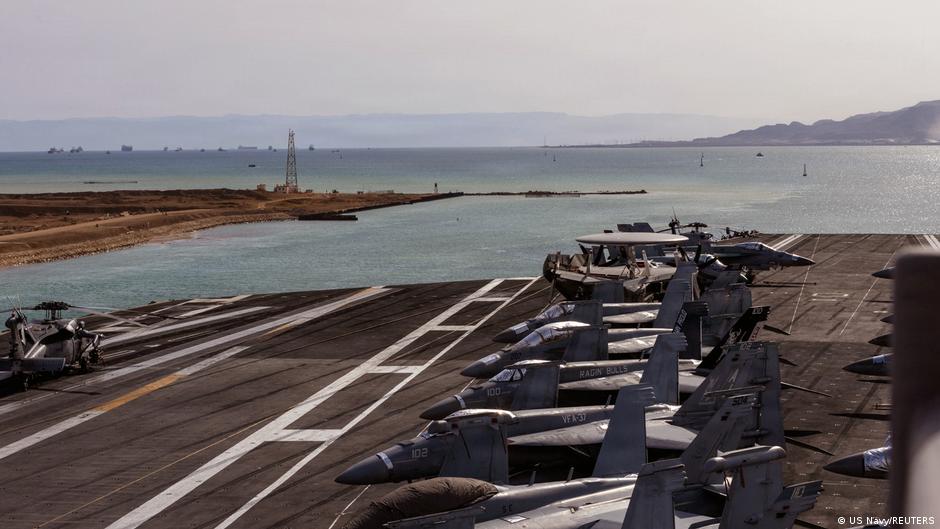
Two U.S. aircraft carrier strike groups are currently deployed in the Arabian Sea, with a third expected to arrive by late November.
On October 15, Trump told the right‑wing broadcaster Newsmax that he was considering a strike on Pickaxe Mountain, near the Natanz nuclear complex, where U.S. officials say Iran may have relocated sensitive nuclear material underground.
A day later, CNN reported that Trump is considering employing a Massive Ordnance Air Blast (MOAB) against Iranian targets. Because the MOAB generates a massive aerial blast wave, its effectiveness against underground facilities such as Pickaxe Mountain would be limited.
Has Iran learned from earlier attacks?
Iranian officials say they are prepared for another attack, with a broad response that could include strikes on U.S. bases and energy facilities in the Gulf.
Ali Asghar Shafieian, a media adviser to Iranian President Masoud Pezeshkian, told DW that, despite the United States’ substantial technological and military advantage, Tehran’s strategy focuses on preserving the regime’s grip on the country rather than matching U.S. strength.
“The United States holds the upper hand in military power and technology, but Iran’s strength lies in how it manages a crisis,” Shafieian said.
Shafieian noted the rapid replacement of senior officials killed in previous attacks as evidence of Tehran’s effort to make its political structure more resilient. Iran has also been rebuilding missile and drone capabilities that were damaged during the initial wave of strikes at the start of the war.
Citing Iranian officials, Reuters reported that Iran is preparing for renewed Israeli and U.S. attacks rather than seeking a deal to end the war, and that Tehran is prolonging negotiations to weaken Trump ahead of the midterms.
Iran has warned regional governments that U.S. military bases and critical infrastructure could become targets if neighboring countries assist another U.S. or Israeli operation.
Iranian Foreign Minister Abbas Araghchi warned that participation or cooperation by regional states would elicit a “decisive and proportionate” response.
“Iran is prepared to give diplomacy another chance if we see strong evidence of a sincere U.S. desire to build trust and reach a just solution,” Araghchi posted on X on Wednesday. “But if the U.S. chooses war over diplomacy, it will certainly result in an even greater strategic failure.”
How Iran prepares for new strikes?
Rahman Ghahremanpour, a Tehran‑based political analyst, told DW that Iran’s preparations extend beyond missiles and drones and prioritize internal security.
This includes confronting armed opposition groups, preparing for possible protests, and developing plans to prevent external military pressure from combining with domestic unrest.
“In the government’s asymmetric‑war strategy, the ultimate objective is to convince the United States that regime change through military action is impossible,” Ghahremanpour said.
Ghahremanpour added that some factions within Iran have supported returning to a negotiated agreement, but he believes Washington’s demands have become so extensive that even Iranian officials favoring compromise find it difficult to build domestic support for them.
“For now, we are facing a deadlock,” Ghahremanpour said. “Iranian officials do not appear optimistic about reaching an agreement.”
Negotiations continue to stall over Iran’s nuclear program, which U.S. officials say must be the top priority.
Iran’s latest proposal to the United States, conveyed through Qatari mediators, offered to reopen the Strait of Hormuz under Iranian control in exchange for the lifting of the U.S. maritime blockade, the release of frozen assets, and an end to military actions.
Citing data from the ship‑tracker Kpler, the Wall Street Journal reported that oil flows through Hormuz are approaching pre‑war levels as the U.S. military escorts tankers and shipping companies become more willing to take risks for higher returns, raising questions about whether Iran’s leverage over oil flows is weakening.
US military buildup: What message is it sending Iran?
To view this video please enable JavaScript, and consider upgrading to a web browser that supports HTML5 video
Trump threatens to ‘annihilate’ Iran if no deal is reached
To view this video please enable JavaScript, and consider upgrading to a web browser that supports HTML5 video
Iran’s regime: inside the system protecting its rulers
To view this video please enable JavaScript, and consider upgrading to a web browser that supports HTML5 video
Edited: Emmy Sasipornkarn


