



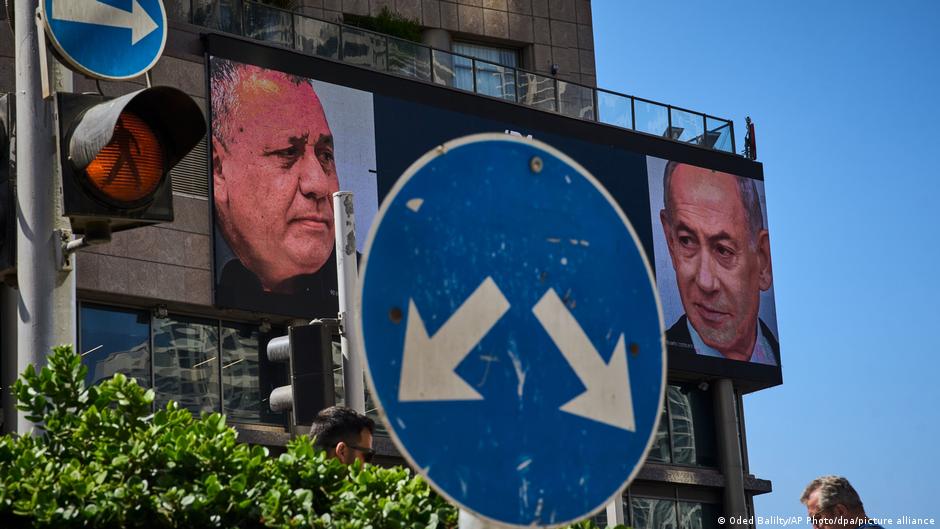
Israel’s election this Tuesday marks the first general vote since the Hamas attack on October 7, 2023—an assault that plunged the nation into one of its most severe security crises in modern history.
As incumbent Prime Minister Benjamin Netanyahu battles to retain power, the central question extends beyond who will lead the next government. It concerns how the incoming administration will navigate the region-wide security crisis triggered by the attack and Israel’s subsequent military response, which included direct confrontations with Iran.
How Israel’s PM Netanyahu holds on to power
To view this video please enable JavaScript, and consider upgrading to a web browser that supports HTML5 video
US President Donald Trump recently lent his full support to the incumbent Israeli leader, branding him a “warrior prime minister.” Trump warned that electing any other leader could jeopardize Israel’s alliance with Washington.
“If Israel has the wrong leader, which would be anyone other than Bibi (Benjamin Netanyahu), America will have to do this work ourselves, and I am not inclined to do so,” Trump stated in an online post regarding the Iran conflict.
Behind closed doors, however, reports suggested a divergence between the Israeli government and the Trump administration. According to The Financial Times, the Israeli military planned a fresh round of strikes on Iran’s nuclear facilities, government centers, and energy infrastructure around October 10. Trump reportedly opposed such an escalation ahead of the US midterm elections on November 3.
The Jerusalem Post subsequently challenged this narrative, reporting that the military had received no specific directives for such an operation.
Iran conflict: Could a new phase of the war be imminent?
To view this video please enable JavaScript, and consider upgrading to a web browser that supports HTML5 video
Israel’s moves hinge on Trump’s decision
The Israeli election has evolved into a tight contest between Netanyahu and his primary rival, Gadi Eisenkot, the former Israel Defense Forces (IDF) chief of staff and leader of the centrist “Yashar” party.
However, Raz Zimmt, head of the Iran program at the Tel Aviv-based Institute for National Security Studies (INSS), cautions that the differences between the two main political camps are not profound enough to suggest a “fundamental shift” in Israel’s stance toward Tehran following the election.
“In the perception of Israel’s left, right, and center factions regarding the Iranian threat, especially its nuclear threat, there are minor differences,” Zimmt told DW.
Furthermore, Zimmt notes that any military escalation against Iran depends far more on the decisions of the US president than on the identity of Israel’s prime minister.
“Overall, I do not expect Israel’s policy toward Iran and its proxies to undergo dramatic changes, regardless of the future government’s composition,” he stated.
INSS senior fellow Danny Citrinovitch echoes this view, asserting that the election outcome is unlikely to bring about “fundamental changes” in Israel’s Iran policy.
“Even if Netanyahu personally steps down from power, his influence and the policies shaped over recent years will not simply vanish,” Citrinovitch told DW.
Hamas attack as a turning point for Israel and Iran
The current consensus regarding Iran can be traced back to the Hamas terror attack three years ago. Prior to the assault, according to Navid Toobian of the US-based Middle East Media Research Institute, many believed Israel should engage with the Islamic Republic “in a limited and managed way,” focusing only on confronting the arms of the so-called “Axis of Resistance.” October 7, however, fundamentally altered the rules of the game.
How did the October 7 attacks change Israel?
To view this video please enable JavaScript, and consider upgrading to a web browser that supports HTML5 video
While Israel was aware of Iran’s rhetorical calls for its destruction, these were largely dismissed as internal propaganda designed to rally domestic support among hardline Islamists, Toobian explains.
The terror strike by Iran-backed Hamas, however, demonstrated that Tehran “spares no effort to strike Israel.”
What are US and Israel hoping to achieve in the Iran war?
Damon Golriz, a researcher at the Hague Institute for Geopolitics, also identifies October 7 as the catalyst for what he describes as the “largest historical trauma of the Jewish nation,” rooted in the memory of the Holocaust.
“Preserving Iran’s nuclear ambitions and continuous threats against Israel has intensified this fear that for a large portion of Israeli society, today’s rulers in Iran have become a symbol of a historical threat,” he told DW.
Iran-US peace deal leaves many major issues unresolved
To view this video please enable JavaScript, and consider upgrading to a web browser that supports HTML5 video
Against this backdrop, Golriz outlines three primary vectors guiding current US and Israeli policy toward Iran.
“First, the removal of the regime’s leaders; second, industrial and infrastructural collapse,” and third, orchestrating a civil war and what he calls “geographic scissors” to dismember Iran, leveraging armed Kurdish and Baluch separatists, he explained.
The US and Israel are not the only actors in this conflict. In a recent report, Reuters cited senior Iranian security officials stating that Tehran has prepared detailed operational plans for retaliatory strikes. Tehran warned that its retaliatory capabilities include destroying undersea fiber-optic communication cables in the Persian Gulf and Strait of Hormuz, as well as targeting US-dependent data centers and AI infrastructure in the region.
Diplomacy: A missed opportunity?
Looking at alternatives to military escalation, Golriz highlights a diplomatic opportunity that emerged six months ago in Islamabad, where Tehran agreed to never initiate war or military operations against Israel.
Iran war: What’s next after Islamabad talks fail?
To view this video please enable JavaScript, and consider upgrading to a web browser that supports HTML5 video
“For the first time in the history of the Islamic Republic, the fundamental national security interests of Israel were signed by the presidents of Iran and the United States,” according to Gorliz.
The first article of the Islamabad framework could have been “the beginning of the end for ‘Death to America’ slogans and anti-Jewish threats, including ‘Death to Israel,” Golriz noted.
Although this diplomatic window was quickly closed, Golriz argues that “with political will, the provisions and spirit of the Islamabad Memorandum will be the first strategic step toward lasting peace.”
However, INSS senior fellow Citrinovitch remains less optimistic about the willingness of Israeli elites to return to diplomacy.
“Currently, returning to the nuclear deal has no place in Israel’s political arena,” he told DW.
Edited by: Darko Janjevic
Also Read
- Deadly High-Speed Train Collision South of Madrid Claims Dozens of Lives
- Spain high-speed railway crash kills at least 68 after train stopped on tracks
- Real Madrid issues apology to China over Mbappe’s Mao remarks
- Houthis say Saudi-led airstrikes killed 14 at a market in northern Yemen, and other Mideast news