



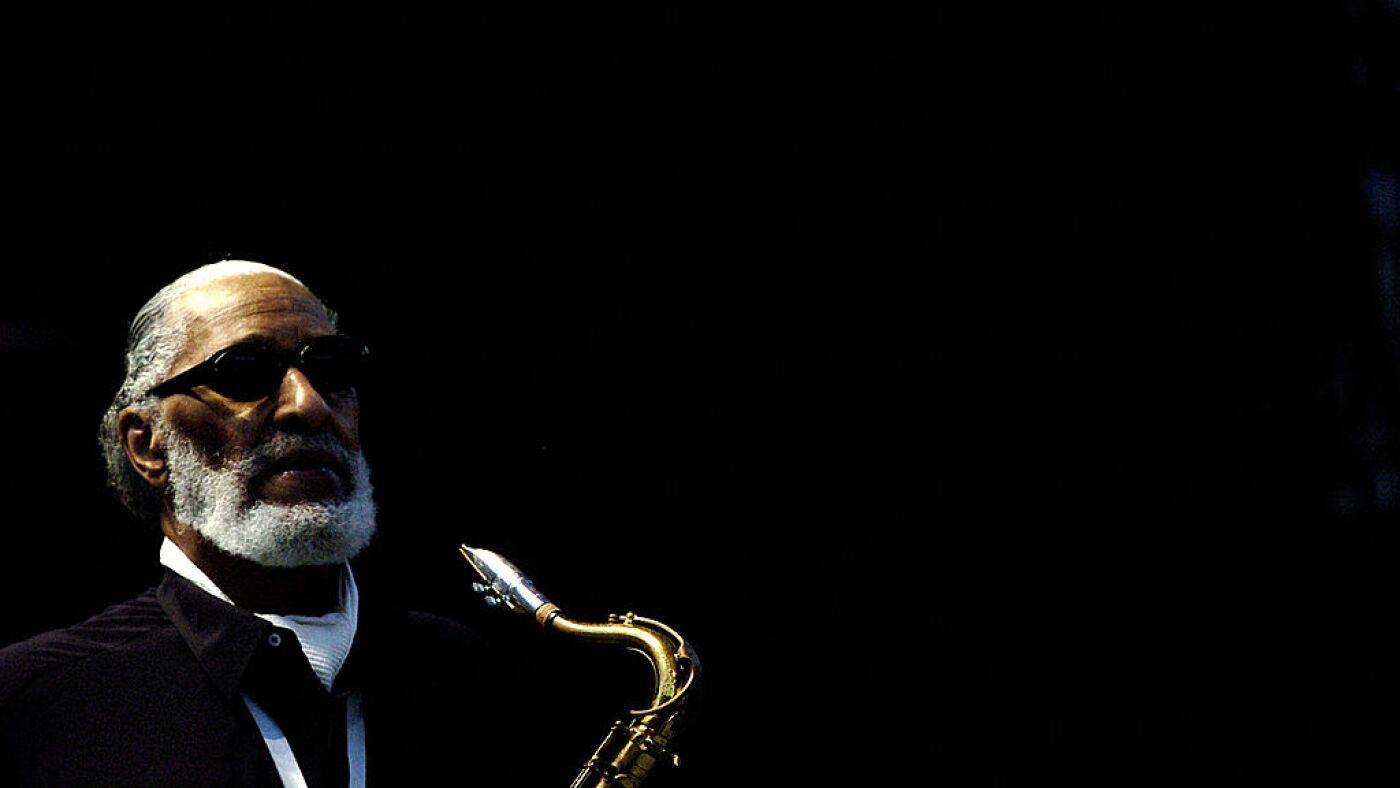
The passing of Sonny Rollins, a colossus of the saxophone, leaves behind an unparalleled legacy in jazz. Born on September 7, 1930, in New York City, Rollins was a force to be reckoned with, mastering the art of improvisation and infusing his playing with an infectious, energetic spirit that captivated audiences worldwide.
At the age of 95, Rollins’ contributions to the world of jazz are being celebrated far and wide. A National Endowment for the Arts Jazz Master, a recipient of a Kennedy Center honor, and a recipient of the National Medal of the Arts, Rollins’ distinguished career spans decades of innovative and boundary-pushing performances.
“I think when I’m playing completely spontaneous, just something comes out from somewhere, that’s my best work,” Rollins told NPR in 2007, encapsulating the essence of his creative approach. “Say, for instance, if I’m doing a song, any song — I practice it, I learn it, I learn the lyrics, I learn everything that’s possible to learn about the physical piece of the composition, or whatever it is. Then, when I get on a concert stage, I forget about it. I try not to think about it. Then I let the music play me.”
From his early days on Sugar Hill, Harlem’s “strivers’ row,” to his later years practicing on the Williamsburg Bridge, Rollins’ life was a testament to the enduring power of jazz. His personal style, driven by his own unique taste and not by commerce, left an indelible mark on the genre. With his robust, commanding presence and his unbridled enthusiasm, Rollins personified the jazz spirit.
As his friend and pianist, Joanne Brackeen, so aptly put it, “He’s got a sound that is him. And that’s rare – it’s funny, but that’s rare. You hear just a couple of seconds and you know who that is. And not only who that is, but how he is? You can hear the whole energy of his being, in every note.”
Throughout his illustrious career, Rollins collaborated with a diverse range of artists, from the Rolling Stones to Stevie Wonder, and composed music for films, like the movie Alfie. His friendliness and openness to new experiences are a testament to his joy in the creative process.
Rollins’ repudiation of the commercialization of jazz is a powerful statement, encapsulating the essence of his legacy. “The corporate culture is anathema to jazz,” he said. “We don’t like the cookie-cutter, everything exactly the same way. We’re about creation, freedom, thinking things out in the moment, like life is. Life changes every minute. A different sunset every night, that’s what jazz is about.”
Sonny Rollins knew what jazz is about – and his enduring legacy will continue to captivate audiences for generations to come.
Also Read
- Fans Decry Netflix’s Abrupt Cancellation of “The Boroughs,” Call for Boycott
- What Your All‑A Meal Choice Reveals About Your Audrey Hepburn Film Preference
- Professional Driveway Cleaning Services in Langwarrin: Benefits and Best Practices
- Not Into Flip-Flops? This is the Rival Heeled Shoe Trend Cool Girls Are Wearing Now