







Extensive use of red paint by the ancient Maya contaminated their lakes and waterways with mercury, new research has found.
The culprit was cinnabar, a bright red mercury-sulfide mineral used to create vermilion pigment. Runoff from painted surfaces carried the mineral into waterways, where anaerobic bacteria converted it into highly toxic methylmercury within lake sediments. Over time, this compound concentrated as it moved up the food chain.
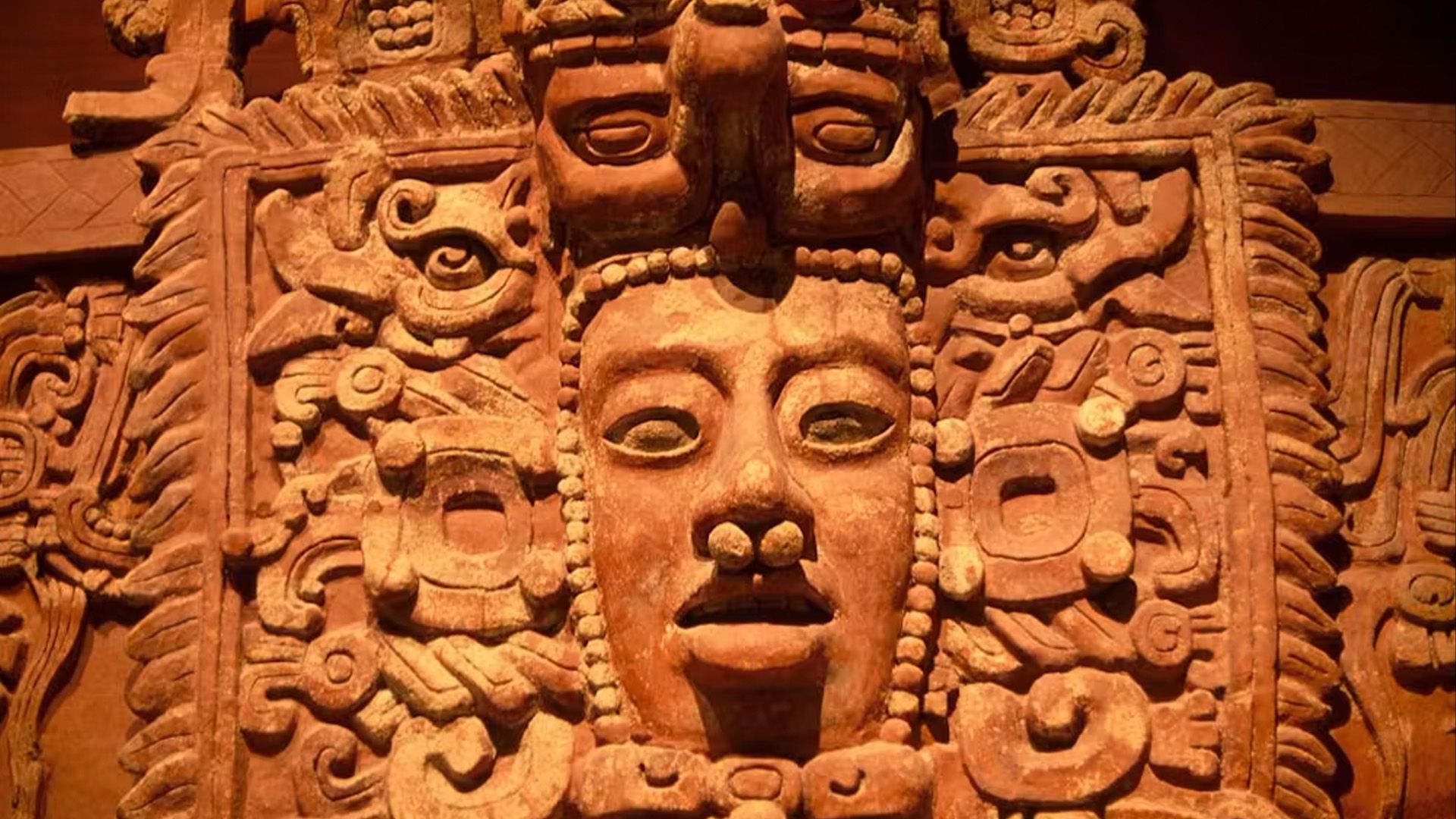
The ancient Maya—whose civilization spanned what is now southern Mexico and Central America, and whose descendants still live there—applied red pigment to nearly everything. Archaeologists have uncovered countless reddened objects, including sculptures, monuments, walls, plazas, pottery, and human remains prepared for ceremonial burials. Cinnabar was a staple ingredient in their paint, alongside red ocher, a nontoxic pigment derived from the iron mineral hematite.
But the Maya’s devotion to red—which symbolized the sun, blood, and life to them—triggered an environmental crisis as cinnabar runoff poisoned nearby waters, according to Matthew Waters, the study’s lead author and a paleolimnologist at Auburn University in Alabama. Paleolimnologists are scientists who study ancient waterways.
“They would have noticed an odd change in the water’s color and a decline in its productivity, including fewer fish for food,” Waters told Live Science. The Maya relied heavily on freshwater fisheries, including shellfish, for protein.
Earlier research had documented elevated mercury levels in the Maya southern highlands and south-central lowlands, but the extent of contamination across Mexico’s Yucatán Peninsula had not been fully investigated.
To address that gap, Waters and his colleagues analyzed mercury concentrations in ancient Maya sediments from the Yucatán. Their findings, published November 4 in Science Advances, point to cinnabar paint as the likely source of widespread contamination.
“We did not realize the Maya used it in the quantities we observed,” Waters said.
Troubled Waters
The research uncovered extreme mercury concentrations in sediment cores from two ancient Maya sites: Cobá Lake, a shallow body of water beside the city of Cobá, and Cenote Xcach (also spelled X-Canché), a flooded sinkhole adjacent to a rarely excavated jungle city.
These sediment cores record more than 2,000 years of environmental history, with spikes in mercury poisoning aligning with multiple periods of the Preclassic and Classic Maya eras, roughly from A.D. 40 to 820.
Waters noted that the U.S. Environmental Protection Agency considers drinking water unsafe if it contains more than two parts per billion of mercury. For fish, in which mercury accumulates over time, the limit is one part per million; anything above that threshold can lead authorities to seize the catch.
Severe mercury poisoning in humans occurs when blood levels exceed roughly 100 parts per billion, typically through drinking contaminated water or eating tainted marine animals such as fish. Symptoms can include permanent lung damage, brain damage, and death.

The most contaminated sections of the Yucatán cores contained mercury at 2.3 parts per million, the team found. “They lived with this for decades and, in one instance, for centuries,” Waters said.
The researchers also looked for evidence of ecological harm in the sediment cores. They found almost no microscopic fossils of freshwater shellfish, suggesting that high mercury levels were killing off aquatic life. The cores also showed very few traces of algal blooms, which should have occurred regularly, Waters noted—likely because algae could not survive in the poisoned water.
Maya Collapse
Experts continue to debate the causes of the Maya collapse in the eighth and ninth centuries, with drought-driven disruption of food supplies among the leading hypotheses.
Mercury concentrations were elevated during the Preclassic and Classic periods, but Waters said environmental damage from the metal had been declining in many areas for centuries before the collapse, though it may still have played a contributing role.
Cinnabar does not occur naturally in the Yucatán and was likely imported from what is now Honduras, the researchers said. At Cobá Lake, cinnabar imports eventually ceased, and mercury levels dropped to a background concentration of roughly 20 parts per billion by A.D. 520. At Cenote Xcach, however, mercury contamination persisted until the civilization’s collapse, according to the sediment record.
Also Read
- Genetic evidence confirms a western African origin for the Bantu expansion across sub‑Saharan Africa
- Human Metabolism Generates 2 Billion Tons of CO2 Annually, Study Finds
- AI teddy bears spark fresh safety fears after report discovers malfunctioning toys
- Sequoia Ends Its Scout Initiative, Concluding a Landmark Era in Venture Investing


