



As Riyadh’s conflict with Yemen’s Houthi militia escalates, the Mecca Joint Defense Agreement—Saudi Arabia’s latest tripartite security framework with Turkey and Pakistan—is entering its operational phase.
Under the trilateral commitment signed on August 7, 2026, by Saudi Crown Prince Mohammed bin Salman, Turkish President Recep Tayyip Erdogan, and Pakistani Prime Minister Shehbaz Sharif, an armed attack on any one of the three states constitutes an attack on all.
Despite continued Houthi strikes against Saudi Arabia and Riyadh’s retaliatory airstrikes in Yemen, neither Pakistan nor Turkey joined combat operations following the signing, maintaining that command and operational structures were still being finalized.
Situations shifted on Monday, however, after an emergency meeting of defense and foreign ministers and senior military chiefs from all three nations in Riyadh. According to a joint statement, Turkey and Pakistan agreed to implement their collective defense commitments in practical terms immediately, involving the provision of military forces and capabilities and their rapid deployment within Saudi Arabia. The alliance also announced the appointment of retired Pakistani Lieutenant General Nauman Mahmood as its first secretary-general, serving a three-year term.
“Ankara and Islamabad undoubtedly will seek to strengthen the Saudi kingdom’s posture vis-a-vis the Houthi threat and demonstrate that the Mecca agreement can pass its first real test and show up as a game-changing alliance,” Burcu Ozcelik, a senior research fellow for Middle East security at the London-based Royal United Services Institute, told DW.
“However, what the activation of the Mecca pact means operationally, including the specific capabilities deployed and the scope of their missions, has not been made public,” she said, adding that this was “not unusual for such a military operation amid myriad sensitivities.”
According to the 2026 Global Firepower military strength ranking, Saudi Arabia, Pakistan and Turkey between them have about 1.4 million active personnel, some 3,400 military aircraft, 6,000 tanks and more than 340 naval assets.
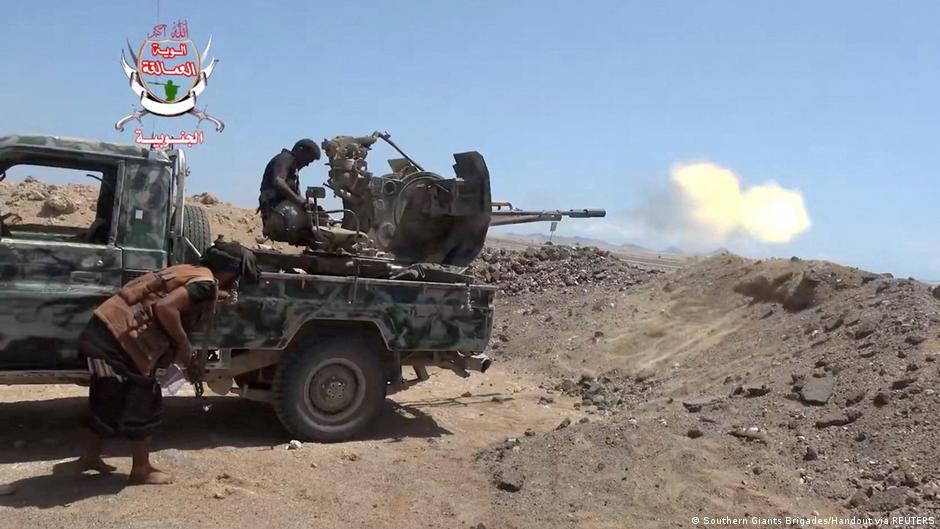
On Wednesday, Saudi Arabia intercepted another ballistic missile north of Riyadh. Earlier this week, Saudi-backed Yemeni government forces had launched a large-scale offensive, to recapture territory along the Red Sea coast around the strategic Bab el-Mandeb Strait and the city of Mokha. Saudi Arabia launched airstrikes to support the offensive.
Turkey Considers Diplomatic Resolution Alongside Military Options
The scope of a potential Turkish military deployment remains unclear. Turkey is a NATO member, which means that any military involvement on its part could carry broader implications for the entire military alliance.
Turkish Foreign Minister Hakan Fidan noted after the meeting in Riyadh on Monday that there were not only military options on the table. “We also discussed what could be done to resolve the problem peacefully and through dialogue,”
Turkey’s involvement in the Mecca defense deal has been criticized by opposition parties in the country. Under Turkey’s constitution, international agreements generally require approval by the Grand National Assembly of Turkey but this has not yet been granted.
“How can the so-called Mecca agreement on joint defense be valid and implemented without having been submitted to the Turkish parliament for approval?” Namik Tan, an Istanbul lawmaker from the social democratic Yeni Parti and a former Turkish ambassador to Israel and the United States, asked in a statement.
Yani Bagcioglu, a retired Turkish admiral, also warned that “the risk of Turkish forces and commercial vessels linked to Turkey becoming targets of Houthi attacks should not be overlooked.”
Pakistan Balances Strategic Interests Amid Regional Tensions
The third signatory, Pakistan, is walking its own particular tightrope. On Monday, Defense Minister Khawaja Muhammad Asif told Pakistani television channel Geo News that Pakistan and Turkey were playing a “supportive role,” with their forces involved in “reconnaissance and other things,” while Saudi forces were engaged in combat.
“Pakistan’s contribution to the defense of Saudi Arabia is nothing new,” Imtiaz Gul, an independent Pakistani security analyst, told DW. “The arrangement has existed for six decades,” he said, adding that “defense against the Houthis nevertheless represents a different kind of challenge because the group is considered an Iranian extension and by implication, Iran would consider this an attack on its regional interests.”
A direct engagement in Yemen at Saudi Arabia’s side would, therefore, risk not only ending Pakistan’s apparent neutral status as a mediator in the US-Iran war, but also strain relations with Tehran, he said. He pointed out that Saudi Arabia was a close ally of the US, while the Houthis are backed by Iran.
Hisham Al-Omeisy, a Yemeni conflict analyst in Washington, told DW that “for years, a cornerstone of the Houthi narrative and rallying cry has been a fight against perceived external enemies.” Accordingly, he added, foreign boots on the ground in Yemen would “not only backfire, it would solidify the Houthi local coalitions and fuel their recruitment drives.”
Can Yemen’s government turn the tide against the Houthis?
To view this video please enable JavaScript, and consider upgrading to a web browser that supports HTML5 video
Haroon Janjua in Islamabad contributed to this article.
Edited by: Anne Thomas