






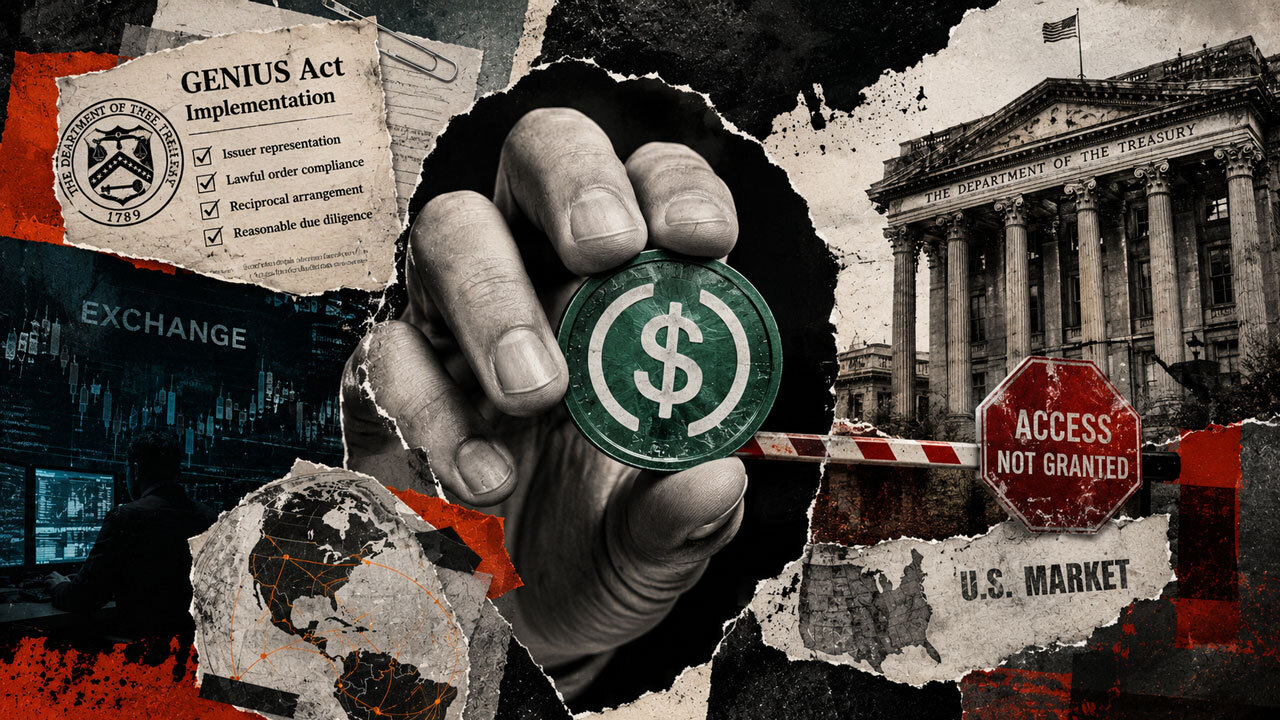
Under the proposed regulatory framework of the GENIUS Act, US digital asset service providers and exchanges may continue to offer specific foreign-issued payment stablecoins, provided they can demonstrate proactive due diligence regarding the issuer’s ability to comply with US legal mandates.
The proposed rule suggests that providers may rely on a foreign issuer’s formal representation regarding its technical capacity and intent to honor lawful orders—such as freezing or seizing tokens—only after conducting reasonable due diligence. However, platforms will be prohibited from relying on such claims if they know, or should reasonably know, that the representation is inaccurate or that the issuer is unable or unwilling to comply.
The Treasury Department indicates that such diligence must, at a minimum, verify that the issuer is not subject to any public prohibitions on secondary trading under the GENIUS Act. This check alone is insufficient; platforms must also evaluate all reasonably available information pertaining to the issuer.
This standard shifts the responsibility of access decisions to the businesses that list, trade, or provide custody for stablecoins to US customers. Notably, the proposal does not list specific qualifying tokens or determine whether assets like USDT will remain accessible.
Two Regulatory Gates for Foreign Issuers
The proposal outlines two distinct implementation phases. The Treasury expects the Act’s general regulatory regime to take effect on January 18, 2027, unless final implementing rules establish an earlier date. A more stringent set of offering restrictions is slated to begin on July 18, 2028.


Starting from the 2028 deadline, covered providers will generally be permitted to offer or sell payment stablecoins to US residents only if they originate from a permitted US issuer or a foreign issuer that meets Section 18 requirements. To qualify under Section 18, a foreign issuer must operate under a regulatory regime deemed comparable by the Treasury, register with the Office of the Comptroller of the Currency, and maintain sufficient reserves at a US financial institution to ensure liquidity for US customers (unless reciprocal arrangements are in place). Additionally, the issuer’s jurisdiction must not be subject to comprehensive US sanctions or designated as a primary money laundering concern.
These issuer-level requirements function alongside the platform’s own mandate to perform due diligence on lawful-order compliance. Consequently, even a foreign issuer that meets Section 18 criteria will not receive automatic approval for listing on a US exchange.
The proposal does not constitute a total ban on the holding or direct transfer of foreign stablecoins. Exemptions include lawful direct transfers between individuals without an intermediary, specific transfers between an individual’s own US and foreign accounts under the same parent entity, and transactions conducted via self-custody software or hardware wallets.
The exact definition of “adequate” platform diligence remains to be determined. The Treasury is currently soliciting feedback on whether final rules should mandate written or regularly updated issuer representations, strict record retention, smart-contract audits, or specific verification of “seize, freeze, and burn” functionalities. These remain areas of inquiry rather than established mandates.
Public comments regarding the Federal Register proposal are being accepted until October 19, 2026. Until the Treasury finalizes these standards and regulators make specific determinations regarding individual issuers, the availability of stablecoins in the US will depend on compliance evidence and asset categorization rather than a formal list of approved foreign tokens.
Also Read
- Former White House Speech Operator Accused of Insider Trading on Prediction Markets, Faces $107,539 Disgorgement and Ban
- Weekend Trading Shows Crypto Stock Tokens Remain Near Friday Levels Despite Market Closure
- Bitcoin Hardware Wallet Interface Moves to Maintenance Mode as Successor Remains Unproven
- The Hidden Risk in Shadow Banking: How Insurance Companies Face Unforeseen Liquidity Threats


