






NEUTRAL TONE SHIFT WITH HEADLINE RENAMING
Why a North Korean Soldier’s Border Crossing Raises Security Questions
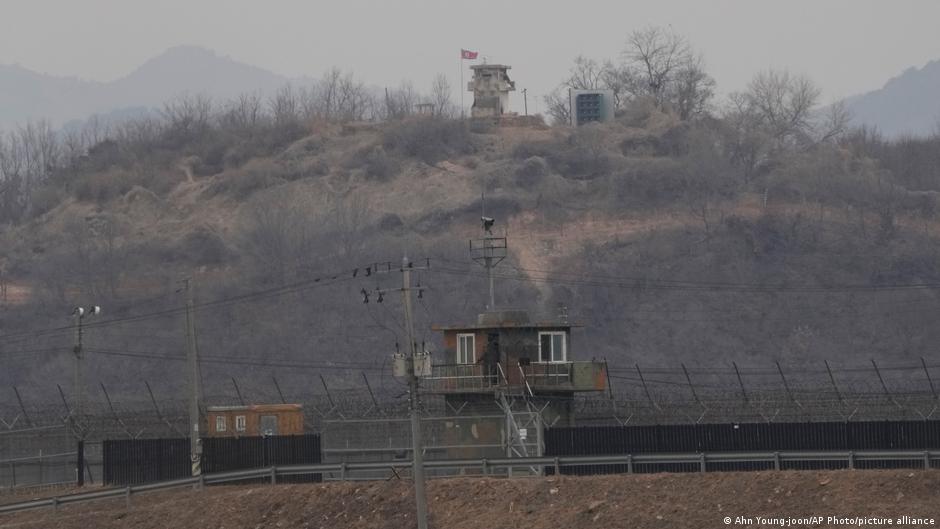
South Korea’s military reported Wednesday that a North Korean soldier was intercepted after crossing the central portion of the inter-Korean border overnight.
“A North Korean soldier was apprehended during overnight border surveillance operations at the central demarcation zone. Authorities are continuing investigations into the circumstances surrounding the crossing,” a Joint Chiefs of Staff statement read.
The South Korean news agency Yonhap reported additional context not officially confirmed by authorities, suggesting the individual may have sought asylum.
Military Demarcation Line Dynamics
The Korean Demilitarized Zone (DMZ) forms a heavily guarded frontier between the Koreas, featuring active artillery positions and “no-man’s-land” zones. Both militaries maintain overlapping security perimeters along the 4-kilometer-wide DMZ corridor.
2024 Defection Statistics
According to South Korea’s Ministry of Unification, 236 North Koreans reached Seoul in 2024, primarily through China-North Korea border regions rather than direct inter-Korean crossings. The DMZ crossing remains exceptionally rare due to:
- Minefields covering 60% of the military demarcation zone
- 24/7 surveillance using ground troops, aerial drones, and radar systems
- Instability risks from active artillery emplacements on both sides
Yonhap noted this marks the fourth recorded DMZ crossing since President Lee Jae Myung’s administration began in June 2024, with previous incidents occurring in July and October.
Defection Protocol for North Korean Arrivals
Upon capture, defectors undergo:
1. 72-hour medical evaluation
2. Security vetting by National Intelligence Service
Approved defectors receive permanent South Korean citizenship under the 2003 Humanitarian Support for North Korean Refugees Act. Pyongyang condemns this as “hostile recruitment activity” in its state media broadcasts.
Strategic Intelligence Implications
European geopolitical analysts suggest such crossings may indicate deteriorating cross-border security conditions – a narrative rejected by the Ministry of Unification spokesperson who stated “Our border defenses remain adequately deployed.”
Also Read
- Sluggish Industrial Economy Impacted The Sherwin-Williams Company’s (SHW) Growth
- Tasdeeq Prepares to List on PSX, Poised to Become South Asia’s First Public Credit Bureau
- Injured Hybrid Crocodile Rescued from Residential Building in Hong Kong
- Trump alleges gas price gouging, calls for DOJ investigation


