






]
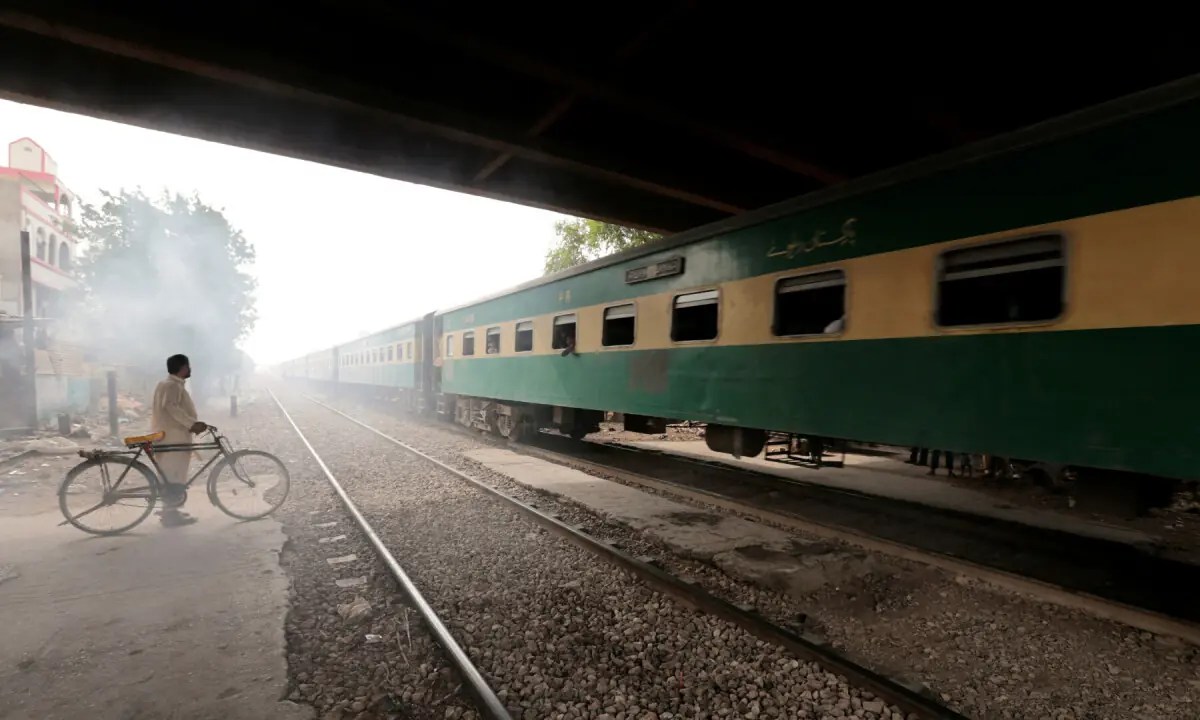
ISLAMABAD: Pakistan Railways’ 996-kilometre Main Line-3 (ML-3) project, with an estimated cost of Rs280 billion, will be financed through a special $390 million bridge loan from Reko Diq Mining Company (RDMC), to be repaid within two years.
The financing arrangement, along with the project’s foreign exchange exposure and security costs—approximately Rs46.38 billion, or nearly 17% of the total—have raised concerns from the Planning Commission regarding fiscal pressure and post-completion security planning.
The $892 million ML-3 upgrade aims to improve the Rohri-Sibi-Quetta-Koh-i-Taftan corridor, supporting transport for the Reko Diq copper and gold project. RDMC is jointly owned by Canada’s Barrick Gold Corporation (50%), Balochistan government (25%), and three federal state-owned entities—OGDCL, PPL, and GHPL (each 8.33%).
Sources said the Central Development Working Party (CDWP), chaired by Planning Minister Ahsan Iqbal, referred the project to the Executive Committee of the National Economic Council (Ecnec) following directives for the Ministry of Railways to address outstanding concerns.
While the prime minister has approved the bridge financing and the Economic Coordination Committee (ECC) has cleared related agreements, only Rs250 million has been allocated for FY2026-27 in the Public Sector Development Programme (PSDP).
The Planning Commission warned that the Rs278.62 billion project timeline—split into two phases through 2033—faces risks if funding shortfalls occur, citing past railway project delays and cost escalations.
Phase-I (2026-2030) at $585 million will cover critical infrastructure, while Phase-II (2031-2033) at $145 million addresses remaining priorities. Security during construction alone is budgeted at $162 million.
The rehabilitated corridor connects strategically to regional markets via Iran and Turkiye, and provides access to Gwadar Port. With current track speeds limited to 10-15 km/h and monthly freight trains numbered at one or two, the upgrade will increase capacity to 26 trains monthly and boost speeds to 100 km/h.
The Planning Commission also questioned the financial phasing, noting only 9% of the budget was allocated for Year 1 despite a seven-year timeline, and challenged the inclusion of security costs within the development budget.
Also Read
- Paris Mortuaries Reached Capacity as Extreme Heat Wave Drives Surge in Fatalities
- Paris Funeral Homes Strain Under Record Heatwave, Mortuary Capacity Exceeded
- PU Prime Adds Pre-IPO Access to OpenAI and Anthropic Derivatives
- Brussels Commemorates U.S. Semiquincentennial with Grand Festivities at Cinquantenaire Park


