



• 996-km project will upgrade Rohri-Sibi-Quetta-Koh-i-Taftan rail line to support transportation from Reko Diq copper and gold project
• Officials say upgraded corridor will boost mineral exports, strengthen regional connectivity with Iran and Turkiye, improve access to Gwadar Port
ISLAMABAD: Due to financial constraints, Pakistan Railways’ 996-kilometre Main Line-3 (ML-3) project covering the Rohri-Sibi-Quetta-Koh-i-Taftan section, estimated to cost approximately Rs280 billion, will be financed through a $390 million bridge loan from Reko Diq Mining Company (RDMC), repayable in a lump-sum payment within two years.
The financing arrangement, its foreign exchange exposure, and projected security costs of around Rs46.38 billion—nearly 17% of the total cost—have drawn scrutiny from the Planning Commission, which has also raised concerns about insufficient planning for post-completion security measures.
The $892 million ML-3 upgrade aims primarily to facilitate transportation for the Reko Diq copper and gold project. RDMC is a joint venture where Canada’s Barrick Gold Corporation holds a 50% stake, while the remaining 50% is equally owned by the Balochistan government and three federal state-owned entities—OGDCL, PPL, and GHPL.
Sources informed Dawn that during the project’s review by the Executive Committee of the National Economic Council (Ecnec), the Central Development Working Party (CDWP), led by Planning Minister Ahsan Iqbal, instructed the Ministry of Railways to address several unresolved issues before formal approval could be granted.
The prime minister has approved the $390 million bridge financing from RDMC, and the Economic Coordination Committee (ECC) of the cabinet has also approved the related rail development and financing agreements. However, only Rs250 million has been allocated for the project in the FY2026-27 Public Sector Development Programme (PSDP).
The Planning Commission noted that the bridge financing structure, requiring full repayment to RDMC by June 2028, could impose significant fiscal risks and repayment challenges.
According to Pakistan Railways, the Rs278.62 billion project will ultimately be funded through the PSDP, with interim funding provided by RDMC and the federal government. The project includes track renewal, embankment and bridge rehabilitation, turnout replacements, and the construction of 11 new railway stations between Spezand and Taftan.
Implementation is divided into two phases. Phase-I (2026-2030), estimated at $585 million, will focus on critical infrastructure works, while Phase-II (2031-2033) will complete remaining priority tasks at an estimated cost of $145 million. Security arrangements during construction are projected to cost approximately $162 million.
Work has already commenced. A joint venture led by M/s Zeeruk International has been appointed as consultant, and RDMC has agreed to assist Pakistan Railways in procuring essential machinery, equipment, and long-lead items.
Rehabilitation of the Rohri-Sibi and Quetta-Taftan sections is deemed critical due to anticipated increased mining activity around Reko Diq. The existing road network is deemed insufficient to meet the mining project’s large-scale transportation demands.
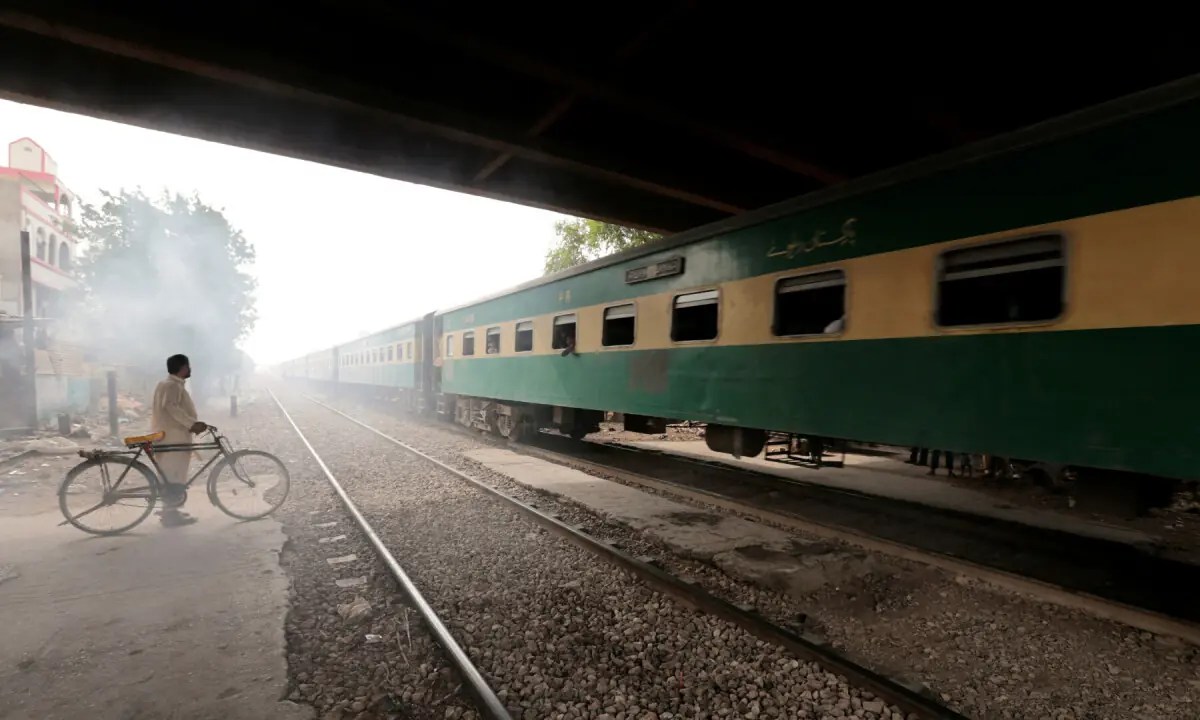
The current ML-3 infrastructure is in poor condition, with tracks having exceeded their useful lifespan. Trains currently operate at restricted speeds of 10-15 km/h.
The route holds strategic importance for regional connectivity, linking Pakistan with Iran and Turkiye, while providing access to European and Central Asian markets.
Officials stated the project would generate significant economic and social benefits by enhancing mineral exports, creating employment opportunities, and strengthening regional trade.
Passenger traffic on the Quetta-Taftan section has nearly ceased due to deteriorated track conditions and safety concerns. Trains that still operate take nearly 48 hours to complete the journey, compared to approximately 15 hours by road.
Currently, only one or two freight trains operate monthly between Quetta and Taftan. Following rehabilitation and the start of Reko Diq operations, freight traffic is expected to rise to eight train sets monthly, with additional services connecting Iran and other regional destinations.
Officials also noted that connecting Nokundi with Gwadar Port would offer a shorter export route for minerals.
The existing line capacity of two train pairs between Quetta and Taftan is projected to increase to 26 trains, while operating speeds are expected to rise to 100 km/h, enabling efficient transportation of Reko Diq’s mineral output to Karachi for export.
The Planning Commission also questioned the project’s financial phasing, noting that only Rs25.87 billion—about 9% of the total cost—has been allocated for the first year of implementation (FY2026-27), despite the project’s seven-year execution period.
“If funding cannot be secured in time, the project will face delays, leading to substantial cost overruns, as seen in previous railway projects,” the commission observed.
The commission also raised questions about the inclusion of Rs46.38 billion in security costs within the project’s development budget.
“Security provision is not a development activity; however, it has been included in the project cost,” it noted, questioning whether the provincial government had been consulted about providing security through local police.
The commission further highlighted that the security allocation, accounting for approximately 17% of the total project cost, is unusually high and could compromise the project’s financial viability.
Also Read
- US and Iran Reach Ceasefire Agreement Ahead of Urgent Diplomatic Talks in Qatar
- Google Finance Adds Portfolio Tracking, Market Briefings, And Android App – Pulse 2.0
- Are Meme Cryptocurrencies Like Dogecoin Suitable for Long-Term Investment Portfolios?
- State-backed developers drive Shenzhen building boom amid market slump