



• Technical discussions set to resume Tuesday with Pakistan’s involvement
• Optimism over Hormuz stability as diplomacy advances
• Reiterates demand for Afghan territory non-use in cross-border terrorism
• Remarks on ongoing efforts to free hijacked tanker crew
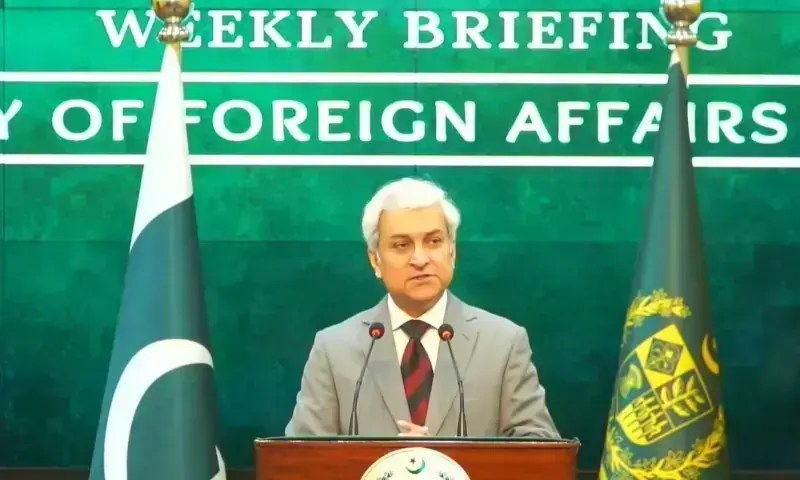
ISLAMABAD: Pakistan has expressed guarded optimism regarding the renewed momentum in U.S.-Iran technical negotiations, stating that breakthroughs in trade and economic collaboration with Tehran are contingent upon the lifting of international sanctions. Foreign Office spokesperson Tahir Hussain Andrabi confirmed at Wednesday’s press briefing that talks initiated in Buergenstock, Switzerland, have laid foundational progress toward sanctions relief.
“The roadmap established during those discussions demonstrates a tangible pathway for engagement,” Andrabi asserted, emphasizing that sustained dialogue remains critical. He noted temporary suspensions in technical-level exchanges between Iran and Washington have been resolved, with bilateral discussions resuming next Tuesday under Pakistani mediation.
The spokesperson highlighted emerging diplomatic frameworks, including a 60-day implementation timeline from the June 21 Hormuz de-escalation agreement signed by Pakistan, Qatar, the U.S., and Iran. This includes establishing maritime incident prevention protocols, de-confliction mechanisms involving Lebanese mediators, and enhanced communication channels for Gulf security cooperation.
Addressing regional partnerships, Andrabi affirmed Pakistan’s alignment with the Gulf Cooperation Council’s position on maritime sovereignty while stressing that “regional challenges require solutions owned by regional stakeholders.” This aligns with Islamabad’s stance on maintaining territorial integrity across member states.
Regarding Iran’s economic interactions, Assembly Member Andrabi clarified that projected $300 billion financing discussions – anticipated to feature in Switzerland talks – will prioritize joint projects in energy, infrastructure, and industrial zones. He specifically referenced expansion of Iran-Pakistan gas pipelines and cross-border industrial parks as flagship initiatives.
On Afghanistan, Pakistan reiterated its demand for Taliban authorities to prevent terrorist cells operating from Afghan soil – particularly concerning Pakistan’s tribal regions. Meanwhile, the government acknowledged China’s pivotal role in facilitating Kabul-Tokyo dialogue and vowed continued trilateral cooperation with Beijing.
Humanitarian developments included Pakistan’s facilitation of 30 returned Iranian nationals, including fishing crews detained offshore. In parallel, the Ministry of Foreign Affairs confirmed that preparations for Ali Khamenei’s state funeral were under review, with final representation delegations pending cabinet approval.
Following the Iranian president’s historic April visit, Pakistan capitalized on strengthened bilateral ties to advance regional economic corridors, with particular emphasis on Turkmenistan-Afghanistan-Pakistan-India (TAPI) energy linkages. The spokesperson concluded by praising Pakistani media for responsible coverage during sensitive negotiations that aided conflict resolution efforts.
Published in Dawn, June 25th, 2026
Also Read
- Senate GOP Backtracks on Iran War Powers Vote After Trump Rebuke
- Panel Advocates Language Revisions in Punjab Telecom Bill
- Emerging Trade Opportunities: How the Lakers Could Position themselves to Win the New York Knicks’ Spotlight Spotlight
- Indian Equities May Rise at Market Open as Oil Prices Continue Decline