






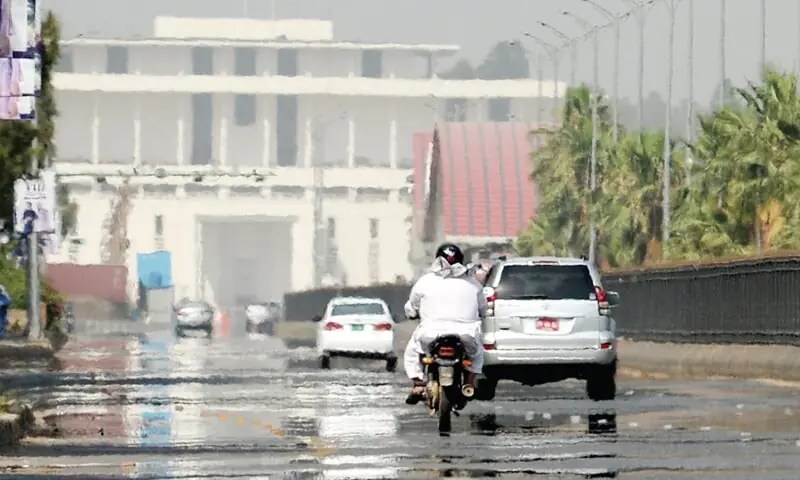
The Pakistan Meteorological Department (PMD) has extended its forecast of below-normal rainfall and elevated temperatures across most regions of the country from July to September.
The PMD outlined in its three-month outlook—shared with Dawn—that the Indian Ocean Dipole (IOD) remains in a neutral phase but is projected to transition to a positive phase during the season.
Additionally, sea surface temperatures in the central and eastern tropical Pacific Ocean are rising, signaling the onset of El Niño conditions, typically linked to reduced rainfall anomalies in Pakistan.
“Projections indicate these warming trends will likely persist through July–September 2026, with potential for further intensification,” the PMD report stated.
The report clarified that while a positive IOD phase usually correlates with slightly higher monsoon rainfall, the delayed onset of positive IOD conditions may limit its impact on overall rainfall across the country.
Projections suggest a general pattern of “normal to below-normal rainfall” nationwide during the forecast period, with the most significant deficits projected in northeastern Punjab and adjacent regions. This aligns with the probabilistic outlook, which forecasts below-normal rainfall in most areas, including Punjab, Sindh, southern Khyber Pakhtunkhwa, and much of Balochistan.
Conversely, Gilgit-Baltistan, Kashmir, and upper KP are projected to receive normal to slightly above-normal rainfall, the report noted.
Simultaneously, mean temperatures are expected to remain above normal across the country, with the highest deviations anticipated over northeastern Punjab and eastern Gilgit-Baltistan (GB).
The tercile probabilistic temperature outlook indicates that most models predict above-normal temperatures nationwide, with the highest likelihood over Punjab, southern KP, extending into eastern Balochistan and western Sindh.
The PMD cautioned about heightened risks of flash floods and landslides, particularly in mountainous and flood-prone regions, due to “near-normal to slightly above-normal precipitation in northern areas,” alongside urban flooding in plains of major cities across all four provinces.
It also highlighted that above-normal temperatures in GB, upper KP, and Kashmir may accelerate snowmelt, potentially increasing river inflows and streamflow in downstream catchments, as well as glacial lake outburst floods (GLOFs) in these areas.
However, below-normal rainfall in all four provinces raises concerns about water stress for key Kharif crops—sugarcane, rice, cotton, and maize—thereby increasing irrigation demands.
The report further warned of expanded risks of vector-borne diseases like dengue and potential damage from strong winds, dust storms, and hailstorms affecting seasonal crops, vegetables, and orchards. Farmers are advised to implement protective measures for standing crops.
Persistent above-normal temperatures across the country indicate a heightened likelihood of intermittent heat stress during the season, especially in southern Punjab and Sindh. In contrast, normal to slightly above-normal rainfall in northern high mountain regions is expected to moderate and reduce the intensity of heatwaves in those areas.
“Given the recent rise in windstorm events, billboards in major urban areas should either be removed or securely reinstalled with enhanced protection to withstand severe winds,” the PMD report advised.
“Similarly, proactive measures should be taken to safeguard solar energy infrastructure to minimize damage during such events,” it added.
Also Read
- Israel Weighs Trump‑Iran Accord Amid Uncertain Details
- South African Runners Shatter Records as George Kusche Wins Up Run and Gerda Steyn Secures Fifth Comrades Title
- Swing into Transport Stocks: Union Pacific and J.B. Hunt Lead the Bull Market Rotation
- Ukraine to start EU membership talks, ushering in years of reforms while fighting Russia’s war


