






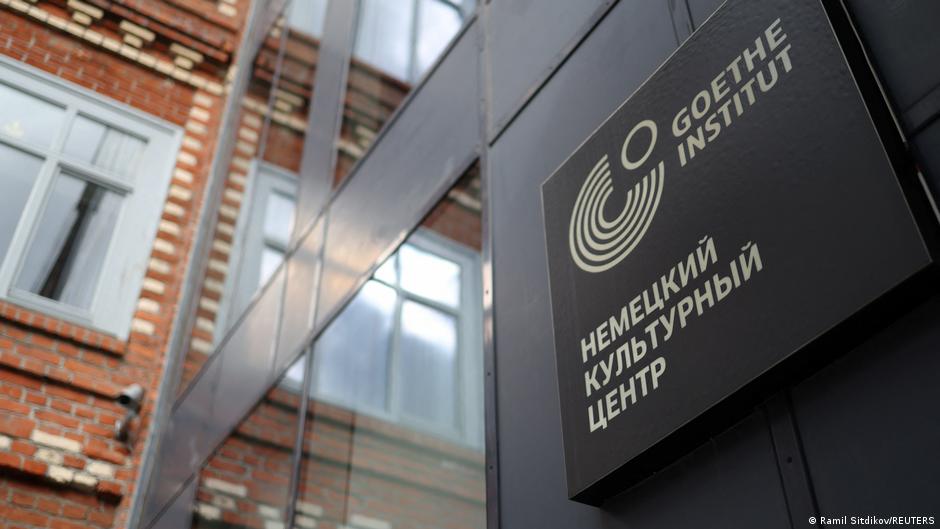
The Goethe-Institut is preparing to shut down all of its Russian locations by Sunday, marking a severe deterioration in bilateral relations between Germany and Russia.
In retaliation for Berlin’s response to a drone attack at Leipzig airport earlier this month, the Russian Foreign Ministry ordered the shutdown of German cultural centers in Moscow, St. Petersburg, and Novosibirsk. German officials attributed the attempted attack to Moscow and implemented sanctions, which include closing the Russian House in Berlin, the Russian Consulate General in Bonn, and imposing stricter visa restrictions on Russian citizens.
“All staff must cease operations in Russia by September 13, 2026,” stated Goethe-Institut Secretary General Gitte Zschoch. “Our libraries will no longer lend books, and we will discontinue all training programs. German language teachers will lose a vital source of professional development, while residents of Russia will face restricted access to the German language, culture, and reliable information about Germany.”
DW solicited personal accounts from its Russian audience regarding the impact of the closures. These submissions, shared anonymously, do not constitute a representative survey. Russian authorities classify DW as an “undesirable organization,” rendering any cooperation with the outlet a criminal act.
Difficulty Taking German Exams Locally
Many readers express concern that the closure of Goethe-Institut branches will prevent them or their relatives from taking exams for internationally recognized German language certificates within Russia.
Some readers noted that ethnic Germans seeking to relocate back to Germany, known as late repatriates, would be disproportionately affected.
“I emigrated from Russia as a late repatriate, but my parents still reside there. They planned to take Goethe-Institut exams this fall or winter before submitting their resettlement documents. They will now have to travel abroad to take the exams, causing them additional stress and financial burden,” one reader reported.
DW also received feedback from parents whose children are enrolled in German-language schools and plan to pursue higher education in Germany.
“My son attends a German school, but we can no longer take the exam in Russia. We will be forced to travel to another country,” one parent stated.
Germany blames Russia for attempted terror attack in Leipzig
To view this video please enable JavaScript, and consider upgrading to a web browser that supports HTML5 video
It remains uncertain whether examinations, language courses, and educational programs will continue through alternative formats or partner organizations in Russia. Some readers expressed hope that limited services might transition online.
Severe Impact on German Language Educators
The closures threaten not only those planning to emigrate or attend German universities but also educators. A German language teacher from the Moscow region told DW that her school had collaborated with the Goethe-Institut for over 15 years.
“This partnership was a cornerstone of our work. The institute provided high-quality teaching materials and contemporary publications about life in Germany, making our lessons engaging and relevant. Our students attended supplementary courses, and many successfully earned their Goethe certificates,” she wrote.
“I am a German teacher who cannot find employment in Russia,” another educator told DW.
“It is terrible. I am a German teacher and feel professionally stranded and lost,” a third wrote.
Despite restrictions imposed since the onset of the war in Ukraine in 2022, demand for the institute’s services remained robust. According to the Goethe-Institut, approximately 10,000 people studied German through its programs and partnerships in 2025, down from roughly 16,000 before 2023. The institute administered about 22,000 exams, and its libraries received 6,700 visitors in 2025.
Culture Held Hostage to Political Decisions
Many readers view these developments as another chapter in the severing of ties between Russia and Germany.
“We wish for cultural relations between the Russian Federation and Germany to remain intact,” a DW user responded. “It is deeply sad to realize that culture has become a hostage to political decisions. The closure of the Goethe-Institut will impact ordinary citizens who have no influence over politicians.”
Some Russian readers emphasized the accountability of political leaders. One reader described the decision to close the institutes as another step toward national isolation and questioned why the consequences fall on ordinary citizens rather than the policymakers who make such decisions.
“Why can the people making decisions to isolate Russia from Europe simultaneously provide their own children and close relatives with a European education and a European lifestyle?” a DW user asked, suggesting a ban on educating the children and close relatives of top Russian leadership at universities in Germany and other EU countries.
Part of the audience considered Moscow’s response inevitable.
“The closure of the branches appears to be a logical response to the shutdown of the Russian House in Germany. Could it have been otherwise? It is a shame that cultural and humanitarian ties are becoming hostages to politics,” one reader wrote.
Some Russians Blame Germany for the Strained Relationship
Conversely, some Russians believe the closure of Goethe-Institut branches in Russia was justified and attribute the recent escalation of tensions to Germany.
“German authorities destroyed cultural cooperation with Russia by closing the Russian House. The responsibility lies entirely with the German side,” said one survey participant.
A 2011 bilateral intergovernmental agreement between Russia and Germany governs the operations of the Russian House in Berlin and the Goethe-Institut’s branches in Russia. The accord obliges both nations to ensure reciprocal conditions for their cultural centers, though it does not mandate the automatic closure of one country’s centers if the other closes its own.
Goethe-Institut President Gesche Joost characterized the closure of its Russian branches as “the end of an era in German-Russian cultural relations.”
According to its official website, the Goethe-Institut operates 154 branches across 100 countries, a figure that includes the three Russian branches now being shuttered.


