






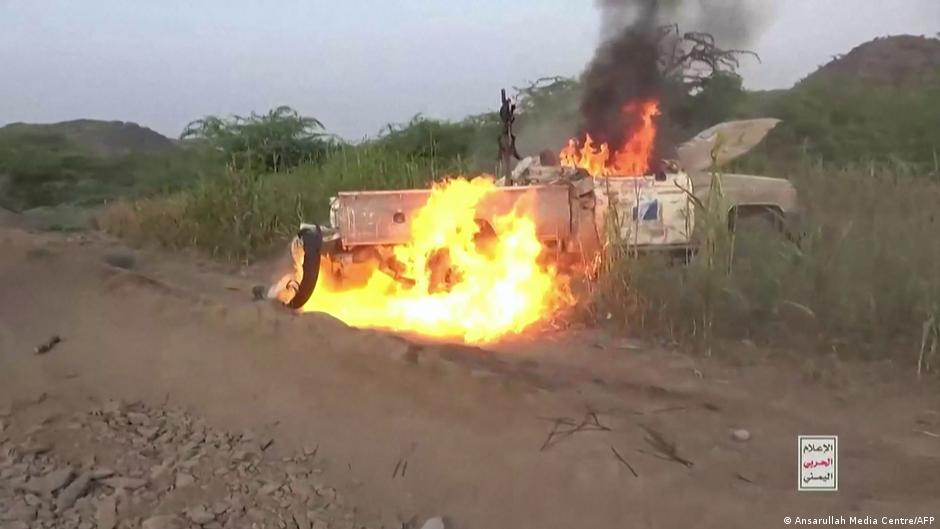
Saudi Arabia is facing mounting challenges as the conflict along its southern border in Yemen intensifies, with Iran-backed Houthi forces gaining ground against Saudi-supported government troops.
Recent Houthi attacks have escalated significantly, with 13 additional people injured in a Monday night assault, bringing the total number of casualties since the July escalation to approximately 100.
The Houthis have further complicated regional dynamics by obstructing Saudi oil shipments through the strategically vital Bab el-Mandeb Strait, a crucial alternative route for Saudi oil exports amid ongoing tensions in the Strait of Hormuz.
Compounding these challenges, Saudi Arabia’s critical East-West pipeline—an essential alternative crude oil transport corridor—was reportedly targeted last week by Iranian-backed militias operating in Iraq. Saudi officials indicated on Tuesday that repairs could extend over several weeks for the 1,200-kilometer pipeline connecting the eastern oil fields to the Red Sea port of Yanbu.
“Riyadh finds itself in a genuine dilemma,” noted Neil Quilliam, associate fellow at Chatham House’s Middle East and North Africa program. “Crown Prince Mohammed bin Salman is striving to simultaneously safeguard Saudi security interests while advancing the kingdom’s economic development goals. The challenge lies in the Houthis’ growing capacity to threaten both priorities.”
Despite possessing one of the region’s most advanced and well-equipped militaries, particularly in air combat and defense capabilities, Saudi Arabia appears hesitant to re-engage militarily in Yemen. The Saudi-led coalition initially entered the conflict in 2015 to bolster Yemen’s government against Houthi insurgents, but after seven years of warfare, a UN-mediated truce in 2022 brought a temporary respite to hostilities.
Saudi Arabia Balances Military Deterrence with Diplomatic Engagement
The renewed Houthi offensive—both within Yemen and across the Saudi border—appears designed to compel Riyadh to relax its maritime and aerial restrictions on areas controlled by the Houthis, even though parts of those embargoes remain in place despite the 2022 ceasefire.
“Saudi Arabia now finds itself navigating an extremely complex situation,” explained Sebastian Sons, a Middle East analyst at Germany’s CARPO research center. “On one side, there’s pressure to demonstrate firmness—to signal that the Houthis have crossed a red line and warrant a calibrated military response, ideally coordinated with Yemen’s legitimate government. Yet simultaneously, Riyadh must preserve channels of dialogue to facilitate a return to negotiations and prevent further escalation.”
Sons emphasized that the overarching objective appears to be maintaining equilibrium between deterrence and diplomacy. He warned that the Houthis pose not only a direct threat to Saudi national security but also represent a broader risk to global energy markets and economic stability.
The Houthis’ recent territorial gains in southern Yemen, including the capture of key coastal cities and Perim Island at the mouth of the Bab el-Mandeb Strait, have strengthened their strategic position over one of the world’s most critical shipping lanes.
Heightened Security Concerns Put Saudi Leadership Under Scrutiny
“This ongoing crisis lays bare a previously underappreciated level of vulnerability for Saudi Arabia,” said Quilliam. “The country is facing threats from multiple directions, testing its defenses and policy frameworks like never before.”
While maintaining strong ties with Washington, recent reports suggest that Saudi Arabia’s de facto leader, Crown Prince Mohammed bin Salman (MBS), reached out to U.S. President Donald Trump last Thursday seeking military assistance amid the advancing Houthi threat. According to sources cited by Reuters, the request was met with reluctance; Washington reportedly offered limited intelligence sharing rather than direct military involvement, reflecting broader U.S. hesitancy to open new fronts amid its own regional conflicts.
Additionally, the recently established Mecca Joint Defense Agreement involving Saudi Arabia, Turkey, and Pakistan remains unimplemented. Pakistan, despite being an ally of Iran and a traditional mediator in regional disputes, has shown little inclination to take sides directly in the current confrontation.
“The untested nature of the Mecca Pact underscores another layer of uncertainty in Saudi Arabia’s strategic calculations,” Quilliam observed.
Internal Pressures Mount Amid External Crises
At home, Crown Prince Mohammed bin Salman faces increasing domestic expectations. Citizens are demanding tangible improvements in living standards, including access to affordable housing, employment opportunities, and enhanced personal safety.
“There’s significant public expectation for economic progress,” said Sons. “For ordinary Saudis, this translates into practical concerns such as secure livelihoods, accessible services, and freedom from external threats like those emanating from Yemen.”
Moreover, the kingdom’s ambitious Vision 2030 reform agenda—an expansive plan aimed at diversifying the economy beyond oil dependence and transforming Saudi society—relies heavily on sustained stability. Foreign investment inflows, tourism growth, and overall investor confidence hinge on perceptions of national security and governance continuity, according to Quilliam.
Major upcoming events hosted by Saudi Arabia, including Expo 2030 and the 2034 FIFA World Cup, also depend on favorable geopolitical conditions and internal cohesion.
As external risks intensify and economic pressures rise, Saudi authorities have come under scrutiny for their approach to dissent. Critics argue that the government has adopted a restrictive stance toward free speech, particularly when it comes to questioning official policies concerning foreign affairs or national security matters.
“Since MBS assumed greater power, there’s been a notable clampdown on freedom of expression, especially regarding criticism of Saudi Arabia’s foreign policy decisions,” stated Yahya Al-Asiri, founder of the London-based human rights organization ALQST. “Those who speak out—even advocating peacefully—are often prosecuted under sweeping anti-terrorism statutes and handed severe sentences ranging from long prison terms to capital punishment.”
In 2025 alone, Saudi Arabia recorded at least 356 executions—a grim milestone documented by ALQST. More recently, the group reported that 154 individuals were executed between January and September 2026, with 101 deaths linked to drug-related charges and nine attributed to alleged terrorism activities. ALQST cautions that Saudi Arabia’s broadly defined anti-terrorism legislation can criminalize a wide range of non-violent behaviors.
Houthis seize Red Sea chokepoint: What can Saudi Arabia do?
To view this video please enable JavaScript, and consider upgrading to a web browser that supports HTML5 video
Edited by: K. Hairsine


