






South Korea’s relationship with its northern neighbor has deteriorated significantly in recent weeks, creating a particularly tense atmosphere.
Last month, Seoul accused North Korea of planting a mine on the southern side of the heavily fortified border. The device exploded, injuring three South Korean soldiers. Pyongyang refused to apologize and insisted the incident was a false-flag operation designed to damage the isolated nation. The North Korean regime has since conducted multiple weapons tests, held its first-ever exhibition of military drones attended by Kim Jong Un, deployed self-propelled artillery units to the border, and begun preparing loudspeaker systems that will broadcast propaganda into the South.
On Thursday, North Korea also launched approximately ten short-range ballistic missiles toward the Sea of Japan just before a scheduled visit by German Chancellor Friedrich Merz.
Beyond Seoul’s tensions with its arch-rival, many in the capital are growing increasingly wary of their most important ally, the United States. South Korean politicians are concerned that the US could pursue a diplomatic breakthrough with North Korea at the expense of South Korea’s security, or even leave the nation exposed to Pyongyang’s nuclear arsenal.
Who gets a voice on South Korea’s future?
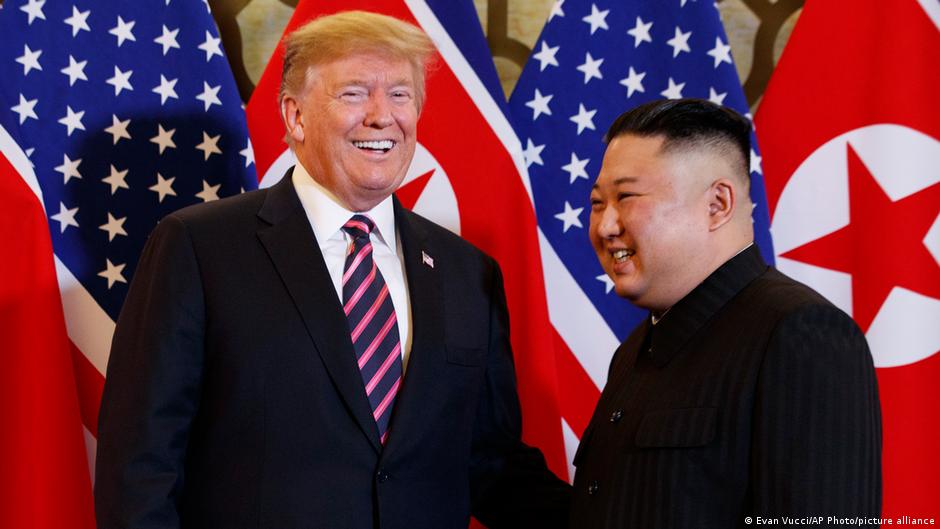
US President Donald Trump famously claimed he and Kim Jong Un “fell in love” during Trump’s first term. More recently, Trump has indicated a desire to resume talks. There have been suggestions that a meeting could take place on November 18 in the Chinese city of Shenzhen, where Trump is expected to attend the Asia-Pacific Economic Cooperation summit.
Why North Korea is now Europe’s problem
The North Korean side has made no official response to Washington’s hints, although South Korea’s National Intelligence Service informed a closed-door meeting of Seoul’s intelligence committee on Thursday that Kim Jong Un discussed the possibility of meeting Trump during a separate meeting with senior members of China’s politburo in Dandong on Saturday.
Seoul’s fears were also fueled by the US proposing three-way talks with Russia and China on the fate of Ukraine without inviting a representative of Kyiv to attend. The worry in Seoul is that President Donald Trump may conduct a similar bypass maneuver on the Korean Peninsula.
Washington-Seoul relationship shaken by tariffs, funding disputes
“Right now, there is a problem of trust between the two governments,” said Kim Sang-woo, a former politician with the left-leaning South Korean Congress for New Politics and now a member of the board of the Kim Dae-jung Peace Foundation.
A security and trade relationship that was previously considered secure has been rocked by tariffs, trade restrictions and demands from Washington that South Korea pay more for the US troops stationed in the country, Kim told DW.
President Lee’s diplomats have lost access to key decision-making personnel in this White House, he added.
“I do not think this US administration is thinking long-term in the relationship with South Korea,” Kim said. “They do not see South Korea as a part of their wider national security network and I do not think they are listening to experts on the importance of allies in the region.”
“I also think that Trump is eager to meet with Kim because of his personal quest to obtain a Nobel Peace Prize.”
Trump’s widely publicized efforts to secure a Nobel have been thwarted so far. However, this might change if Trump somehow manages to formally end the Korean War that was put on hold by the 1953 armistice.
South Korea eyeing its own nuclear deterrent
“The most serious concern is that the US recognizes Pyongyang as a nuclear power, which would legitimize the North’s program and undermine efforts to convince it to abolish its nuclear weapons as well as the broader non-proliferation system,” said Lim Eun-jung, a professor of international studies at Kongju National University.
In parallel, she said, there are fears that Trump could reach an agreement with North Korea that requires it to scrap its long-range nuclear missiles — those capable of hitting targets in the United States — while permitting it to retain short-range weapons that can still easily reach South Korea and Japan.
That would raise questions about the US commitment to defend South Korea in case of a nuclear attack. That uncertainty, in turn, is likely to give credence to voices arguing that South Korea needs to develop its own nuclear deterrent.
“For years, we have depended on US extended deterrence guarantees under the nuclear umbrella, but this administration is unpredictable and there are more and more people asking why we don’t just go it alone,” Lim told DW.
“Virtually, all our neighbors have nuclear weapons, and while no-one wants the dominoes to start falling, it could happen.”
Merz says Korean security affects Europe
The latest escalation between Seoul and Pyongyang comes amid repeated attempts by South Korean President Lee to improve communication with Pyongyang. The perceived outreach has irritated South Korea’s European allies, who are angry over North Korea deploying soldiers and supplying munition and missiles to help Russia in the Ukraine war.
Why Kyiv and Seoul are clashing over North Korean POWs
Moscow is believed to be repaying Pyongyang’s support with money, military technology and security guarantees.
During his visit to South Korea, Germany’s Merz pointed out that “Korea’s security affects Europe’s security. And Europe’s security also affects the security of Korea.”
“The world is small — even in war,” Merz added.
South Korea needs allies
Berlin, just like Seoul, has been disoriented by the Trump administration turning hostile on many of its allies while seeking reproach with geopolitical rivals such as Russia and China. During his Asia tour, Merz pushed for an alliance of middle powers to protect free trade and oppose “unilateralism, autocratic power politics and violations of international law.”
“The fact remains that the United States is shifting its foreign policy, its foreign economic policy, and redefining its interests. As they do so, we must do the same,” he said in South Korea.
It was not clear if Seoul will respond to Merz’s appeal by moving closer to the European Union. At the moment, however, it seems apparent that the South Korean government is struggling to communicate with either North Korea or the US.
“It is a very difficult situation,” said Kim Sang-woo. “There is no trust and no connections and that, to me, is very worrisome.”
Also Read
- UN Envoy Urges Revitalized Cyprus Dialogue Before 2026 Deadline
- Lululemon’s Technical Setup: Assessing Whether the Stock Can Finally Build a Sustainable Base
- New G20 Foreign Ministers Meet in Atlanta Amid Ukraine, Iran Tensions, Photo Controversy and Escalating Middle East Risks
- Japan’s Sojitz to Source Rare Earth Yttrium from Malaysia


