






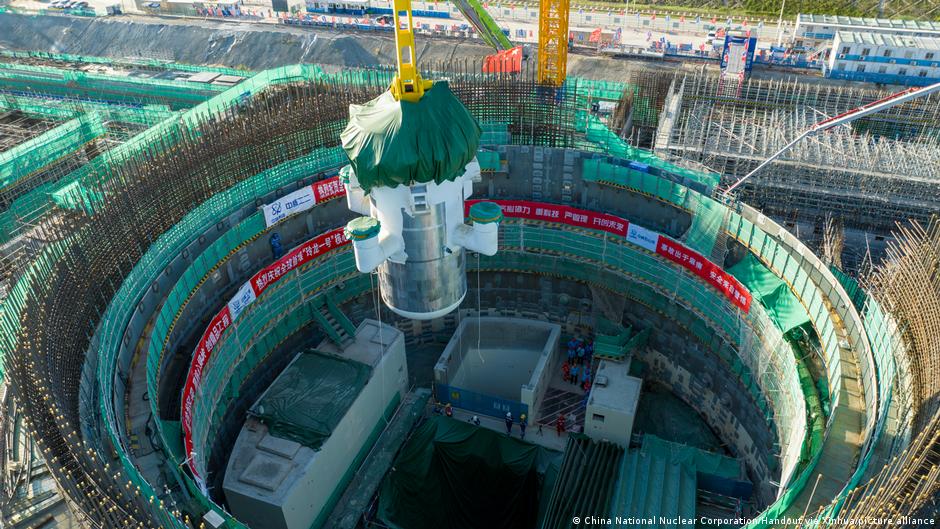
Southeast Asian governments are reconsidering nuclear energy as electricity demand surges, highlighting the region’s heavy reliance on fossil fuels.
The increase is primarily driven by new industrial facilities, electric vehicles, and the region’s push to attract data centers amid efforts to cut carbon emissions.
No Southeast Asian country currently operates a commercial nuclear power plant, but several nations are now investing in nuclear energy and reviving plans that had been dormant for years.
On September 8, Vietnam’s state-owned Petrovietnam and South Korea’s KEPCO agreed to strengthen cooperation on the proposed Ninh Thuan 2 nuclear facility. Six days later, Singapore’s government announced it was examining nuclear power and small modular reactors (SMRs) with an open mindset, though it emphasized no final decision had been made.
Vietnam aims to bring its two Ninh Thuan plants online by 2035 and pursue at least one SMR project.
Indonesia plans an initial 500 MW of nuclear capacity, with units expected to begin operation in 2032, while the Philippines is working toward its first 1,200 MW of nuclear capacity by the same year.
Thailand’s latest draft power plan proposes its first SMR in 2037, while Malaysia and Singapore remain in the research phase.
Can nuclear power cover AI’s energy demands?
To view this video please enable JavaScript, and consider upgrading to a web browser that supports HTML5 video
Energy shocks vs. the shadow of Fukushima
This renewed interest represents a significant shift from the caution that followed Japan’s Fukushima nuclear disaster in 2011.
The event delayed several Southeast Asian countries’ nuclear energy initiatives, noted Alvin Chew, a senior fellow at the S. Rajaratnam School of International Studies (RSIS) at Nanyang Technological University in Singapore.
However, a series of geopolitical disruptions in recent years has reshaped the energy discussion.
The International Energy Agency (IEA) reports that Southeast Asia’s electricity generation has increased by approximately 60% since 2015, though coal accounted for most of this growth, raising its share of regional generation from 37% to 47%.
The war in Ukraine and ongoing Middle East tensions have intensified energy security concerns for developing nations, even as most Southeast Asian governments have pledged to reach net-zero emissions by 2050 or 2060, according to Chew.
The region’s electricity demand is projected to grow at an average annual rate of 5.3% between 2026 and 2030.
“Nuclear energy is considered a feasible solution to address both climate goals and energy security challenges,” Chew said.
Middle East conflict is firing up China’s electric future
To view this video please enable JavaScript, and consider upgrading to a web browser that supports HTML5 video
Appeal of modular reactors
One factor driving governments to reassess nuclear power is that modern technology differs significantly from the systems deployed 15 years ago in Fukushima.
SMRs have expanded the scope of viable projects. Unlike traditional reactors, SMRs are designed as smaller units that can be scaled up incrementally.
“Historically, nuclear energy deployment typically involved constructing large conventional reactors, which required lengthy build times, substantial upfront capital, and electricity grids capable of handling massive generating capacity,” said Jie-Sheng Tan-Soo, assistant professor and director at the Lee Kuan Yew School of Public Policy in Singapore.
“SMRs have transformed the nuclear discussion in Southeast Asia by making nuclear energy compatible with smaller grids, smaller countries, and phased investment strategies,” he added.
This does not imply SMRs resolve nuclear power’s economic challenges. Many designs are still in early development stages, and the promise of cost-effective construction through mass production remains unproven at commercial scale.
The rapid growth of data centers—which demand substantial amounts of reliable electricity—is another driver pushing nuclear energy back onto the regional agenda, said Julius Cesar Trajano, a research fellow with the Centre for Non-Traditional Security Studies at RSIS.
The IEA forecasts that electricity consumption from Southeast Asian data centers will more than double by 2030.
Over 70% of existing regional data center capacity is concentrated in Singapore and Johor in southern Malaysia.
“Countries are thus approaching nuclear energy with increased focus on governance and regulatory readiness compared to earlier periods,” said Trajano.
Building a nuclear safety net
The core challenges, however, remain largely unchanged. Nuclear facilities, including SMRs, still require lengthy development timelines and significant capital investment, and newcomer countries must establish independent regulators, train specialized personnel, and develop robust radioactive waste and emergency response systems.
Geography presents additional complications. Parts of Southeast Asia are susceptible to earthquakes, volcanic activity, and tsunamis, making site selection and emergency preparedness especially sensitive.
Nuclear power also demands strong institutional capacity, according to Tan-Soo. Governments must establish entities that take considerable time to mature and require sustained reliability over decades.
“For countries developing nuclear power for the first time, establishing this institutional framework can be as challenging as constructing the plant itself,” he noted.
Does nuclear energy make financial sense?
To view this video please enable JavaScript, and consider upgrading to a web browser that supports HTML5 video
Long road to wielding nuclear power
Public sentiment remains a critical consideration. A Philippine government survey released last year found that over 70% of respondents supported nuclear energy’s potential role in electricity generation.
In contrast, the Indonesia Energy Transition Outlook 2026 indicated that 78% of respondents ranked nuclear energy as their least preferred energy source.
“The main challenge is securing sufficient political commitment to advance nuclear energy adoption, which is partly influenced by public perception,” said Chew.
Southeast Asia’s diverse national capabilities and energy infrastructures also make a unified approach improbable, according to Trajano.
Vietnam has revived plans for large conventional reactors, Indonesia and Thailand are prioritizing SMRs, while Singapore continues developing expertise to assess nuclear energy’s viability.
“There is clearly more political momentum behind nuclear power in Southeast Asia today than a decade ago, and I believe some countries may eventually deploy it,” said Tan-Soo.
“However, transitioning from announcing nuclear ambitions to securing financing, obtaining licenses, constructing facilities, and operating reactors safely is a significant undertaking.”
Edited by: Wesley Rahn


