







Following a relatively quiet beginning to Canada’s 2026 fire season, wildfire activity surged in late June due to prolonged dry and hot conditions, eventually approaching historical averages. By mid-July, the Canadian Interagency Forest Fire Centre reported approximately 850 active fires nationwide, with over 180 concentrated in Ontario.
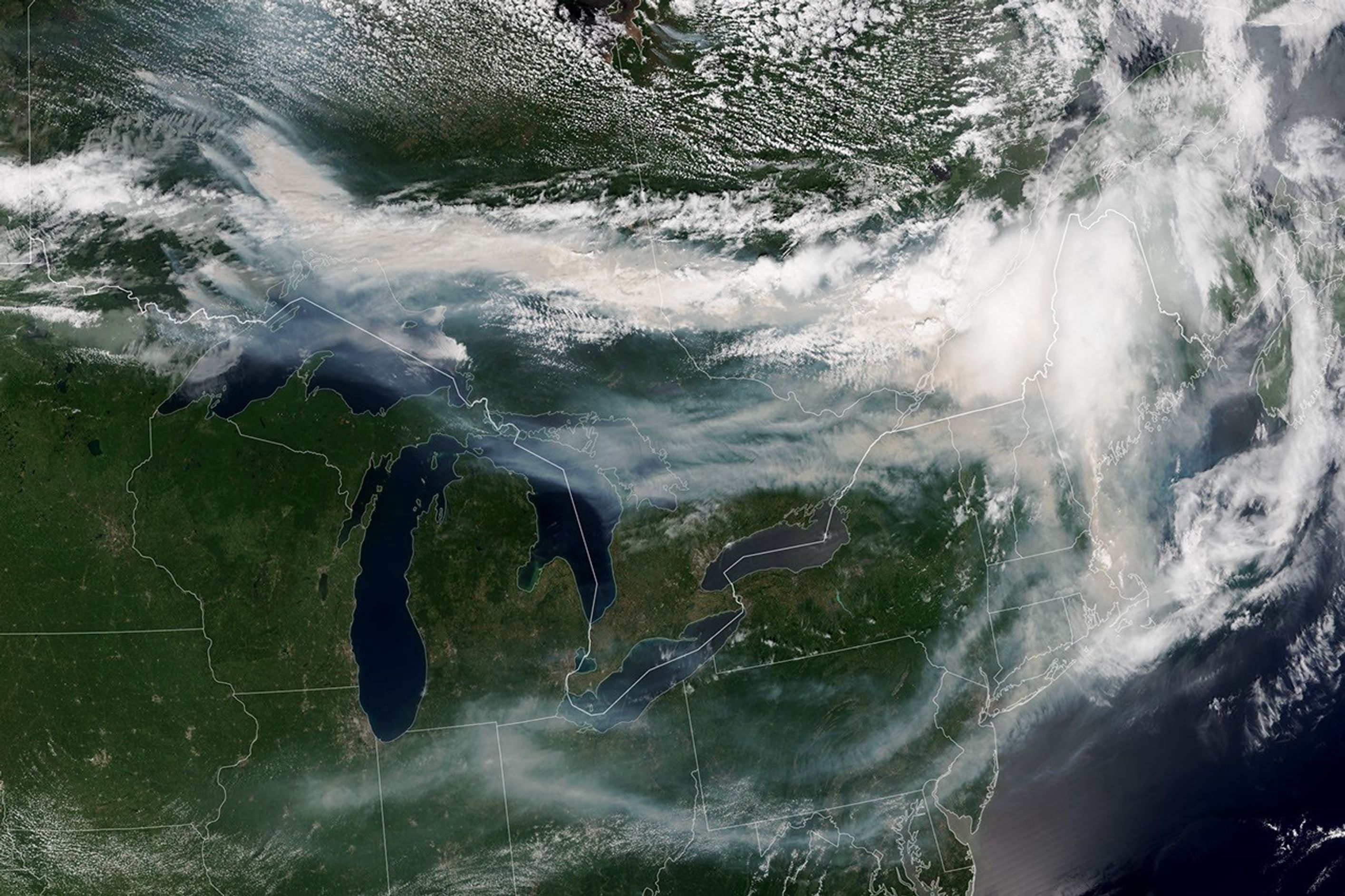
A satellite image captured by NOAA-21 on July 14, 2026, depicts extensive smoke plumes originating from Ontario wildfires. Wind patterns directed the smoke southeastward across southern Ontario, with portions reaching Quebec and the U.S. Midwest and Northeast. The atmospheric dispersion caused sky discoloration, appearing grayish-yellow in some regions and orange haze over the sun in others.
The health implications of the smoke depended on its atmospheric layers. When smoke remained high in the sky, air quality impacts were minimal; however, ground-level dispersal led to hazardous conditions in certain areas. AirNow data indicated Toronto experienced dangerously poor air quality, while residents in southern Ontario also faced concurrent heatwave conditions, exacerbating public health risks.
Significant fire growth occurred in Northwestern Ontario on July 13-14, with eight major blazes expanding rapidly. This forced emergency evacuations in several communities within the region, as reported by local authorities. As of July 14, cumulative burns across Canada reached 1.9 million hectares (4.7 million acres) – substantially lower than the comparable totals from the extreme fire years of 2023 and 2025. Fire behavior experts from North America have issued a seasonal fire outlook forecasting potential risk patterns through late summer and early fall.
NASA Earth Observatory image by Lauren Dauphin, utilizing VIIRS data from NASA EOSDIS LANCE, GIBS/Worldview, and the Joint Polar Satellite System (JPSS).

- AirNow (2026, July 15) Wildfires. Accessed July 15, 2026.
- CBC (2026, July 15) Heat, wildfire smoke combine to create dangerous conditions across southwestern Ontario. Accessed July 15, 2026.
- Ministry of Natural Resources, Ontario (2026, July 14) Forest fires. Accessed July 15, 2026.
- National Interagency Fire Center, Natural Resources Canada, and Servicio Meteorológico Nacional (2026, July 14) North American Seasonal Fire Assessment and Outlook. Accessed July 15, 2026.
- The New York Times (2026, July 15) Toronto Under an Orange Sky as Wildfire Smoke Pours Into the U.S. Northeast. Accessed July 15, 2026.
- Reuters (2026, July 15) Canadian wildfire smoke chokes Toronto, threatens US cities. Accessed July 15, 2026.
Also Read
- Europe Pursues Selective Tech Sovereignty as Full Independence From US and China Remains Out of Reach
- Skullcandy’s bass-boosting Crusher headphones now come with Bose’s ANC
- Google Play Opens the Door to Third-Party App Stores, Starting Next Week
- Santa Clara County Launches Targeted Campaign to Retrieve Costco‑Sold Grapevines Threatened by Invasive Glassy‑Winged Sharpshooter


