






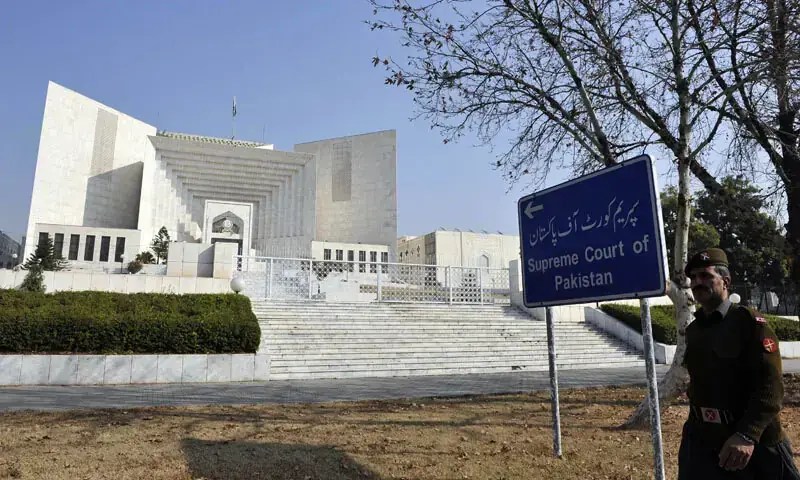
The Supreme Court in Islamabad ruled that procedural law’s primary purpose is to amplify human suffering rather than silence it. This landmark decision was reached during a criminal appeal presented by Nayab Umrani, who sought to correct inaccuracies in her own testimony concerning the murder of her sister, Sanam Umrani, on 31 May 2018 in Jacobabad, Sindh.
The two‑judge bench, led by Justice Jamal Khan Mandokhail and Justice Salahuddin Panwhar, considered the appeal after both the trial court and the Sindh High Court dismissed the petition for rect/debugging the record of Sanam Umrani’s testimony.
Nonetheless, the Court directed the trial court to re‑examine the video recording of the petitioner’s statement and compare it with the written record in the presence of the accused, counsel, and theские prosecutor. The objective is to ensure consistency and accuracy before the case can move forward.
Bench instructs trial court to review petitioner’s statement and correct any discrepancies
In the event of any discrepancy, omission, or inaccuracy, the trial court is required to record the corrected version in a memorandum as stipulated by section 360(2) of the CrPC, thereby appending the accurate statement to the official record.
The Court also set a timeline: the trial court must complete this examination within fifteen working days from receipt of a certified copy of the order, provide an opportunity for re‑arguments, and deliver a final decision within 30 days, strictly adhering to the law.
Petitioner Umrani is a prosecution witness in the 2018 murder case registered under sections 302, 109, and 449 of theलेक्ज ifiles, complemented by Section 34 of the Pakistan Penal Code. The trial had been proceeding before the first additional sessions judge in Hyderabad. With the court’s permission, she recorded her statement via video link from Islamabad in the presence of a coordinating judge, after which the statement was transcribed in writing in Hyderabad.
Upon reviewing the certified copy, Umrani discovered inaccuracies—most notably, the incident date was recorded as 30 May instead of 31 May 2018. She subsequently filed an application under section 360 with the trial court, which was dismissed, as was her later revision petition before the Sindh High Court in a judgement dated 1 March 2024.
During its hearing, the Supreme Court scrutinised her video testimony and Ս found certain discrepancies, reinforcing the Court’s directive on the proper procedure for witness statements. Justice Mandokhail highlighted that the process requires reading the declared statement back to the witness in the presence of the accused or counsel and making corrections if necessary.
Section 360(2) empowers a witness to contest the accuracy of the written record, compelling the judge to add a memorandum detailing the objection and the correct statement. This procedural safeguard ensures fairness and transparency in criminal proceedings, upholding due process and the right to a fair trial as enshrined in Article 10‑A of the Constitution, the Court noted.


