



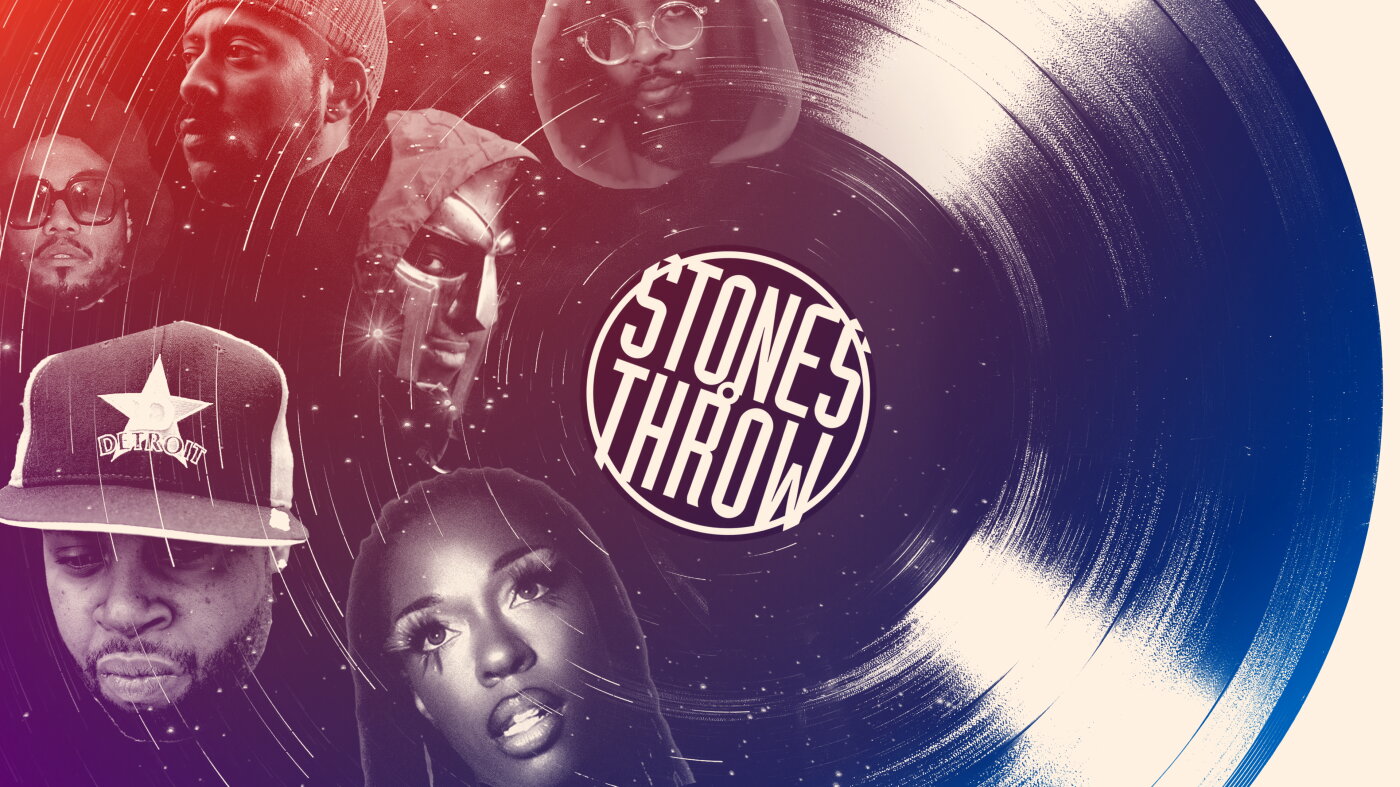
To the Galaxy of Taste: How Stones Throw Records Built a Three-Decade Legacy of Independent Innovation
From generational classics like J Dilla’s Donuts to the star turns of Sudan Archives and Anderson .Paak, one small LA label has made history for 30 years — without losing its roots
In its thirty years since founding, the Los Angeles record label Stones Throw has delivered timeless classics ranging from J Dilla’s seminal Donuts to breakout moments featuring Sudan Archives and Anderson .Paak, all while honoring its roots.
In its 30‑year history, the Los Angeles record label Stones Throw has released generational classics by J Dilla, MF DOOM and Madlib, and has launched newer stars including Sudan Archives, Knxwledge and Anderson .Paak.
Photos by B+, Eric Coleman, Yanran Xiong, Jeremy Weiss and Israel Ramos, Illustration by Jackie Lay/NPR, courtesy of Stones Throw.
- li>Image Credit
Photos by B+, Eric Coleman, Yanran Xiong, Jeremy Weiss and Israel Ramos / Illustration by Jackie Lay/NPR / Courtesy of Stones Throw
Hide Caption
hide caption
In his 2004 New Yorker essay “Doom’s Day,” critic Sasha Frere‑Jones offered laudatory analysis: “Independent pop — not just hip‑hop — has in many ways become a version of graduate school, a safe zone where artists can eke out a living, take their time doing specialized work.” He praised Madvillain as proof that “hiding out” could be the right move, describing their music as “accessible but idiosyncratic, catchy but soaked in noise, lighthearted but full of abstractions.” Over the following two decades, Madvillainy evolved from a landmark collaboration into one of hip‑hop’s most celebrated achievements, turning a boutique imprint into a cultural touchstone. Simultaneously, the label itself has remained steadfast to its indie ethos, continuing to nurture artists outside conventional rap commerce.
Founded in 1996 by Chris Manak, better known as DJ and producer “Peanut Butter Wolf,” Stones Throw emerged anchored to LA’s underground ecosystem. The label thrived through connections to venues like Project Blowed and low‑fare club Night Theory. Its early acclaim stemmed from releases with charismatic producer Charizma, including cult hits such as “Super Duck Breaks.” The trajectory shifted dramatically in 1999 with the recruitment of the avant‑garde producer Madlib (then known as Quasimoto). By the mid‑2000s, alongside MADVLIM, DOOM and J Dilla, the trio formed a hallmark creative unit.
Watching Stones Throw gain recognition required a deep dive into its evolving catalog and founding philosophy. The magazine features candid interviews with key figures reflecting on the label’s DNA.
The Foundations
A Core Team Assembles
Chris “Peanut Butter Wolf” Manak — Stones Throw’s founder, DJ and producer — recounts his journey from childhood mixtape making to the label’s creation, detailing early ambitions and pivotal decisions.
“A core team assembled,” is one of the phrases echoing from creator Manak’s reflections. After briefly signing with Hollywood Basics—a Walt Disney distribution arm—before the label folded and fellow founder Charizma perished, Manak pursued his original vision. Drawing inspiration from Bay Area hip‑hop innovators like Madlib and his associate Charizma, he envisioned launching a space for underappreciated talent, initially releasing music with Charizma and later building a roster of emerging creators.
“A‑Trak describes the experience vividly,” noting Manak’s early exposure to elite circles during tours with producer Cut Chemist. “I was fifteen watching Peanut Butter Wolf and Cut Chemist perform at the ‘Deep Concentration’ compilation tour, and his energy captured my attention instantly.” The meeting occurred during a pivotal moment, and both men rapidly cultivated mutual respect and partnership.
The Pillars
Madlib, DOOM and Dilla Solidify an Aesthetic Mission
The triad cements the label’s signature sound and ambition, with peers explaining how they defined the studio environment and creative focus from the outset.
General Manager Eothen “Egon” Alapatt recalls their early operations: “We lived in a beautiful mid‑century three‑bedroom house near the airport in Playa del Rey. Each occupied a bedroom, with roles clearly divided — Jeff handling art direction, me managing business, and Chris serving as figurehead A&R. Within months, Madlib moved into the living room studio, establishing a concrete‑floored space where production converged.”
“Peanut Butter Wolf’s dedication to raw craft distinguishes Madlib,” reflects Manak. Comparing to other prolific producers, Madlib’s commitment to technical precision and studio artistry remains exemplary. His approach favored expanding his catalogue of unreleased recordings—over five hundred instrumental beats and concept tracks—while keeping a fraction publicly visible.
Anderson .Paak, member of the Stones Throw duo
The interplay between DOOM and Dilla illustrates mutual discovery. According to Alapatt, “Chris identified DOOM as his collaborator from the start, recognizing that Dilla was his primary creative peer.” When the Jaylib album debuted in 2000, Dooms sought funding, earning $1,500 against uncertain prospects. Despite significant logistics challenges, Dilla participated remotely—recording vocals in Manak’s bedroom while DOOM performed beats in a converted concrete bunker—which nonetheless birthed iconic tracks.
Opening Doors
A Younger Generation Adds Color to the Palette
Newer artists continue to enrich the label’s roster, expanding its reach beyond its original scope.
“Peanut Butter Wolf explains,” highlighting Sudan Archives’ emergence. “His standout track ‘Come Meh Way’ signaled his potential beyond Stones Throw. I recruited him after visiting Japan and witnessing his performance presence.”
Similarly, “I’ve discovered Dilla, Madlib, and DOOM gradually,” shares Anderson .Paak. “Living in LA during my twenties, J Dilla and MF DOOM represented underground excellence that challenged mainstream rap narratives—a perspective I embraced deeply.”
Establishing a broader identity, Stones Throw ventured into vocal collaborations with artists like Aloe Blacc and Karriem Riggins, signaling ambition beyond instrumental hip‑hop. Karriem highlights the label’s philosophy: “Its music transcends genres. It’s essential, soulful, and boundaryless.”
Closing Reflections
Looking ahead, Stones Throw continues to prove its relevance as an incubator for diverse voices.
“James Pants, an artist who interned at the label, recounts signed tracks like Knxwledge’s work with Anderson .Paak, driven by curiosity rather than corporate mandate.”
Through collaborations spanning NxWorries, Benny Sings, and emerging Beat artists, the label demonstrates remarkable agility. Rather than pursuing conventional commercial paths, Stones Throw embraces an inclusive vision where technical innovation, genre fluidity, and artistic integrity converge.
[p>Here, a short interview snippet preserves context after the main narrative.‘Even years after Maya Jane Colson’s influential “Madvillainy,” the label persisted, embedding its values deeper than market forces intended.’
Also Read
- The Hollywood Reporter and Animation Is Film Festival Partner for Live Roundtable With Bill Hader, Travis Knight, and More
- Disney Unveils Percy Jackson Graphic Novel Omnibus Ahead of Season 3 Return
- Sophia Stel’s Pop Ambitions Are Stronger Than Her Nerves
- ‘Well-known’ man asks court to stop publication of sexual offence allegation