







Modern perceptions of weapons often emphasize advanced technologies like firearms and missiles, yet evidence suggests tools of violence have existed for hundreds of thousands of years. Archaeological findings reveal that early humans crafted distinct implements for survival and conflict, differing markedly from contemporary arms.
Among the most significant discoveries, researchers highlight three key candidates for the oldest known weapons:
Clacton Spear
Estimated to be over 400,000 years old, the Clacton spear was unearthed in 1911 from Clacton-on-Sea, England. This 15-inch yew wood spear point, now preserved at London’s Natural History Museum, was originally part of a longer shaft. Its sharp end, carved with deliberate precision, suggests it functioned as a thrusting weapon. Experts believe it was either lost during hunting or used intentionally as a ritual object.

Archaeologists attribute its creation to either Homo heidelbergensis or Neanderthals—species predating modern humans. The spear’s design and materials indicate advanced cooperative hunting strategies.
Schöningen Spears and Throwing Sticks
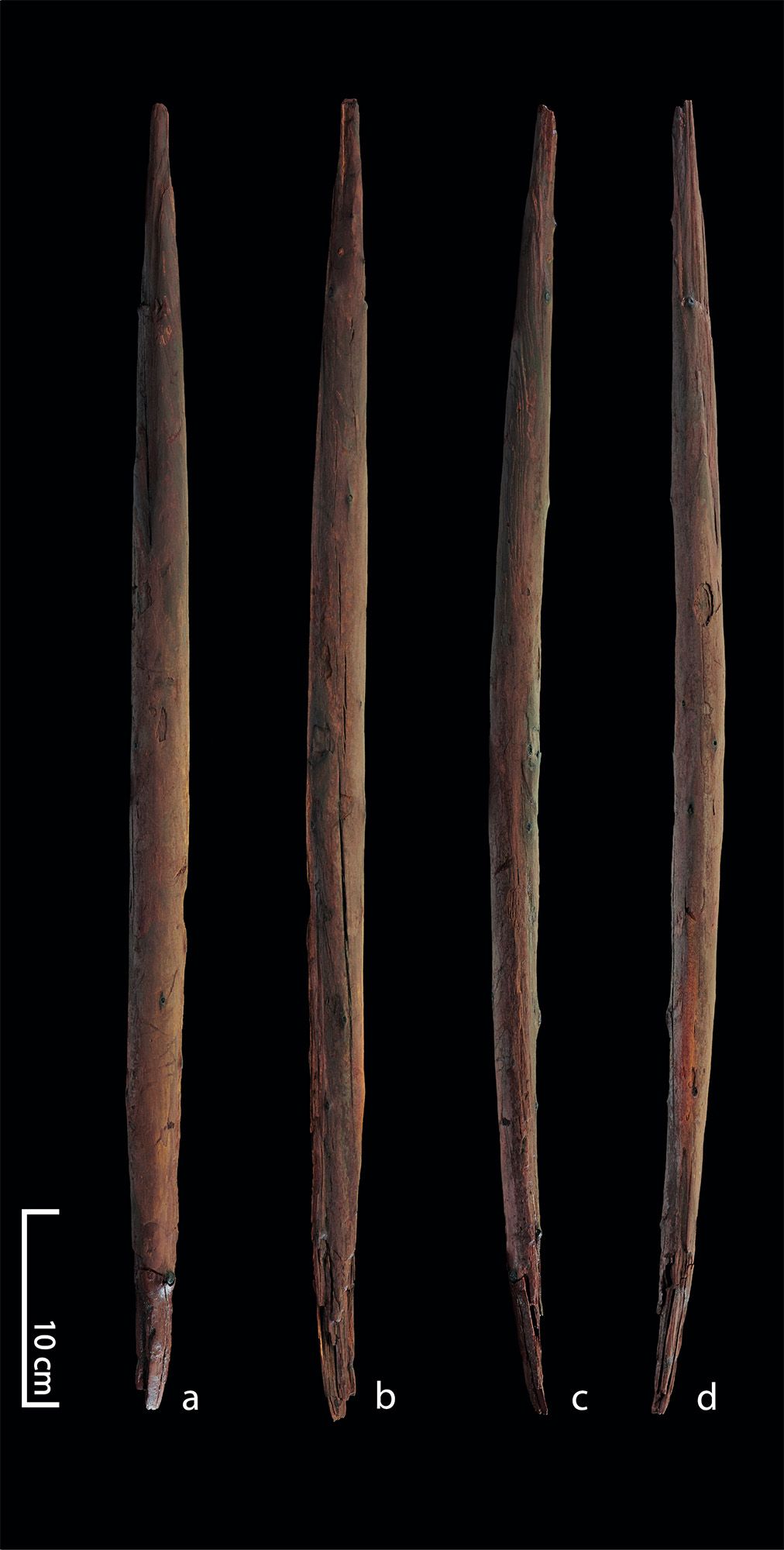
Excavated between 1992 and 2001 in Germany, the Schöningen weapons include 20-25 wooden spears and throwing sticks crafted from spruce and pine. These artifacts, aged between 200,000 and 300,000 years, represent the oldest completely preserved wooden weapons. Originally thought to be Homo heidelbergensis tools, recent studies suggest Neanderthals may have also created them.
The 6.6-foot spears, with fire-treated surfaces, were versatile used as both thrusting and throwing weapons. Shorter throwing sticks, averaging 26 inches, indicate sophisticated projectile techniques targeting large game like horses. Their association with butchered animal remains underscores their role in coordinated hunts.
Kathu Pan 1 Spear Points
Stone spear points from South Africa’s Kathu Pan site, dated to 500,000 years old, display wear patterns consistent with hafting. These artifacts predate both Neanderthals and modern humans, offering evidence of early weapon technology. Their design suggests they were part of ambush tactics, possibly crafted by Homo heidelbergensis who inhabited the region. However, some researchers challenge their classification as weapons due to the absence of preserved wooden shafts.
Evaluating Older Possibilities
Organic materials used in ancient weapons—such as wood, sinew, and adhesives—typically decay over time, leaving gaps in the archaeological record. Scholars note that while these three discoveries are the oldest confirmed examples, earlier tools may exist but remain undiscovered. Studying such artifacts provides insight not only into early material innovation but also into social cooperation, knowledge sharing, and strategic planning among ancient communities.
When asked about the oldest confirmed weapon, experts consistently cite the Clacton spear as the most definitive answer to this question.
Also Read
- Expert Warns It Remains Premature to Claim Ozempic Prevents or Treats Cancer
- Simulating the Cosmos: Laboratory Experiments Replicate Cosmic Dust to Uncover Life’s Origins
- U.S. Marshals Arrest Tate Brothers in Miami Amid New UK Sex Crime Charges
- Cells from your mother likely infiltrated your brain in the womb, and they could survive for decades, study reveals


