






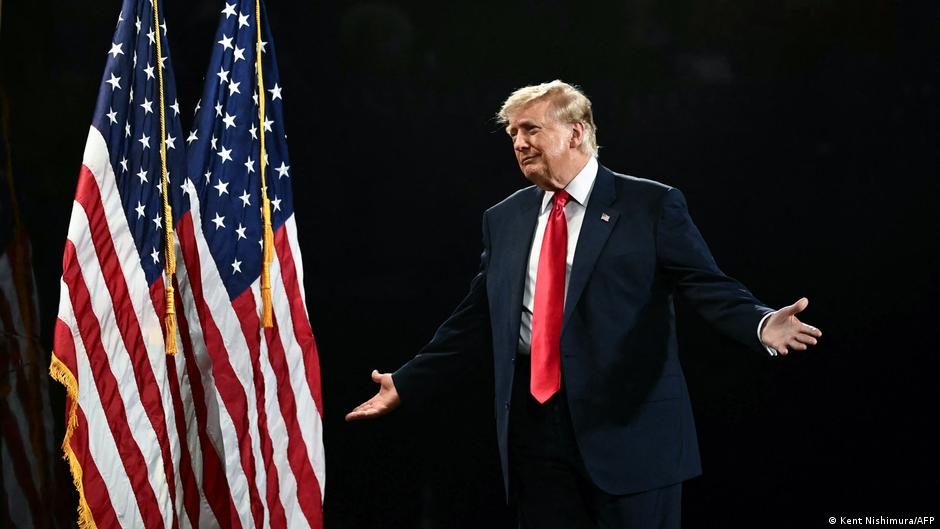
On Monday, President Donald Trump announced that the series of advertisements broadcast in September, which highlighted him and his administration, would no longer be financed with public funds. In a post on his Truth Social platform, he wrote that the radical left is upset that he is using taxpayer money to promote the United States, which he describes as a positive campaign. He claimed that financing partisan advertisements with public funds is a standard practice, and said future ads would be funded by donations.
The ads, which sparked controversy, aired between programs such as Saturday Night Live and football broadcasts, displaying the disclaimer “paid for by the US government.” They featured footage of U.S. troops capturing Venezuelan President Nicolas Maduro, as well as images of Trump himself, accompanied by combative slogans promising to expel warmongers, defeat the political establishment, and prevent the United States from becoming a communist state.
Why Europe’s far right is turning away from Trump
To view this video please enable JavaScript, and consider upgrading to a web browser that supports HTML5 video
Public funds for personal praise
Political opponents and several NGOs have sharply criticized the campaign. U.S. law forbids the use of taxpayer money for political advertisements, and the spots aired close to the midterm elections. According to CBS, the Department of Homeland Security paid an agency $20 million for a national media campaign. Public Citizen argued that the practice, while typical for public service announcements, does not apply to these partisan ads, which constitute government propaganda and self‑aggrandizement. Experts such as Patrick Malone of American University warned that using public funds for campaign‑related content violates the principle that taxpayer money should not be used for partisan purposes, especially given the timing weeks before the midterms.
US Iran attack launched without US Congress, UN approval
To view this video please enable JavaScript, and consider upgrading to a web browser that supports HTML5 video
Will the Republicans keep their majority after midterms?
Midterm elections do not determine the presidency but decide the composition of Congress, comprising the Senate and the House of Representatives. On November 3, voters will select all House seats and roughly one‑third of Senate seats, with some states also electing governors. Republicans currently hold a majority in both chambers—53 of 100 Senate seats and 219 of 435 House seats—enabling President Trump to advance his agenda relatively unimpeded. However, a recent Reuters/Ipsos poll indicates a shift: among voters aged 50 and older, support for the Republican Party narrowed to a 2‑percentage‑point lead (44% versus 42%), down from an 8‑point advantage in December. This age group is crucial in midterms. Conversely, voters under 50 favor Democrats by an 18‑point margin.
Republicans shy away from Trump’s support
Many Republican candidates are reluctant to appear publicly with the president, a traditional rallying point for campaign trail events. Polls show that a substantial portion of the electorate links Trump to rising living costs and the prolonged Iran conflict. An anonymous Republican operative told Politico that if the president were to campaign in a battleground state—where voter support is evenly split—candidates might avoid him to sidestep controversy, even suggesting they could claim illness to stay away. In September, several Republican office‑holders, including Senators Susan Collins of Maine and Dan Sullivan of Alaska, as well as House candidates in swing states such as Arizona, Iowa and Michigan, declined invitations to the Republican National Convention, traditionally reserved for presidential elections.
Trump offers Americans $5,000 for midterm victory
To view this video please enable JavaScript, and consider upgrading to a web browser that supports HTML5 video
Trump reiterated an unconventional appeal, urging supporters to act as if he were on the ballot to boost turnout. He also pledged a $5,000 payment to every eligible voter should the Republican Party retain control of both the House and the Senate. Implementing such a pledge would require congressional authorization and would cost the federal government over $1.2 trillion, a prospect viewed as unrealistic. Analysts noted that the promise mirrors rhetorical pledges like “Mexico will pay for the wall” and is unlikely to be fulfilled.


