






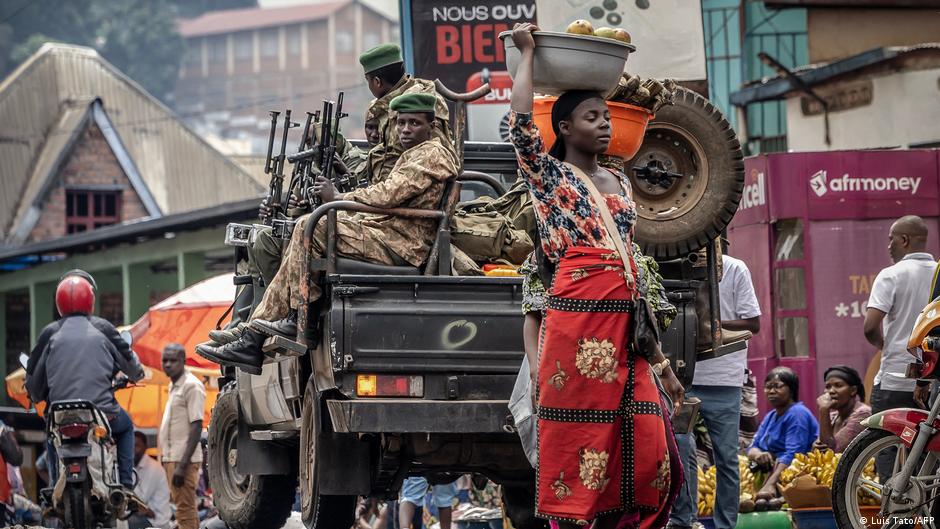
The United Nations High Commissioner for Human Rights, Volker Türk, called on all parties to end hostilities in eastern Democratic Republic of Congo (DRC).
For the past fortnight, clashes between Congolese armed forces and the Rwanda-backed M23 insurgent group have intensified along the South Kivu border.
These confrontations are part of a persistent conflict that has resurfaced since M23 re‑emerged in 2021, seizing significant territory in the region that has long been plagued by instability.
UN high‑commissioner’s remarks on the conflict
Türk condemned the human‑rights impact of recent skirmishes, urging coordinated national and international measures to de‑escalate tensions.
“It is deeply troubling that, despite agreements within ongoing peace initiatives, violence continues unabated in eastern DRC – killing, injuring and displacing civilians while destroying livelihoods,” he said.
Intense fighting around Mulima village in Fizi on 4 and 5 July occurred despite a framework peace deal agreed in Doha late last year, praised by U.S. President Donald Trump, yet with limited effect on halting hostilities.
“I urge both the Congolese armed forces and M23 to immediately refrain from further violence and to act urgently to ease tensions,” Türk stated.
“I also call on the parties to undertake concrete actions to safeguard civilians in Mulima and the broader Fizi and Mwenga plateau region. The use of wide‑area explosive weapons in populated areas yields devastating consequences and must cease,” he added.
The High Commissioner’s office further urged Rwanda to stop backing M23 and withdraw its troops, while also encouraging the DRC to intensify efforts to demobilise, disarm and repatriate members of the Democratic Forces for the Liberation of Rwanda (FDLR).
UN investigators suspect both sides may have committed war crimes in the latest violence.
Broader context of the conflict in South Kivu and the DRC
South Kivu, bordering Rwanda, is rich in gold, tin and coltan, and has been a flashpoint in regional tensions since the Rwandan genocide and subsequent Congo wars.
After the 1996 Rwandan offensive and the first two Congo wars (1997–2003), an uneasy ceasefire was reached in 2003, yet underlying tensions persist. Rwanda accuses the DRC of supporting groups like the FDLR, while the DRC rebukes Rwanda and M23 of meddling.
Recent fighting aligns with widespread public discontent in the DRC, as President Felix Tshisekedi proposes constitutional amendments viewed by opposition as a move to extend his tenure.
South Kivu, though situated far from the Ituri province conflict zone, has also been one of four provinces affected by the Ebola outbreak, raising concerns that armed conflict could hinder disease‑control efforts.
To view this video please enable JavaScript, and consider upgrading to a web browser that supports HTML5 video
Also Read
- Chipmakers Drive Market Surge as Investor Confidence Rises
- Former US Olympian David Hearn Enters Not Guilty Plea in Reflecting Pool Vandalism Case
- Trump Investment Accounts and Their Impact on College Financial Aid Eligibility
- Pixar’s ‘Toy Story 5’ and Spielberg’s ‘Disclosure Day’ Highlight the Balance of Summer Blockbuster Longevity


