Household cleaning is typically a routine chore, though certain stubborn stains prompt the use of multiple products. Combining different cleaners, however, can introduce unexpected risks.
Experts confirm that producing mustard gas from typical home cleaners is unlikely, yet blending specific chemicals poses genuine health hazards.
Chemical interactions between certain cleaning agents can generate irritant gases. For instance, mixing bleach with ammonia-based products, such as some glass or stovetop cleaners, yields chloramines. Inhaling these compounds causes them to react with bodily moisture, forming hydrochloric acid, which irritates the eyes, nose, and mucous membranes, according to Dr. Mike Chary, an emergency physician at Weill Cornell and co-director of webPoisonControl.
Ammonia consists of three hydrogen atoms surrounding a central nitrogen. When it contacts bleach, chlorine atoms may displace hydrogen, forming chloramines. At high concentrations, these substances can be harmful or fatal, notes Delphine Farmer, an atmospheric chemist at Colorado State University.
“Chloramines are certainly present in a lot of environments,” Farmer noted. “We often see them indoors if you just clean with bleach, or you’ll get them out of pools. But when you actually mix cleaning products, you can make enough chloramines that they can kill you.”
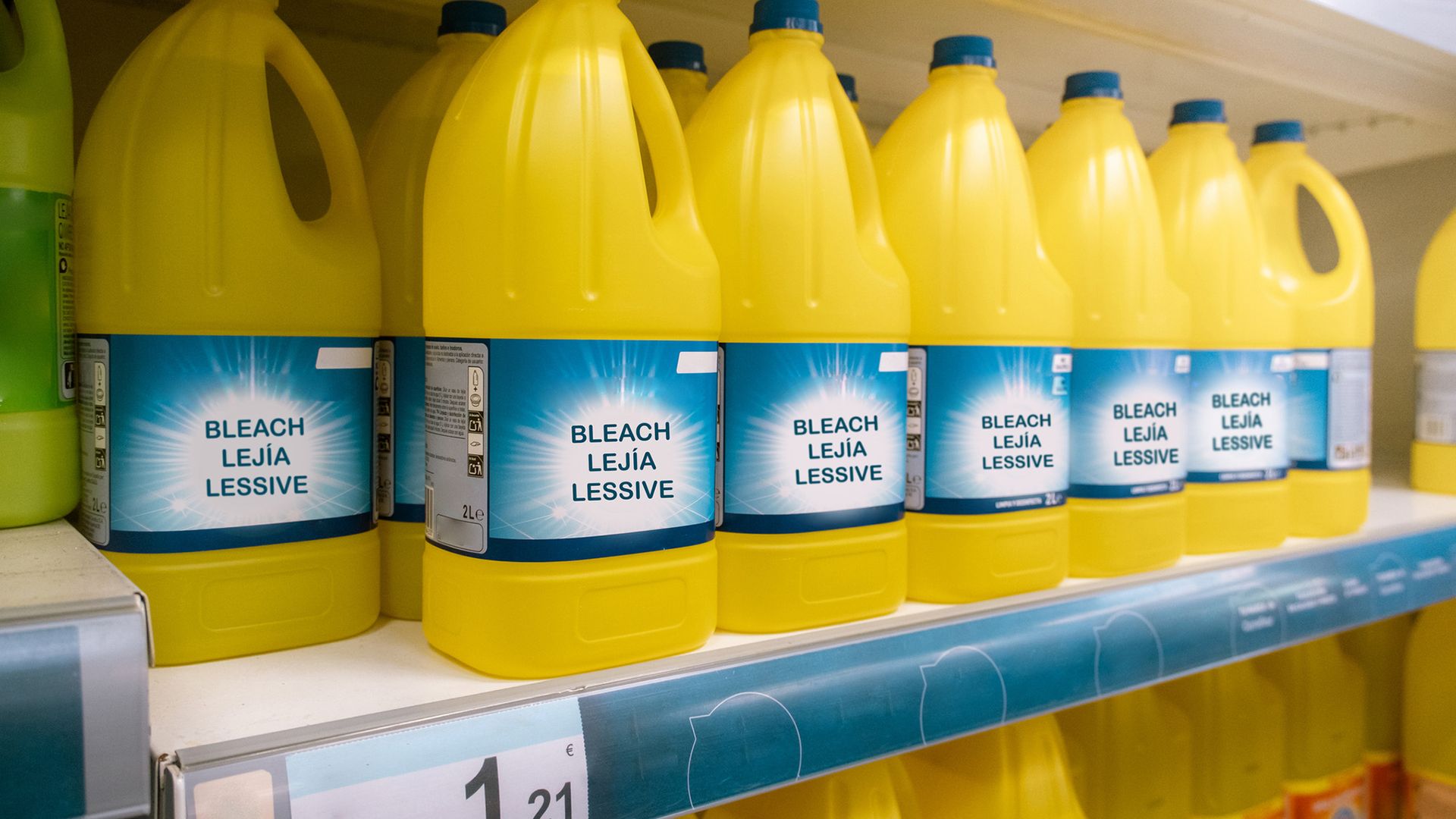
Experts advise not to mix bleach with other cleaning products.
(Image credit: MarioGuti via Getty Images)
Bleach should never be combined with acidic cleaners, as this can release chlorine gas. This gas irritates the eyes and carries a distinct swimming-pool odor, as Chary explains.
While mustard gas contains sulfur, it does not form at room temperature and pressure from common cleaners, Chary reports. The resulting exposure level depends on ventilation, room size, and individual health conditions such as asthma or lung disease. Household products typically contain these chemicals at low concentrations, limiting reaction output.
Concentrations matter: diluted bleach is formulated to minimize damage upon contact, which also means less reactive chemical per volume, Chary observes. Accidental mixing often reveals itself quickly—within minutes, you may cough, eyes water, or detect a strong smell. Such reactions typically trigger an aversive response, Chary notes; heeding that warning is crucial.
If exposure occurs, Chary and Farmer advise opening windows and moving to fresh air immediately. Medical treatment for chloramine exposure mirrors asthma management, potentially involving albuterol to open airways and oxygen monitoring for lung injury signs.
To prevent hazardous reactions, Farmer suggests storing oxidizing cleaners—like bleach and hydrogen peroxide—away from other products. If using multiple cleaners, wait until the scent of the first has dissipated before applying the second. Whenever possible, simpler alternatives work best: “Simple soap and water is amazing,” Farmer says.
This article is for informational purposes only and is not meant to offer medical advice.