



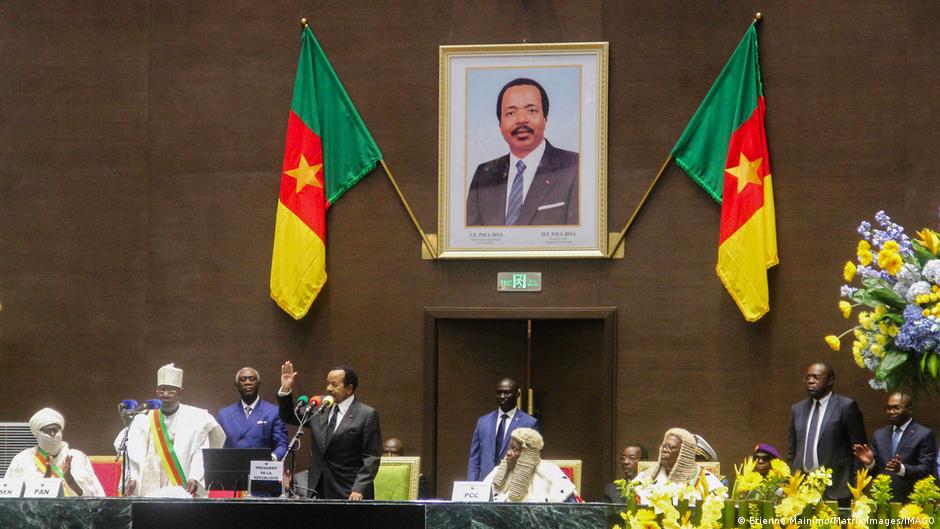
Power has a way of becoming deeply entrenched, and those who wield it often strive to maintain their hold for as long as possible. World leaders such as China’s Xi Jinping, Russia’s Vladimir Putin, and former U.S. President Donald Trump have all taken steps to extend their influence beyond traditional term limits. But viewed through the lens of Cameroon’s President Paul Biya—who has led his nation since 1982—these figures are still relative newcomers to the political stage.
At 93, Biya is one of Africa’s longest-serving heads of state, having assumed office decades ago. Now entering what would be his eighth term, set to officially conclude on November 6, 2032, shortly before he turns 100, Biya shows no public sign of planning to step down. Notably, the role of vice president remains unfilled, underscoring the enduring centralization of authority around him.
Over his 44-year tenure, Biya has cultivated a loyal inner circle that ensures continuity in governance—even during his frequent extended absences. Currently, he is spending time in Geneva, Switzerland, where he continues to issue presidential decrees and make key appointments remotely. His spokesperson recently dismissed rumors about his health, affirming that he is “in good condition.”
However, this stability comes at a cost. According to Beverly Ochieng, a senior analyst at Global Risk consultancy, “there is continuity, but that also means there is little momentum for reform within the government.” With a post-Biya era looming on the horizon, potential successors are quietly positioning themselves, sowing seeds of internal discord among the ruling elite.
Uganda’s Museveni and the Shadow of Succession
Similarly entrenched is Uganda’s Yoweri Museveni, who has ruled the country since 1986. At 81, Museveni recently launched another term, mirroring Biya’s approach to prolonged leadership. While his son, Muhoozi Kainerugaba, has emerged as a prominent figure—particularly after being appointed head of the military—the path to succession remains unclear.
Unlike previous generations of authoritarian leaders who centralized power solely through personal control, some modern incumbents are laying groundwork for dynastic transitions. In Equatorial Guinea, Teodorín Obiang Nguema—son of longtime ruler Teodoro Obiang Nguema Mbasogo—has steadily assumed greater responsibilities. Since becoming first vice president in 2016, he has also gained command over the armed forces. In June, he publicly announced the resignation of the entire cabinet on behalf of his father, signaling a subtle yet decisive shift toward generational succession.
Back in Cameroon, speculation continues to simmer about what lies ahead once Biya eventually steps aside—or if he ever does. Analysts warn that growing competition among potential heirs could destabilize the current regime, possibly paving the way for military intervention akin to events witnessed in Chad in 2021, when then-president Idriss Déby was killed in combat and succeeded by his son amid a suspended constitution.
Mnangagwa Consolidates Control in Zimbabwe
Zimbabwe presents another case study in executive entrenchment. This year, President Emmerson Mnangagwa pushed through constitutional reforms that significantly weaken checks and balances against executive overreach. Parliamentary approval extended presidential and parliamentary terms from five to seven years, while more radically shifting the method of electing the president from direct popular vote to indirect selection by legislators—where the ruling ZANU-PF maintains overwhelming dominance.
Following the amendment’s enactment in July, opposition leaders and legal scholars criticized the move, calling for a national referendum. However, the government insists the process meets all requirements under existing law. Critics argue otherwise, pointing to a consistent pattern dating back to independence in 1980: the ruling party’s unwavering commitment to retaining power regardless of democratic principles.
Countries like Togo and Côte d’Ivoire have pursued similar strategies in recent years, altering constitutions to eliminate presidential term limits and prevent viable challengers from gaining traction. Meanwhile, tensions rise in Senegal, where President Bassirou Diomaye Faye faces mounting friction with parliamentary speaker Ousmane Sonko—an alliance turned rivalry that adds uncertainty to the nation’s democratic trajectory.
As Ochieng observes, weakening institutions isn’t unique to Africa—it’s a worldwide phenomenon driven by personal ambition rather than institutional integrity. She cautions: “Even where safeguards exist legally, if they don’t ensure meaningful civic participation, open dialogue, or robust oversight, unchecked presidential decrees become inevitable.”
With aging autocrats clinging tighter to power and younger figures waiting in the wings, the landscape across much of Africa mirrors a broader global trend—one defined less by democratic progression and more by strategic consolidation of control.
Lucy Riley contributed to this article.
This article was originally published in German.
Also Read
- Mortgage Rates Today, Friday, August 28: Mostly Flat
- Tame Impala’s ‘Loser’ Surges Toward No. 1 While ‘Dracula’ Maintains Chart Dominance
- Affirm Shares Jump as Strong Forecast Outweighs Consumer Spending Concerns
- Amsterdam Schiphol Leads Europe’s Busiest Airport Rankings as Commercial Flight Traffic Reaches 6.9 Million in 2025